
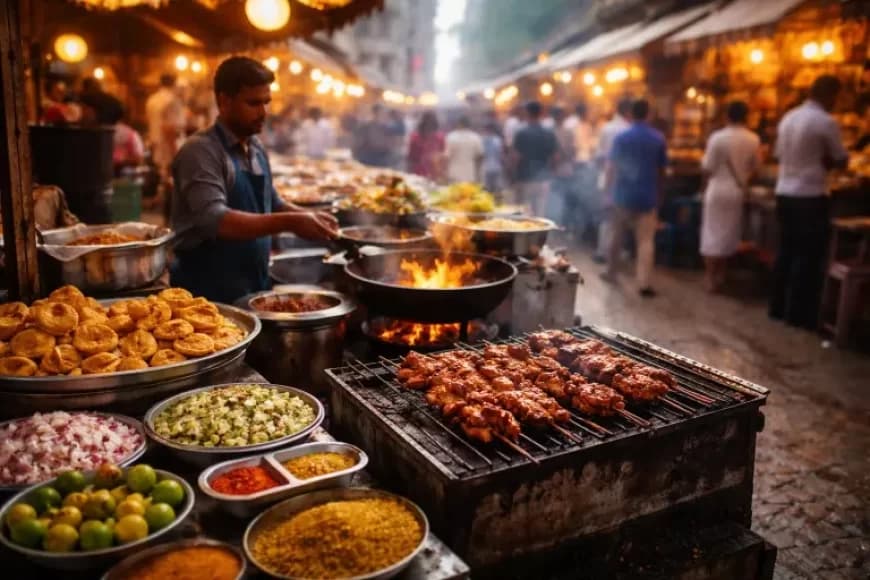
India’s street food is famous for its flavour, affordability and cultural identity. But behind the popularity lies an uncomfortable debate — how safe is it? Recent food poisoning incidents, viral hygiene videos and regulatory gaps have intensified discussions about balancing heritage with public health.
Experts say the real issue may not be the vendors themselves, but the lack of infrastructure, enforcement and support systems.
India’s Street Food Culture Under Scrutiny
From chaat stalls in Delhi to seafood carts in coastal cities, street food feeds millions daily. However, a series of incidents in 2024–2025 triggered serious concerns about hygiene standards.
Authorities in some cities temporarily restricted certain items after suspected food contamination cases. At the same time, social media clips showing unsafe food handling practices sparked widespread public debate.
Yet, food policy researchers argue that many vendors operate in difficult conditions.
Without access to clean water, waste disposal or refrigeration, maintaining perfect hygiene becomes nearly impossible.
The Real Problem: Infrastructure, Not Intent
Lack of Basic Facilities
One of the biggest challenges facing street vendors is the absence of basic infrastructure.
Common problems include:
No running water for cleaning utensils
Cooking near drains or congested roads
No electricity for refrigeration
Limited waste management
Studies suggest a large percentage of food-borne illness linked to street food can be traced back to poor sanitation facilities rather than deliberate negligence.
For small vendors working long hours, survival often comes before compliance.
The High-Risk Category: Seafood and Heat
India’s rising temperatures make food safety even harder.
Seafood, dairy products and egg-based sauces require strict temperature control. Without cold storage, these foods spoil quickly and may cause illness.
Food safety experts highlight risks such as:
Bacterial growth in unrefrigerated seafood
Histamine poisoning from poorly stored fish
Spoilage of egg-based sauces like mayonnaise
During peak summer heat, these risks increase significantly.
The “Hafta Hygiene” Problem
Another layer of the issue lies in the informal economy surrounding street vending.
When Regulation Gets Replaced by Bribes
Many vendors struggle to obtain official food licenses due to paperwork requirements such as address proof, water source verification and formal documentation.
Instead, some reportedly pay small informal payments — commonly known as “hafta” — to avoid inspections or eviction.
This creates a dangerous loophole.
Rather than improving food safety, the system sometimes prioritizes unofficial payments over real compliance.
Shortage of Food Safety Officers
India’s enforcement capacity is limited.
With millions of street vendors across the country, the number of trained inspectors is far lower than required. This gap makes consistent monitoring difficult and allows unsafe practices to continue unchecked.
Experts say improving enforcement alone is not enough — vendors also need resources and training.
Two Competing Solutions Emerging
Policy makers and urban planners are currently debating two very different models for the future of street food.
1. The Corporate Kiosk Model
Some companies and technology providers propose replacing traditional carts with standardized vending systems.
These include:
Automated food vending machines
Branded street food kiosks
Pre-packed hygienic food counters
Supporters argue these systems offer:
Controlled hygiene
Consistent quality
Digital monitoring
However, critics say this approach risks eliminating the local character of street food and pushing small vendors out of business due to high operating costs.
2. The “Healthy Food Streets” Approach
Another model focuses on improving the environment rather than replacing vendors.
Government initiatives aim to create designated food zones equipped with shared facilities.
These may include:
Safe drinking water supply
Proper drainage systems
Waste collection points
Shared refrigeration units
Hygiene training for vendors
Urban planners believe this model preserves the authenticity of street food while making it safer.
Why Street Food Matters Beyond Taste
Street food is not just a culinary tradition.
It also supports millions of livelihoods.
For many migrant workers and low-income families, vending is an accessible form of employment requiring minimal investment.
A shift toward corporate-controlled vending could disrupt this economic ecosystem.
The Road Ahead
The debate around street food safety in India is unlikely to end soon.
Experts suggest the most realistic solution may involve a mix of:
Better infrastructure
Vendor education
Transparent licensing
Stronger enforcement
Improving conditions on the ground could protect both public health and the vibrant food culture that defines Indian cities.
After all, the future of street food may depend not on replacing vendors, but empowering them.
FAQs
Is street food in India safe to eat?
Most street food is safe when vendors follow hygiene practices, but lack of infrastructure like clean water and refrigeration can increase risks.
Why do food safety problems occur with street vendors?
Common causes include poor sanitation facilities, high temperatures, lack of storage and limited regulatory oversight.
What is the Healthy Hygienic Food Streets initiative?
It is a government initiative aimed at creating organized street food zones with shared facilities such as water supply, waste management and hygiene training.
Why can’t all vendors get official food licenses?
Many vendors struggle with documentation requirements, costs and lack of formal business infrastructure.
Will vending machines replace street food vendors?
Experts believe a full replacement is unlikely, as street food culture and livelihoods depend heavily on traditional vendors.