
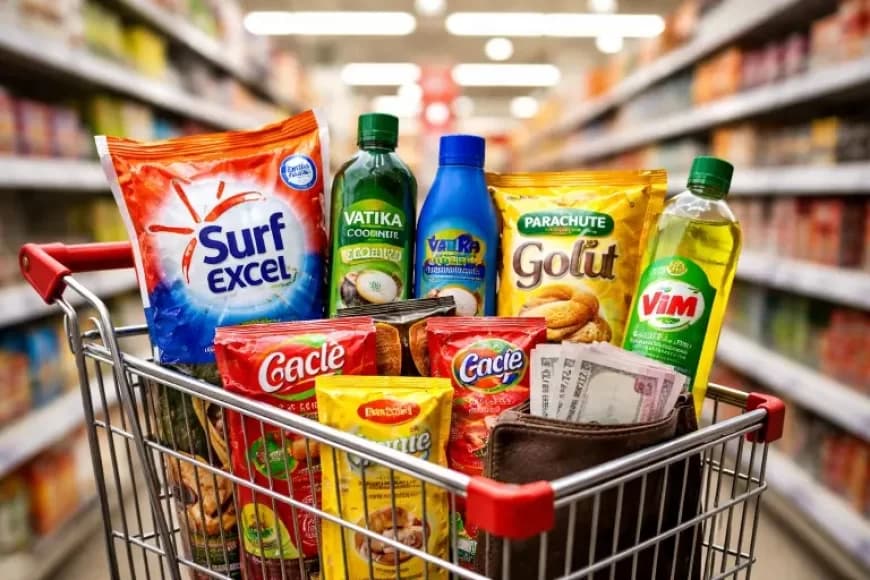
India’s FMCG price stability phase is officially fading. As of February 19, 2026, leading consumer goods companies have started implementing fresh price hikes of up to 5%, driven by rising commodity costs, crude-linked inputs, and a weaker rupee.
From detergents and soaps to hair oils and breakfast staples, Indian households are now seeing a clear increase in daily essential spending.
FMCG Price Hike 2026: What’s Driving the Sudden Rise?
After months of limited price movement following GST-related adjustments last year, major FMCG players are now shifting to margin protection mode. Industry analysts point to multiple cost pressures converging at the same time.
Commodity Inflation Hits Raw Material Costs Hard
One of the biggest triggers is the sharp rise in key commodities used in everyday products.
Coconut Oil Prices Soar
Coconut oil, a critical ingredient in India’s hair oil segment, has reportedly seen a massive jump over the past year. This has directly impacted manufacturers of popular hair care products.
Crude Oil Surge Raises Packaging and Chemical Costs
A rise in global crude prices has increased the cost of petroleum-based ingredients such as:
surfactants (used in detergents and shampoos)
liquid paraffin (used in soaps and personal care)
packaging materials (plastic-based inputs)
This is now reflecting in higher costs for home care and cleaning categories.
Rupee Weakness Adds Pressure on Imported Ingredients
The weakening rupee is also playing a major role in pushing prices higher.
With the Indian currency touching near record lows against the US dollar, imported ingredients such as:
oats and grains
almonds and nuts
specialty chemicals
food additives
have become significantly more expensive, impacting both packaged foods and health-focused breakfast brands.
Why Companies Delayed Price Hikes Until Now
Many FMCG companies were cautious after the GST cuts in 2025, as aggressive pricing could have attracted regulatory or consumer backlash.
However, with that adjustment phase now over, companies are increasingly exercising pricing flexibility to protect profitability and manage rising input costs.
Top FMCG Companies Increasing Prices in India (February 2026 Update)
Several leading FMCG giants have already confirmed selective hikes across product categories.
Hindustan Unilever (HUL)
HUL is reportedly raising prices in its Home Care portfolio, impacting widely-used brands such as:
Surf Excel
Rin
Vim
Domex
This move is expected to influence detergent and cleaning product pricing across the market.
Dabur India
Dabur has implemented a price increase of around 2% for the current quarter, with indications of more revisions depending on commodity trends. Key brands impacted include:
Vatika Hair Oil
Real Fruit Juice
Marico
Marico is facing strong cost pressure due to coconut oil inflation. Its core product category, especially:
Parachute Coconut Oil
has seen significant pricing changes.
Tata Consumer Products
Tata Consumer has introduced a selective uptick, particularly in:
Tata Tea
with pricing adjustments depending on region and variant.
Bagrry’s
Breakfast cereal brands are also reacting to rising imported ingredient costs. Bagrry’s has made marginal increases on select packs across:
oats
muesli
breakfast cereals
Which FMCG Products Will Become Costlier for Consumers?
Consumers are expected to feel the impact most in categories linked to crude oil and edible oils.
1. Detergents and Cleaning Products
This includes:
laundry detergents
dishwash bars
liquid cleaners
Crude-linked chemicals and surfactants are driving costs higher.
2. Personal Care Products
Products likely to see continued hikes include:
hair oils
soaps
shampoos
Coconut oil and palm oil inflation are major reasons behind this trend.
3. Packaged Food and Snacks
Packaged food makers are dealing with higher costs of imported ingredients and packaging, affecting:
biscuits
chocolates
noodles
4. Breakfast Essentials
This category is particularly impacted due to imports. Items include:
oats
cereals
muesli
nut-based breakfast foods
Consumer Impact: Why Household Budgets Are Under Pressure
FMCG companies have shown healthy revenue growth recently, but their margins have tightened due to input inflation.
To maintain profitability, companies are now passing part of the cost burden to consumers. This shift could lead to a rise in monthly grocery spending, especially for middle-class households dependent on packaged essentials.
Shrinkflation May Return if Inflation Persists
Experts warn that if commodity prices remain elevated, FMCG brands may choose shrinkflation as the next step—where product prices remain unchanged but pack sizes are reduced.
This trend has been used frequently in the past during high inflation periods, especially in snacks, biscuits, soaps, and detergents.
Will FMCG Prices Rise Again in 2026?
The direction of FMCG pricing in the coming months will depend largely on:
crude oil movement
edible oil supply trends
rupee-dollar exchange rate stability
global commodity inflation
If these factors do not ease, another round of price revisions could follow in mid-2026, especially in home care and personal care categories.
FAQs: FMCG Price Hike in India (2026)
Q1. Why are FMCG companies increasing prices in February 2026?
FMCG firms are raising prices due to rising raw material costs, higher crude oil-linked inputs, and the rupee weakening against the dollar, making imports more expensive.
Q2. Which FMCG brands are affected by the latest price hike?
Brands expected to see price increases include Surf Excel, Rin, Vim, Domex, Vatika Hair Oil, Real Juice, Parachute Coconut Oil, Tata Tea, and select oats and cereal packs.
Q3. How much will FMCG product prices increase in 2026?
Most companies are pushing price hikes in the range of 2% to 5%, depending on the product category and raw material exposure.
Q4. Which product categories will become costlier for consumers?
The most affected categories include detergents, cleaning products, soaps, hair oils, packaged foods, biscuits, chocolates, oats, and breakfast cereals.
Q5. What is shrinkflation and will it happen again in India?
Shrinkflation is when product pack sizes are reduced while prices remain the same. Analysts believe it could return if commodity inflation continues through 2026.