
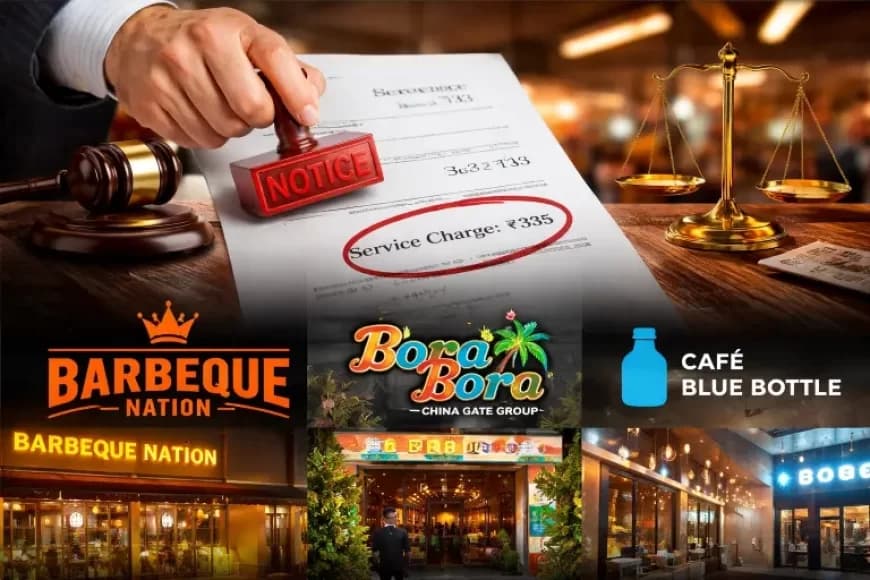
India’s restaurant industry is facing fresh regulatory heat as the Central Consumer Protection Authority (CCPA) intensifies enforcement against illegal service charges. Following a major Delhi High Court ruling in March 2025, the government has now shifted from advisories to direct penalties and refund orders as of early 2026.
The latest crackdown signals a major change in how restaurants across India can charge customers, especially in billing and POS software practices.
CCPA Service Charge Crackdown: What Has Changed in 2026?
The key turning point came after the Delhi High Court’s March 28, 2025 ruling, which stated that mandatory service charge collection is “contrary to law.”
Since then, the CCPA has escalated action, and by February 2026, enforcement has moved into an aggressive phase involving:
Direct notices to restaurant chains
Refund orders for customers
Monetary penalties
Instructions to modify billing systems
This crackdown is part of a wider push to stop what the authority calls unfair trade practices in restaurant billing.
CCPA Takes Suo Motu Action Against Multiple Restaurant Chains
According to recent developments, the CCPA has initiated suo motu proceedings against 27 restaurant brands and outlets across different Indian cities.
This indicates that the regulator is no longer waiting for consumer complaints alone, but proactively investigating restaurant billing practices.
Key Rules Restaurants Must Follow on Service Charges
The CCPA has reinforced multiple consumer protection rules, making it clear that service charges cannot be treated like mandatory taxes.
1. Service Charge Cannot Be Automatically Added
Restaurants are not allowed to add a service charge by default in the bill.
This means the bill should not generate a pre-filled service charge amount unless the customer chooses to pay it.
2. No Alternative Names Allowed
Restaurants also cannot rename service charges to avoid scrutiny.
Common misleading labels under observation include:
“Staff Welfare Fund”
“Service Fee”
“Hospitality Charge”
“Convenience Charge”
The CCPA has clarified that such renaming will still be treated as a service charge in disguise.
3. Service Charge Must Be Clearly Voluntary
Restaurants must inform customers clearly that service charges are optional and voluntary.
The regulator has also emphasized that the customer should not feel pressured into paying it.
4. Restaurants Cannot Deny Service for Refusing Service Charge
One of the strongest consumer rights reinforced is that restaurants cannot refuse entry, seating, or service if a customer declines to pay a service charge.
Any denial could be treated as an unfair trade practice.
5. GST on Illegal Service Charge Can Trigger Further Action
Another critical point is the GST aspect.
If the service charge is added unlawfully, authorities argue it cannot be treated as a legitimate “service” charge. This means applying GST on such charges may become a further compliance risk for restaurants.
Major Brands Under CCPA Scanner (2026 Enforcement Actions)
Recent enforcement in January–February 2026 has reportedly included action against well-known brands.
Restaurants and Outlets Named in Recent Cases
Some of the highlighted enforcement cases include:
Barbeque Nation: Pulled up for adding service charge on a bill, including a specific charge reportedly around ₹335.
Bora Bora (China Gate Group), Mumbai: Penalized for alleged unfair billing practices involving forced service charges.
Café Blue Bottle, Patna: Ordered to refund service charge amounts and faced additional penalty directions.
Other outlets across cities: Issued show-cause notices and asked to update billing systems.
These cases show that the crackdown is not limited to small restaurants, but includes large brands and premium dining outlets.
Restaurants Updating POS Software to Avoid Penalties
A major industry response has been visible in billing system upgrades.
Many restaurants are now modifying their POS (Point of Sale) software so that:
the service charge column remains blank by default
it becomes an optional editable field
staff cannot auto-add it without customer approval
This shift suggests that the enforcement is impacting not only billing practices but also restaurant technology and compliance systems.
What Consumers Should Do If a Service Charge Appears on the Bill
Consumers now have clear legal backing to challenge service charges if they are applied unfairly.
Step 1: Ask for Immediate Removal
If a service charge is added automatically, customers can request staff to remove it from the bill.
Step 2: File a Complaint if the Restaurant Refuses
If a restaurant refuses to remove the charge, consumers can report the issue through:
National Consumer Helpline (NCH) – 1915
NCH mobile app
e-Daakhil consumer portal
Direct complaint email to CCPA
This is expected to increase consumer reporting and force stronger compliance.
Why Restaurants Defend Service Charges: The Staff Income Argument
Many restaurants argue that service charges help maintain fair income distribution among staff, especially those who do not receive direct tips, such as:
kitchen helpers
dishwashers
junior cooks
cleaning staff
Since tips often go to front-end service staff, restaurants claim service charges ensure a more structured staff welfare pool.
The Emerging “AOV Trap” Trend: Menu Prices May Rise Next
A growing trend worth tracking is what industry insiders call the “AOV Trap” (Average Order Value Trap).
As service charges become harder to enforce, restaurants may start adjusting strategy by:
increasing menu prices by 5% to 10%
bundling costs into food pricing instead of billing add-ons
positioning higher pricing as “inclusive hospitality cost”
This could lead to a new consumer debate—whether customers prefer optional charges or higher menu pricing.
The CCPA’s latest enforcement drive marks a major turning point for restaurant billing culture in India. With the Delhi High Court ruling setting the legal direction, the regulator has made it clear that service charges cannot be treated as mandatory payments.
Going forward, restaurants will likely focus on POS compliance and pricing adjustments, while consumers may become more aware and more willing to challenge unfair charges. The next big shift could be a gradual rise in menu prices as brands try to recover costs legally.
FAQ: CCPA Service Charge Rules in India (2026)
Q1. Is service charge legal in restaurants in India?
Yes, service charge is allowed only if it is voluntary and optional. Restaurants cannot add it automatically or force customers to pay.
Q2. Can restaurants refuse service if I don’t pay service charge?
No. Under CCPA guidelines, restaurants cannot deny entry, seating, or service if a customer refuses to pay a service charge.
Q3. What should I do if service charge is added automatically to my bill?
You should immediately ask the restaurant staff to remove it. If they refuse, you can file a complaint through NCH (1915) or the e-Daakhil portal.
Q4. Can restaurants rename service charge as staff welfare fund or service fee?
No. The CCPA has clarified that restaurants cannot use alternative names like “staff welfare fund” or “service fee” to collect service charges indirectly.
Q5. Will restaurant food prices increase after the service charge crackdown?
Possibly yes. Many experts believe restaurants may increase menu prices by 5% to 10% to recover costs that were earlier collected through service charges.