
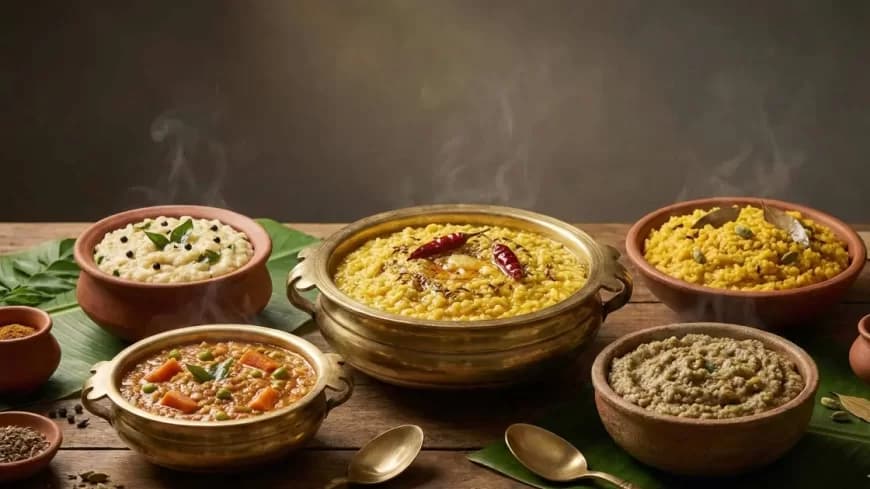
Khichdi is often called India’s comfort food—but nutrition experts say it is also one of the country’s smartest traditional meals. Every regional version is built around local health needs, seasonal challenges, and digestive balance. A closer look reveals that khichdi across India is not just cooked for taste, but for healing, strength, and sustenance.
Why Khichdi Is Considered a Complete Meal
Across regions, khichdi works because of one simple formula:
Grain = Energy (carbohydrates)
Dal/Legume = Protein
Ghee/Spices = Digestion & nutrient absorption
Ayurveda and modern nutrition agree that this combination makes khichdi:
Easy to digest
Gut-friendly
Suitable for all age groups
Ideal during illness, recovery, or seasonal transitions
Health Benefits of India’s Major Khichdi Varieties
Ven Pongal (Tamil Nadu): Gentle on the Gut
Key Ingredients: Rice, moong dal, black pepper, ghee, cumin
Health Benefits:
Moong dal is low in fat and easy to digest
Black pepper improves metabolism and gut health
Ghee helps absorb fat-soluble vitamins
Ideal for people with weak digestion or acidity
Why It Matters:Ven Pongal is designed for humid climates and early mornings. It provides steady energy without overloading the stomach, making it a preferred breakfast and hospital diet.
Bisi Bele Bath (Karnataka): Immunity & Energy Booster
Key Ingredients: Rice, toor dal, vegetables, tamarind, spices
Health Benefits:
High protein from toor dal
Vegetables add fibre and micronutrients
Tamarind aids digestion and provides antioxidants
Spices improve immunity and circulation
Why It Matters:This dish is a one-pot balanced meal. It supports active lifestyles and long working hours, common in urban Karnataka.
Bhoger Khichuri (West Bengal): Satvik & Anti-Inflammatory
Key Ingredients: Fragrant rice, roasted moong dal, ginger, whole spices
Health Benefits:
Roasting dal improves digestibility
Ginger reduces inflammation and bloating
No onion or garlic keeps it light and calming
Helps during fasting, illness, or detox
Why It Matters:Cooked during festivals, this khichdi supports mental calmness and digestive balance, aligning with religious and seasonal fasting traditions.
Bajra Khichdi (Haryana): Winter Strength Food
Key Ingredients: Bajra (pearl millet), moong dal, ghee, butter
Health Benefits:
Bajra is rich in iron, magnesium, and fibre
Generates body heat in cold weather
Helps regulate blood sugar
Keeps you full for longer hours
Why It Matters:This khichdi is built for harsh winters and physical labour, making it a staple in rural North India.
Health Logic Behind Regional Khichdis
Himalayan & Northern Regions
Use whole legumes and millets
Focus on warmth, endurance, and protein
Ideal for cold climates and hard physical work
Western India
Lighter khichdis for digestion
Often paired with kadhi for probiotics
Suitable for hot and dry climates
Eastern India
Minimal spices, roasted ingredients
Focus on digestion, ritual purity, and balance
Southern India
Pepper, cumin, and ghee for gut health
Rice-based for easy digestion in humid weather
Why Nutritionists Are Rediscovering Khichdi
Modern food experts now recommend khichdi for:
Gut reset diets
Post-illness recovery
Children and elderly nutrition
Weight management when portion-controlled
Its flexibility allows customization for diabetes, gluten sensitivity, and protein needs.
Khichdi is not just comfort food—it is India’s original functional meal. Every regional version reflects centuries of nutritional intelligence shaped by climate, crops, and culture. As modern diets move back toward simple, whole foods, khichdi stands out as a timeless example of how tradition and health can coexist on one plate.
FAQs
Q1. Is khichdi healthy for daily consumption?Yes, when made with balanced portions of grains, lentils, and vegetables.
Q2. Which khichdi is best for digestion?Moong dal–based khichdis like Pongal or plain moong khichdi are easiest to digest.
Q3. Is khichdi good for weight loss?Yes, if cooked with minimal ghee and more vegetables.
Q4. Which khichdi is best for winters?Millet-based versions like Bajra Khichdi help generate body heat.
Q5. Can diabetics eat khichdi?Yes, especially millet or dal-heavy versions with controlled rice portions.