

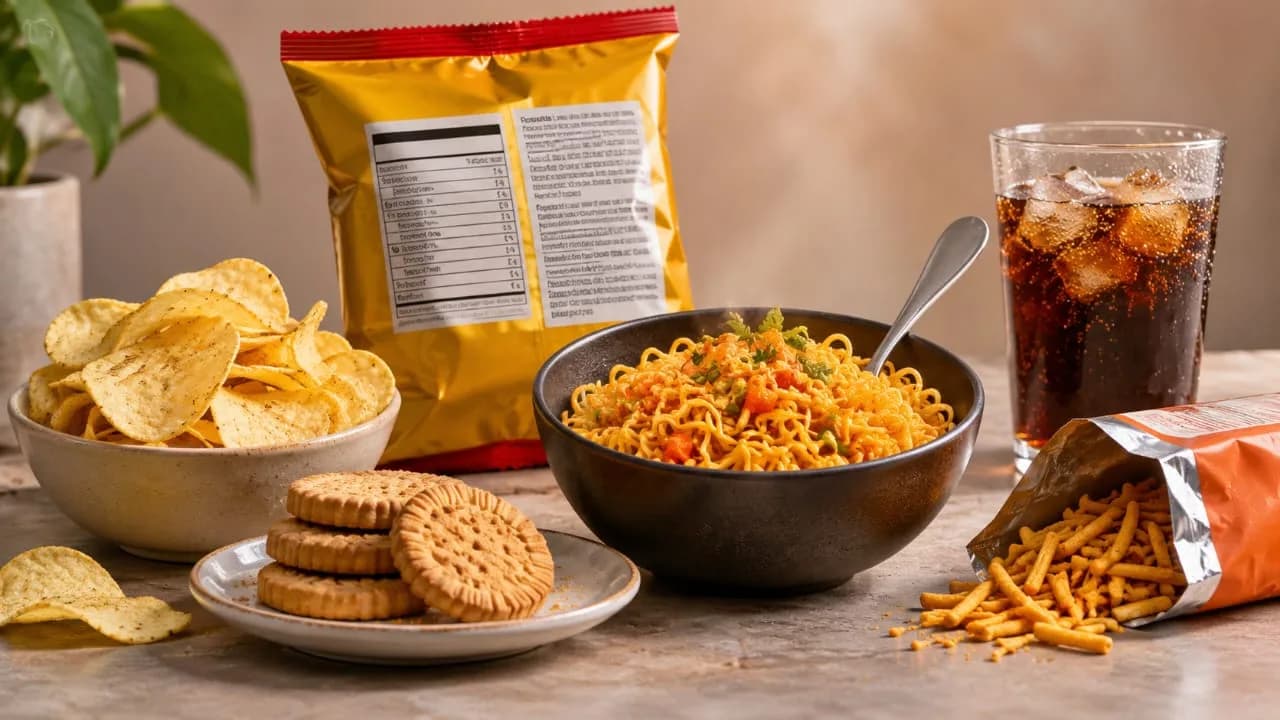
What Are We Really Eating? The Untold Story of Package Foods in India
From a packet of crispy potato wafers during an evening break to instant noodles after a long day, packaged snacks have become a regular part of modern Indian life. They are affordable, easily available and marketed in attractive packaging that makes them difficult to resist.
But have we ever stopped to ask what goes into these products? Do we actually read the ingredients printed on the back of the packet, or do we simply trust the brand and enjoy the taste?
Behind the colourful packaging and tempting advertisements lies an important question: Are our favourite snacks as harmless as they appear?
The Rise of Packaged Food Culture in India
The Rise of Packaged Food Culture in India
What Makes These Snacks Different?
Not every packaged food is unhealthy. However, some highly processed products contain excessive amounts of salt, added sugar and unhealthy fats while providing limited nutritional value.
Consider some common examples:
- Potato wafers and chips: Often contain considerable amounts of salt and fat.
- Instant noodles: Some varieties can be high in sodium.
- Packaged biscuits: Certain varieties contain significant amounts of added sugar and fat.
- Sugary beverages: Can add substantial amounts of free sugar to daily diets.
- Flavoured snacks: May contain flavour enhancers and other additives.
The important thing is not to judge a food simply by its packaging or popularity, but to understand its nutritional composition.
The Marketing Behind Our Favourite Foods
Have you ever noticed how food advertisements use words such as "crispy", "tasty", "energy", "natural" and "delicious"?
Brands often use attractive colours, celebrity endorsements, cartoon characters and promotional offers to make products appealing, especially to younger consumers.
While advertising is an important part of the food industry, consumers should remember that attractive packaging does not automatically mean better nutritional quality.
A product's actual ingredients and nutritional information matter more than its marketing.
The Food Label: A Small Detail That Matters
One of the simplest ways to become a smarter consumer is to read food labels.
Before buying a packaged product, check:
1. Ingredients: Ingredients are generally listed in descending order by weight.
2. Sugar: Check how much sugar the product contains.
3. Sodium: High sodium intake can negatively affect blood pressure.
4. Total fat and saturated fat: Compare nutritional values between products.
5. Serving size: Understand whether the nutritional information refers to the entire packet or just one serving.
6. Expiry date: Always check the product's date and storage instructions.
The Food Safety and Standards Authority of India (FSSAI) also provides consumer guidance on understanding food labels.
What Does Science Say?
The World Health Organization (WHO) recommends limiting free sugar consumption to less than 10% of total daily energy intake and reducing salt consumption.
WHO also recommends a balanced diet containing fruits, vegetables, whole grains, pulses and other nutrient-rich foods.
These recommendations highlight an important message: healthy eating is not about completely avoiding your favourite snacks; it is about making informed choices and maintaining balance.
Can We Make Better Food Choices?
Absolutely! Small changes in everyday habits can make a meaningful difference.
- Choose fresh fruits instead of sugary snacks more often.
- Prefer homemade snacks when possible.
- Compare nutrition labels before purchasing packaged products.
- Avoid making sugary beverages a daily habit.
- Maintain variety and balance in everyday meals.
- Enjoy packaged snacks occasionally rather than relying on them as regular meals.
Think Before You Take Another Bite
Food is more than just taste. It plays an important role in our health, lifestyle and overall well-being.
Packaged foods are not automatically bad, and consumers do not need to eliminate every favourite snack from their lives. However, understanding what we eat is essential.
The next time you pick up a packet of wafers, biscuits or instant noodles, take a moment to turn it around and read the label.
Because sometimes, the most important information about your favourite food is not written on the front of the packet, but hidden in plain sight on the back.