

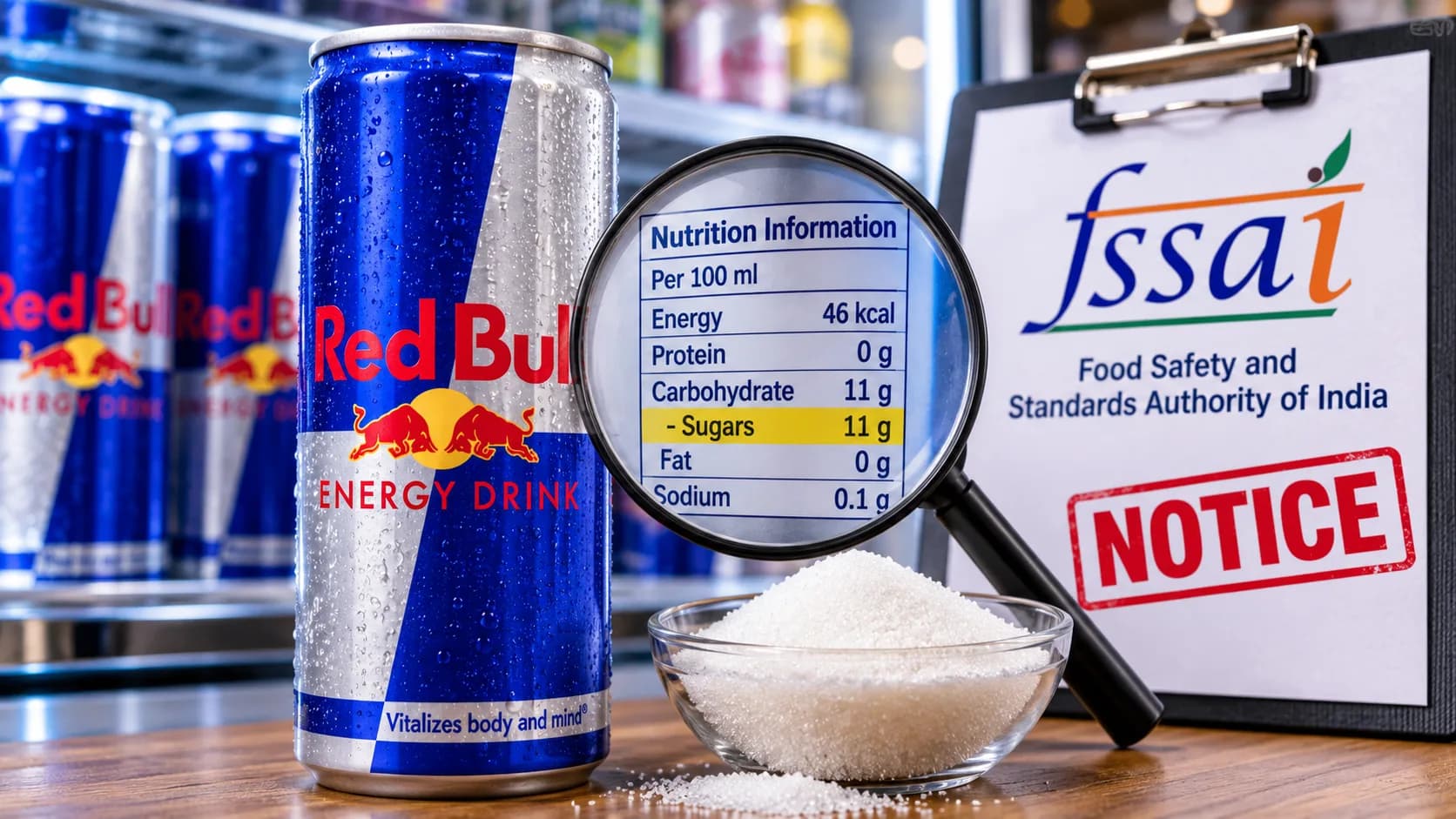
India’s Food Safety and Standards Authority (FSSAI) has raised concerns over the nutritional composition and marketing classification of Red Bull, questioning whether the beverage should continue to be labelled as an “energy drink”.
According to a report by Reuters published on November 16, FSSAI has issued a notice giving Red Bull seven days to explain why the product should not be prohibited from using the energy drink label. The regulator has questioned whether the beverage's energy-related marketing claims are adequately supported by scientific and regulatory evidence.
Concerns Over High Sugar Content
One of the major concerns highlighted by the regulator is the drink's added-sugar content. According to the notice reviewed by Reuters, the beverage contains approximately 11 grams of sugar per 100 ml.
This means that consuming 500 ml could result in an intake of approximately 55 grams of sugar. The regulator noted that this exceeds the generally recommended daily limit of 50 grams.
FSSAI has also questioned whether the product's consumption advisory could lead consumers to believe that drinking up to 500 ml daily is appropriate.
Energy Drink Classification Under Regulatory Scrutiny
The latest notice is part of a wider regulatory dispute concerning the classification and labelling of energy drinks in India.
The issue began in June 2026, when restrictions were introduced on the use of the energy drink label. Several beverage companies, including Red Bull, PepsiCo, Monster Beverage and Reliance Consumer, challenged aspects of the regulatory action.
Red Bull obtained temporary court protection allowing it to continue using the energy drink label, while the regulatory position for competing companies remained different.
FSSAI has subsequently asked the Delhi High Court to review the temporary protection granted to Red Bull. The matter is scheduled to be heard in January 2027.
What This Means for Consumers
The development highlights the importance of transparent food and beverage labelling. Consumers increasingly rely on product descriptions and marketing claims when choosing packaged drinks.
High sugar content, caffeine levels and other ingredients are important factors to consider when evaluating energy drinks. Clear nutritional information can help consumers make more informed purchasing decisions.
The latest notice does not mean that Red Bull has already been banned in India. The company has been asked to provide an explanation within seven days, and further regulatory or legal developments will determine the next steps.
The case could also influence how energy drinks are classified, marketed and labelled in India's rapidly growing beverage industry.