


Vaishali and Roopali Licence Suspensions: What the Inspections Show
A freezer beside a toilet wall
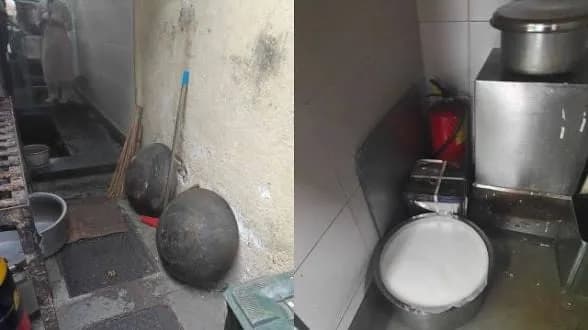
On 13 November 2026, a food safety officer inspected Hotel Vaishali on Fergusson College Road, Pune. According to reports of the FDA's findings, a freezer holding raw ingredients stood beside the women's washroom, and the griddle for dosa and uttapam stood beside the men's. The hotel scored 58 out of 98 and was classed "non-compliant" (Free Press Journal).
The Maharashtra Food and Drug Administration then suspended the food-business licences of Vaishali and of Hotel Roopali, also on Fergusson College Road. Both may not sell food, take parcel orders or deliver until they correct the defects, pass a fresh inspection and receive written permission (Pune Pulse).
This is a suspension, not a cancellation, and not a finding of illness or criminal guilt. No report we read says any food was tested or that any customer fell ill. What the reports describe are observed conditions and risks. The question for readers is what those conditions mean and what the rules require.
What the FDA reportedly found
Hotel Vaishali. Beyond the layout, reports say washed utensils sat on a table outside the washroom; boiled potatoes, cooked rice and other prepared food stood uncovered in an open corridor; idli and dosa batter was prepared in an unsafe area; and raw chopped vegetables were stored above ready-to-eat food. The kitchen reportedly lacked insect-proof doors. Records for temperature monitoring and an updated drinking-water test were unavailable, and no valid FoSTaC-trained supervisor was present (Punekar News, Pune Pulse). The hotel had been inspected in June 2026 and given an improvement notice; the FDA says serious violations persisted. We have not seen that notice, so we cannot say which deficiencies it listed or whether these are the same ones.
Hotel Roopali. Reports say the kitchen was open and poorly protected from dust, dirt and insects; water was stagnant; cleaning and waste disposal were inadequate; raw, semi-processed and cooked foods were uncovered, and some lacked labels or "use by" dates; raw and cooked food were not separated; and temperature records, a Food Safety Management System plan, standard operating procedures and training records were missing. Its order was issued on 13 November after a hearing. No score and no earlier notice have been reported for Roopali.
The two cases are not identical. Vaishali's reported lapses lean on layout and a repeat inspection; Roopali's on protection, separation and missing paperwork. Reports also differ in small ways: one Marathi outlet says food was "not kept at proper temperatures", while others say only that records were missing. That is a difference between a condition and a document, and the orders themselves would settle it.
Why these lapses matter
Food-safety risk is a chain, and each reported link has a plain reason behind it. The explanations below are general principles; before publication they should be tied to FSSAI guidance and a named food-safety scientist.
Raw above cooked. Raw vegetables, meat and unwashed produce can carry microbes. Stored above ready-to-eat food, drips and handling can move them onto food that will not be cooked again.
Open storage of cooked food. Cooked rice and boiled potatoes are moist, starchy foods. Left uncovered and unmonitored, they are exposed to dust, pests and handling, and to time and temperature that let microbes multiply. This is why covers, labels and temperature records are standard controls.
Batter prepared in an unprotected area. Fermented batter is handled by hand and then cooked lightly or not for long; where it is prepared matters.
Pests, standing water and waste. Insects and rodents enter through open doors and drains. Stagnant water and poorly handled waste attract them.
Food near toilets. Proximity does not prove contamination. The concern is physical separation, handwashing access and the risk of splash, traffic and unclean hands. That is why rules ask for separate, adequate facilities, and why the FDA treats layout as a finding.
A reported violation is not a confirmed contamination event, and neither is a laboratory-confirmed unsafe food. The suspension rests on the first.
What the law requires
The reports do not name the provision used. The legal frame below comes from a law-firm summary and should be checked against the Act and the orders.
Section 32 of the Food Safety and Standards Act, 2006 lets a Designated Officer issue an improvement notice when a business does not comply, and allows suspension or cancellation if it fails to fix matters in the period given. A proviso to Section 32(3), with Regulation 2.1.8 of the 2011 Licensing and Registration Regulations, lets the officer suspend a licence at once in the interest of public health, recording reasons in writing, as summarised by King Stubb & Kasiva. The same summary reports that the Bombay High Court, in a 2026 case, quashed an immediate suspension after later inspections showed substantial rectification, stressed proportionality, and left open whether an improvement notice must come first. We have not read the judgment.
Schedule 4 sets hygiene requirements. A secondary summary of its Part II lists separate lavatories for men and women, premises separated from any privy or drain, insect-proof screens and self-closing doors, covers on food containers, covered waste bins, and potable water (TaxClue, 30 Sep 2026). That page does not cover temperature control, FoSTaC supervisors or drinking-water testing, which the FDA findings cite. Those requirements need to be quoted from FSSAI's own text.
How often are restaurants inspected?
The broader record is a partial picture. Between 25 May and 31 July 2026, the Maharashtra FDA reported 3,137 food establishments inspected, with 2,373 needing no corrective action, 764 improvement notices and 165 suspended licences, the Free Press Journal reported on 6 August 2026, attributing the figures to the FDA (report). That covers all food outlets, not only restaurants, and not only Pune.
What we could not find: the number of licensed restaurants in Maharashtra or Pune, the number of food safety officers, inspection frequency for popular restaurants, how repeat violations are tracked, and any public compliance database or published inspection reports. Without a total of licensed establishments, we do not calculate an enforcement rate. The gap is itself a finding on transparency, pending an FDA response.
After a suspension
Per the reports, both restaurants must fix the defects, undergo a fresh FDA inspection and obtain written permission before resuming. None of the reports states how long this takes or whether samples were collected.
What customers can check
Diners cannot inspect a kitchen, and a clean dining room proves little about it. Visible clues are modest: whether the FSSAI licence is displayed, whether staff handle food with clean hands, and whether serving utensils are clean. Complaints can go to the state FDA or through FSSAI's Food Safety Connect; confirm the current channel before publishing. Include the restaurant's name and address, date and time, what you saw, and photos if safely taken. Report what you observed, not accusations.
The restaurants' side
No response from either restaurant appears in any report we read. We have not yet contacted them or the FDA; questions are in the right-of-reply section. This section should be completed before publication.
A reputation is not a certificate
Vaishali and Roopali are well-known names, and neither reputation nor decades of service is a hygiene record. The suspensions rest on what inspectors observed on one day, and on a repeat visit for Vaishali. The public still cannot easily see whether a favourite restaurant has been inspected before, what was found and how fast it was fixed. Until inspection results are visible, diners are asked to trust a name.