
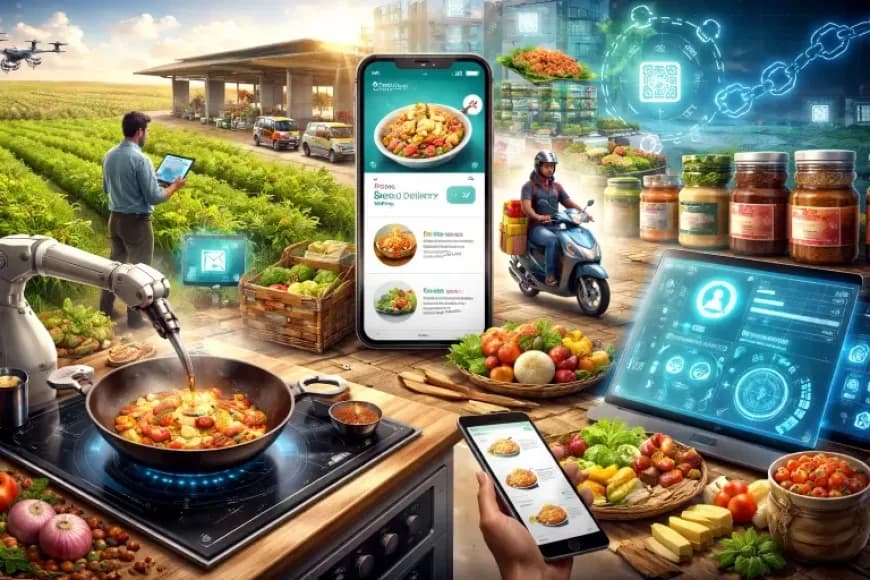
India’s food industry is no longer driven by taste alone.
In 2026, technology is becoming the secret ingredient behind faster deliveries, smarter kitchens, lower food waste, and better customer experiences.
From street-food-inspired cloud kitchens to large FMCG companies, AI and digital tools are reshaping how India eats, cooks, and does food business.
This shift is not futuristic anymore — it’s already happening.
AI Is Changing How India Orders and Eats Food
Think about how food apps today seem to “know” what you want to eat.
That’s AI at work.
Food platforms and restaurant brands are using AI to:
Recommend dishes based on past orders
Predict peak demand hours
Design smarter menus
Improve customer service through chatbots
For customers, this means faster service and personalised choices.
For food businesses, it means higher sales and fewer wrong decisions.
Smarter Supply Chains Are Tackling Food Waste
Food waste has always been a silent loss for India’s food sector.
Now, AI-powered supply chains are helping companies:
Predict demand more accurately
Track inventory in real time
Reduce overproduction
Optimise delivery routes
Less waste means lower costs, better margins, and more sustainable operations — a big win for both businesses and the environment.
Smart Kitchens Are the New Normal
Cloud kitchens and QSR brands are increasingly relying on automation and smart kitchen equipment.
These technologies help with:
Consistent taste across outlets
Faster food preparation
Reduced dependency on manual labour
Better hygiene and safety standards
As food brands expand to multiple cities, smart kitchens ensure quality never drops — even at scale.
Blockchain Is Building Trust in Food Brands
Consumers today ask important questions:
Where does my food come from?
Are ingredients genuine?
Is the label trustworthy?
Blockchain technology helps brands:
Track food from farm to fork
Ensure ingredient authenticity
Prevent food fraud
Build long-term consumer trust
Transparency is fast becoming a competitive advantage in the food business.
Technology Is Empowering Farmers Too
The food tech revolution is not limited to cities.
AI and agritech platforms are supporting farmers through:
Crop and yield prediction
Weather alerts
Quality assessment
Better access to markets and pricing data
A stronger farming ecosystem leads to a stronger, more reliable food supply chain.
Challenges Still Exist
Despite rapid growth, technology adoption comes with hurdles:
High costs for small restaurants
Limited digital skills
Data privacy concerns
Resistance to change in traditional setups
To truly transform India’s food industry, tech adoption must be affordable, inclusive, and practical.
What the Future Looks Like
Technology is not replacing India’s food culture — it’s strengthening it.
The future of India’s food industry belongs to brands that can balance:
Tradition with innovation
Taste with technology
Growth with sustainability
AI will not cook emotions — but it will help businesses serve them better.
Final Words
India’s food ecosystem is entering a smarter era. Whether you’re a restaurant owner, startup founder, FMCG professional, or food enthusiast, technology will shape how you grow, compete, and survive in the coming years.