
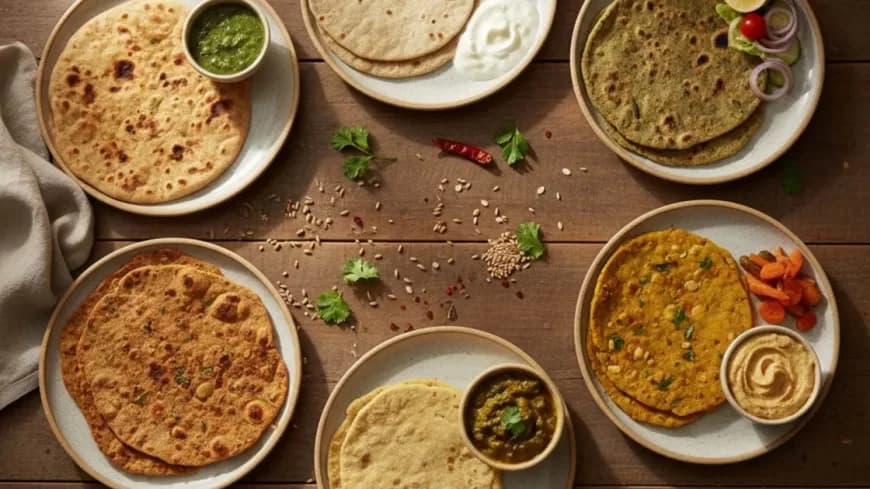
In India, roti is more than just food – it is a staple that has been part of daily meals for centuries. While wheat roti is the most common, several varieties such as jowar, bajra, ragi, oats, and besan rotis are gaining popularity due to their unique health benefits. Each type of roti contributes differently to nutrition, digestion, and overall wellness.
Health Benefits of Different Types of Roti
Wheat (Gehu) Roti
Wheat roti is widely consumed across India and is easy to digest. However, it can increase calorie intake and may not be ideal for people with high blood sugar or weight concerns.
Jowar Roti
Naturally gluten-free, jowar roti is an excellent option for those with gluten intolerance. It also supports weight management and helps regulate blood sugar levels.
Bajra Roti
Rich in calcium and iron, bajra roti strengthens bones and provides natural warmth to the body, making it particularly beneficial during winters.
Makka (Corn) Roti
Packed with iron and magnesium, makka roti improves digestion and provides essential nutrients that support energy levels.
Ragi (Finger Millet) Roti
High in calcium and protein, ragi roti is especially beneficial for bone development and is considered one of the best options for children.
Besan (Gram Flour) Roti
Rich in protein and fiber, besan roti keeps the stomach full for longer, reducing unnecessary snacking and aiding in weight management.
Oats Roti
Known for its cholesterol-lowering properties, oats roti is a good choice for heart health. Its high fiber content also supports digestion.
Why Choose Different Rotis?
Incorporating a variety of rotis into your diet ensures that your body receives diverse nutrients. Rotating between wheat, millets, and alternative flours can improve digestion, boost immunity, and help manage lifestyle diseases like diabetes and obesity.
Conclusion
From wheat to oats, every type of roti brings its own nutritional value. Choosing the right roti based on your health needs can significantly enhance your overall well-being. As dietary awareness grows, these traditional and modern alternatives are becoming an essential part of healthy Indian diets.
FAQs on Different Types of Roti
Q1. Which roti is best for weight loss?Jowar roti and besan roti are great choices as they are high in fiber, gluten-free, and keep you full for longer periods.
Q2. Is ragi roti good for children?Yes, ragi roti is rich in calcium and protein, making it excellent for bone development and growing kids.
Q3. Can diabetics eat wheat roti daily?While wheat roti is common, diabetics should limit consumption and switch to jowar, ragi, or oats roti for better blood sugar control.
Q4. Which roti helps in lowering cholesterol?Oats roti is known for its ability to reduce bad cholesterol levels and improve heart health.
Q5. Are millet-based rotis better than wheat rotis?Yes, millet rotis like jowar, bajra, and ragi are more nutrient-dense, gluten-free, and provide better benefits for digestion and overall health.