
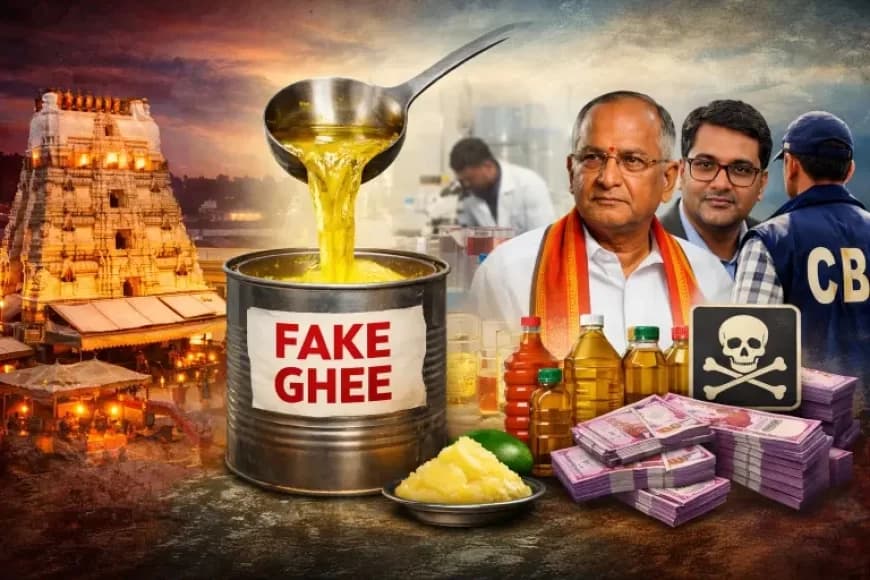
In one of the biggest food adulteration scandals linked to a religious institution, the CBI-led Special Investigation Team (SIT) has filed a final chargesheet in the Tirumala Tirupati Devasthanam (TTD) ghee adulteration case. The investigation uncovers large-scale supply of synthetic ghee to the Tirumala temple over several years, raising serious concerns over food safety, governance, and procurement oversight.
CBI Files Final Chargesheet in TTD Ghee Scam
In January 2026, the CBI-led SIT submitted its final chargesheet before the ACB Court in Nellore, naming 36 accused individuals in connection with the alleged adulteration and fraudulent supply of ghee to TTD.
The case relates to the procurement of ghee used for temple rituals and prasadam preparation between 2021 and 2024, a period during which investigators say genuine dairy procurement was completely bypassed.
₹250 Crore Worth of Synthetic Ghee Supplied to Temple
According to the SIT’s findings, nearly 68 lakh kilograms of synthetic or fake ghee were supplied to the Tirumala temple during the investigation period. The estimated value of the adulterated supply stands at approximately ₹250 crore.
The primary supplier, a dairy firm based in Uttarakhand, allegedly did not purchase any milk or butter during this entire period, indicating that the ghee supplied was not dairy-based at all.
How the Adulteration Was Carried Out
Use of Palm Oil and Chemical Additives
Investigators revealed that instead of pure cow ghee, a synthetic blend was prepared using:
Palm oil
Palm kernel oil
Industrial chemical additives
To replicate the aroma, taste, and laboratory parameters of genuine ghee, artificial flavouring compounds were added.
Role of Chemical Suppliers
A Delhi-based businessman has been identified as a key link in the supply chain, accused of providing acetic acid esters and artificial flavouring agents designed to manipulate lab test results and sensory checks.
Allegations Against TTD Officials and Experts
The chargesheet also names senior TTD officials and external dairy experts. Investigators allege that:
Fake quality certificates were issued
Adverse lab results were suppressed
Bribes and expensive gifts were accepted to clear substandard consignments
These actions allegedly allowed adulterated ghee to enter the temple supply chain despite repeated red flags.
NDDB Lab Report Exposed Serious Violations
A laboratory analysis conducted by the National Dairy Development Board (NDDB) in July 2024 played a crucial role in the probe.
Key Findings
S-Value recorded as low as 19.72, against the standard 98–104 for pure desi ghee
Presence of non-dairy fats, including:
Animal fats such as lard and beef tallow
Vegetable oils
Fish oil traces
Under ISO 17678 standards, S-4 values specifically indicate the presence of animal fats, further strengthening the case of severe adulteration.
Rejected Tankers Reintroduced Into Supply Chain
The SIT report notes that while most adulteration involved chemical sludge, some tankers containing animal fat were initially rejected but later reintroduced into the supply system, pointing to deliberate manipulation within the procurement process.
Why This Case Matters
The scandal has triggered nationwide debate on:
Food safety standards at religious institutions
Accountability in public procurement
Transparency in dairy supply chains
Given the scale and sensitivity of Tirumala temple operations, the case is being closely watched by regulators, devotees, and the food industry alike.
With the final chargesheet now filed, the case moves into the trial phase. Legal experts expect the proceedings to set a major precedent for food adulteration cases involving public and religious institutions. Authorities may also push for stricter auditing mechanisms and third-party testing for temple food supplies going forward.
Frequently Asked Questions (FAQ)
What is the TTD ghee adulteration case?
It is an alleged scam involving the supply of synthetic and adulterated ghee to the Tirumala Tirupati Devasthanam between 2021 and 2024.
How much fake ghee was supplied?
Around 68 lakh kilograms of synthetic ghee worth approximately ₹250 crore was allegedly supplied.
Who investigated the case?
The case was investigated by a CBI-led Special Investigation Team (SIT).
What did lab tests reveal?
NDDB lab tests found extremely low purity values and the presence of animal fats, vegetable oils, and chemical additives.
What happens next in the case?
The case will proceed to trial in the ACB Court, where evidence and witness testimonies will be examined.