
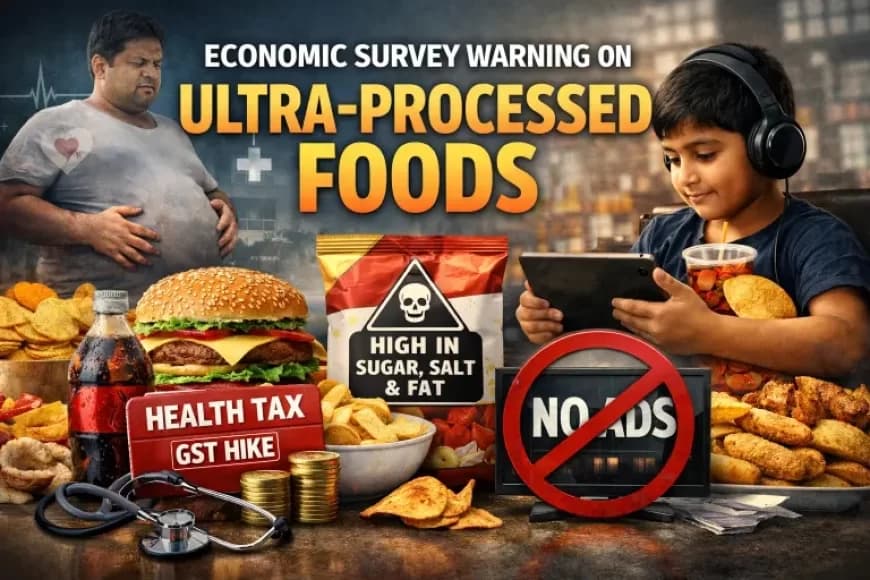
India’s rising consumption of ultra-processed foods (UPFs) has emerged as a serious public health concern, according to the latest Economic Survey 2025–26. The Survey links the rapid growth of packaged and highly processed foods to obesity, lifestyle diseases and long-term economic costs, especially among children and young adults.
The government has indicated that stronger policy intervention may be needed, including higher taxation, warning labels and tighter advertising controls.
Ultra-Processed Foods Consumption Rising Rapidly in India
The Economic Survey highlights that India is witnessing one of the fastest growth rates in ultra-processed food consumption globally. Sales of such products — including packaged snacks, sugary beverages, instant foods and ready-to-eat meals — have surged sharply over the last decade.
These foods are increasingly replacing traditional home-cooked diets, particularly in urban areas, driven by convenience, aggressive marketing and changing lifestyles.
Link Between UPFs and Obesity, Lifestyle Diseases
The Survey draws a clear connection between ultra-processed foods and the rise of non-communicable diseases (NCDs) such as obesity, diabetes, cardiovascular disorders and metabolic illnesses.
According to the report:
UPFs are typically high in sugar, salt and unhealthy fats
They offer low nutritional value while increasing calorie intake
Regular consumption raises long-term health risks
The Survey warns that poor dietary habits could eventually impact workforce productivity and increase healthcare expenditure.
Children and Youth Most at Risk
A key concern raised is the growing exposure of children to unhealthy food environments. The Survey notes that ultra-processed foods are widely marketed to younger audiences through television, digital platforms and social media.
Rising childhood obesity levels are described as a long-term threat, with unhealthy eating habits forming early and continuing into adulthood.
Economic Survey Suggests Tax and Regulatory Measures
To curb consumption, the Survey outlines several policy options:
Higher Tax or Health Levy on Ultra-Processed Foods
The report suggests placing ultra-processed foods in higher tax brackets or imposing a dedicated health tax to discourage excessive consumption. This could involve changes under the Goods and Services Tax (GST) framework.
Mandatory Warning Labels on Packaging
Clear front-of-pack warning labels are proposed to help consumers make informed choices. The Survey indicates that stronger labeling norms could highlight high sugar, salt or fat content.
These measures may be developed in coordination with food regulators such as Food Safety and Standards Authority of India.
Proposal to Restrict Advertising of Ultra-Processed Foods
Another significant recommendation is the regulation of food advertising, particularly content targeting children. The Survey supports tighter controls on when and how ultra-processed foods can be promoted across media platforms.
The objective is to reduce exposure during peak viewing hours and limit persuasive marketing aimed at young consumers.
Public Health and Economic Impact
The Economic Survey frames the issue not just as a health challenge but as an economic one. Rising diet-related illnesses could place a heavy burden on public healthcare systems and reduce overall economic productivity in the long run.
Improving dietary quality, the report suggests, is an investment in human capital and sustainable growth.
The Economic Survey 2025–26 signals a shift toward stronger scrutiny of ultra-processed foods in India. While no immediate policy changes have been announced, the recommendations indicate that taxation, labeling and advertising regulations could soon become part of broader public health reforms.
Industry stakeholders, consumers and policymakers are likely to witness increased debate and regulatory action around food quality and nutrition in the near future.
FAQs on Ultra-Processed Foods and Economic Survey
What are ultra-processed foods?
Ultra-processed foods are industrial formulations made using refined ingredients, additives, preservatives and artificial flavors, with minimal whole food content.
Why has the Economic Survey raised concerns about UPFs?
The Survey links UPFs to rising obesity, diabetes and lifestyle diseases, which pose long-term risks to public health and economic productivity.
Does the Economic Survey propose higher taxes on ultra-processed foods?
Yes, it suggests options such as higher GST rates or a separate health tax to discourage consumption.
Will advertising of ultra-processed foods be restricted?
The Survey recommends tighter controls on food advertising, especially to protect children from aggressive marketing.
Are warning labels on packaged foods being considered?
Yes, clearer front-of-pack warning labels are suggested to help consumers identify unhealthy food products.