
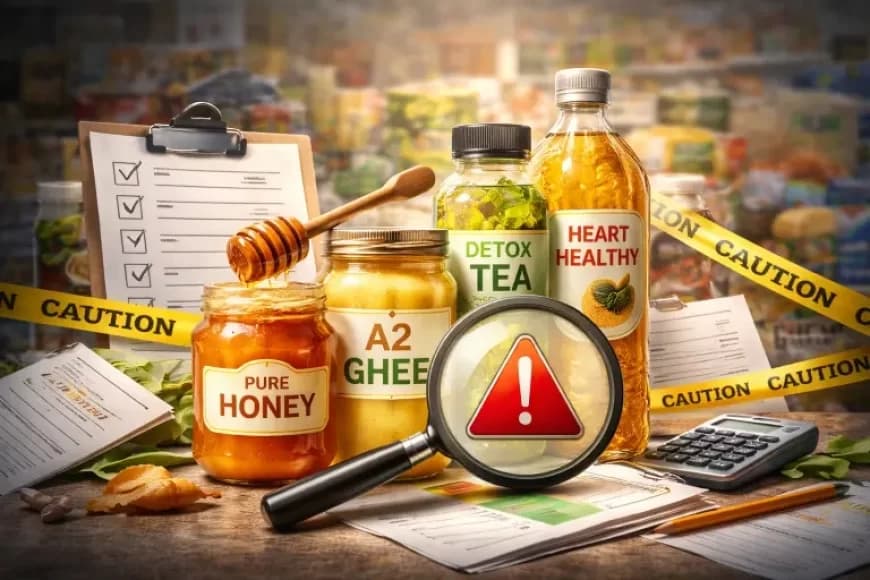
India’s packaged food industry is facing a serious labeling credibility crisis. A new independent audit by LabelBlind®, an AI-led food labeling compliance platform, reveals that one in three labeling claims on packaged foods may not meet regulatory standards.
The study comes at a time when FSSAI and ASCI are tightening enforcement on misleading health and nutrition claims, making food labeling a high-risk compliance area for FMCG brands.
LabelBlind Study Analyzes Over 5,000 Claims Across Indian Packaged Foods
According to the “LabelBlind® Study of Labelling Claims in India’s Packaged Food Industry 2025–26”, the platform evaluated:
5,058 labeling claims
Across 586 products
From 227 brands
The report is being seen as one of the most detailed independent assessments of food label compliance in India, especially in categories that consumers traditionally associate with purity and wellness.
33.6% Label Claims Found Problematic: Key Compliance Numbers
The report highlights a large compliance gap in packaged food marketing.
Key findings include:
33.6% overall claims failed
21.3% claims were directly non-compliant with FSSAI/ASCI guidelines
12.3% claims lacked adequate substantiation, meaning brands could not provide proper scientific proof or verification
This indicates that the issue is not limited to minor formatting mistakes, but includes serious claim-based violations involving health, nutrition, and purity messaging.
Traditional Kitchen Staples Are the Biggest Violators, Not Modern Products
Interestingly, the report points out that categories considered “trusted” in Indian households were the worst offenders.
The “Tradition Trap” in Food Marketing
Many brands are using emotional and cultural narratives like:
“pure”
“traditional”
“ancient method”
“immunity booster”
“Ayurvedic”
However, regulatory standards require specific definitions and evidence, and the study suggests many such claims fail technical compliance checks.
This trend shows a widening gap between consumer perception and regulatory reality.
Worst Categories for Misleading Health and Nutrition Claims
The report ranked categories based on failure rate of health/nutrition-related claims.
Category-wise failure rates:
Honey (80% failure rate)
Honey products showed the highest level of violations. Common issues included:
“immunity boosting” claims without proof
“weight loss” marketing
lack of verification for “pure,” “raw,” or “unprocessed” claims
Ghee (65.5% failure rate)
Ghee brands frequently promoted claims related to:
heart health benefits
A2 superiority
“Bilona method” claims without supporting certification
Tea & Infusions (54.3% failure rate)
Tea and herbal infusion brands often made exaggerated claims like:
detox
fat burn
therapeutic benefits
weight loss promises without clinical evidence
Edible Oils (52.9% failure rate)
Edible oil products were found using questionable claims such as:
“heart-friendly”
“cholesterol-lowering”
health positioning without regulatory compliance
These categories are among India’s most consumed daily staples, making the findings particularly important for public health and consumer trust.
Even Clean-Label and New-Age FMCG Products Are Not Fully Safe
While traditional categories topped the violation list, newer product segments also showed notable non-compliance levels.
Emerging category failure rates:
Plant-based beverages: 29% non-compliant
Ready-to-Eat (RTE) meals: 28.6% non-compliant
Packaged snacks: 27.3% non-compliant
The report suggests that fast innovation cycles and frequent product launches may be creating internal gaps in compliance review systems.
Why This Study Matters Now: FSSAI and ASCI Crackdown Intensifies
The findings arrive during a major regulatory shift in India’s food labeling ecosystem.
Key regulatory developments impacting brands:
FSSAI Advisory on “100%” Claims
A 2025 advisory discourages or restricts the blanket use of “100%” claims like:
“100% natural”
“100% pure”
“100% healthy”
The aim is to prevent misleading consumer interpretation and exaggerated marketing.
VOPPA Compliance Actions in Edible Oil Sector
The government has issued regulatory actions and show-cause notices under the Vegetable Oil Products Order (VOPPA), pushing edible oil companies toward stricter registration and reporting compliance.
July 1 as the Annual Labeling Amendment Deadline
FSSAI has standardized July 1 as the implementation date for labeling rule changes, allowing brands a structured annual transition cycle of 365 days.
This indicates that compliance is no longer optional or loosely enforced—food businesses must now prepare proactively.
“Labeling Is Now a Public Health Issue,” Says LabelBlind CEO
Dr. Rashida Vapiwala, CEO of LabelBlind®, reportedly emphasized that labeling is no longer a marketing feature—it is becoming a public health and governance requirement.
The report highlights that brands relying on manual compliance processes often fall into “interpretation gaps,” where marketing teams push claims that legal or regulatory teams may not validate thoroughly.
The study encourages companies to adopt digital and AI-led compliance monitoring to reduce risk, improve documentation, and avoid penalties.
Misleading Food Ads Can Attract Heavy Penalties Up to ₹10 Lakh
The study also reinforces the rising financial and reputational risk for brands.
Under India’s tightening food advertising ecosystem, misleading health claims may lead to penalties reportedly reaching up to:
₹10 lakh for misleading advertisements
additional action under consumer protection and food safety laws
With ASCI and FSSAI actively monitoring packaged food promotions, compliance failures can trigger not just fines, but also product withdrawal, negative media attention, and trust erosion.
What This Means for Indian FMCG Brands and Consumers
The LabelBlind findings highlight a growing issue: Indian consumers are increasingly buying products based on “healthy,” “natural,” and “immunity” claims, but many of these claims may not meet regulatory evidence requirements.
For FMCG brands, this signals an urgent need for:
better claim validation systems
stronger scientific substantiation
legal compliance integration in marketing strategy
transparent labeling practices
For consumers, the report is a reminder to evaluate packaged food labels critically, especially for products marketed as “pure,” “traditional,” or “medicinal.”
Future Outlook: India’s Food Labeling Market Will Move Toward AI Compliance Systems
The study suggests that food compliance is entering a new era where brands may need automated governance tools to track labeling rules, ensure substantiation, and avoid misbranding claims.
With growing enforcement by regulators, the Indian packaged food industry could see:
stricter claim approvals
more audits
more legal disputes in FMCG marketing
higher consumer demand for verified transparency
Food labeling may soon become as regulated and scrutinized as pharmaceutical advertising.
FAQs (SEO-Friendly)
1. What is the LabelBlind Study 2025–26 about?
The LabelBlind Study 2025–26 is an independent audit of India’s packaged food industry that analyzed 5,058 labeling claims across 586 products to evaluate compliance with FSSAI and ASCI guidelines.
2. What percentage of packaged food label claims were found non-compliant?
The report found 33.6% of all labeling claims failed compliance checks, including non-compliance and lack of substantiation.
3. Which food category had the highest labeling violations in the study?
Honey was the worst-performing category, with an 80% failure rate, mainly due to misleading immunity and purity-related claims.
4. Why are FSSAI and ASCI increasing scrutiny on food labels?
FSSAI and ASCI are intensifying scrutiny because misleading health and nutrition claims can misguide consumers, affect public health, and distort fair competition in the FMCG market.
5. What kind of claims are now risky for Indian FMCG brands?
Claims like “100% natural,” “pure,” “detox,” “immunity booster,” “cholesterol-lowering,” and “weight loss” are increasingly risky unless supported by valid scientific proof and regulatory compliance.