
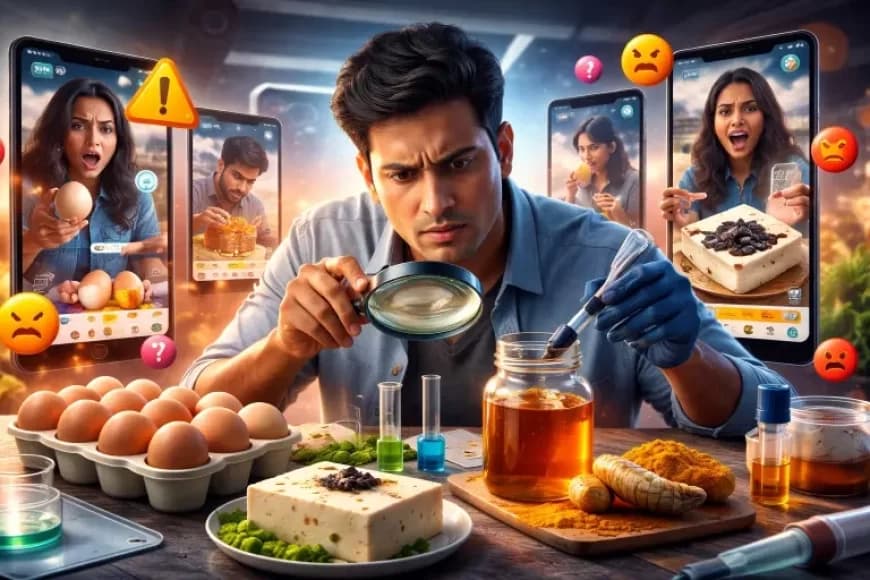
India’s viral “Fake Food” trend has moved far beyond simple kitchen hacks. What once looked like consumer awareness content is now becoming a full-blown digital courtroom, where influencers publicly test products, accuse brands, and deliver verdicts—often before regulators even enter the scene.
From the Eggoz antibiotic residue controversy to the Torii “fake paneer” row, the biggest debate today is clear: Are influencers protecting India’s food safety, or spreading science-less panic just to gain views?
Trial by Social Media: The Rise of Viral Food Investigations
Over the last two years, India has seen an explosion of influencer-led food testing content. YouTube creators and Instagram Reels influencers are increasingly acting like investigators—buying products, running quick tests on camera, and presenting results as “exposés.”
The format is simple, powerful, and viral:
A product is shown
A dramatic test is performed
A shocking conclusion is delivered
The audience reacts instantly
In this ecosystem, brands are no longer judged in courts or labs. They are judged in comment sections.
This phenomenon has given rise to what many industry insiders now call “Trial by Social Media.”
The Eggoz Nutrition Controversy: When ‘Antibiotic-Free’ Became a Viral Accusation (Dec 2025)
One of the most high-profile cases in this trend involved Eggoz Nutrition, a premium egg brand known for marketing its products as “100% antibiotic-free.”
What Triggered the Eggoz Controversy?
In December 2025, a popular YouTube channel released a video claiming a lab report detected traces of AOZ, a metabolite associated with Nitrofuran antibiotics—a category often linked to restricted or banned usage in poultry and animal farming.
The video used heavy terms like:
“cancer-causing residues”
“genotoxic substances”
“unsafe eggs”
Within hours, the content spread rapidly across social media, sparking consumer panic and damaging trust in the brand.
Eggoz’s Response: Trace vs Truth
Eggoz defended itself by stating the detected amount was extremely low—around 0.73 ppb—and could be linked to environmental contamination rather than deliberate antibiotic administration.
The brand also pointed to its compliance process and shared reports from NABL-accredited labs, stating the eggs met safety requirements under current FSSAI standards.
The Bigger Question: Was It Awareness or Fear Marketing?
While many viewers praised the influencer for “exposing” a health risk, several experts argued that the framing of the content created unnecessary fear.
The controversy highlighted a critical gap:
“Antibiotic-free” is often interpreted by consumers as ‘zero trace possible,’ while real-world supply chains can still show micro traces from environmental exposure.
This created a dangerous media outcome—where nuance disappeared and panic won.
Torii Fake Paneer Row: Luxury Dining Put on Public Trial (June 2025)
If Eggoz showed how packaged food brands can be targeted, the Torii controversy proved that even premium restaurants are not safe from viral accusations.
In June 2025, influencer-led restaurant testing videos gained massive traction. A YouTuber visited multiple celebrity-linked restaurants, including Torii, associated with Gauri Khan.
The Viral Claim: “Paneer is Fake”
The influencer performed a DIY iodine test on paneer and claimed that because it turned dark purple/black, it contained starch and was “fake.”
The video immediately spread, with audiences questioning the quality of high-end dining.
What Food Experts Said: The Test Was Incomplete
Chefs and food experts explained that iodine reacts with starch—but starch can come from multiple sources in a restaurant kitchen.
In Asian-inspired restaurants, paneer may be cooked with:
soy-based sauces
marinades
thickened gravies
coated ingredients
Cross-contamination alone could impact the test result.
Unexpected Outcome: Torii Turned It Into a PR Win
Instead of losing customers, the restaurant used the controversy to explain food chemistry and ingredient handling.
The incident reportedly increased curiosity, and footfall improved. The influencer later removed the video, but the damage had already been done in public perception.
The case became an example of how viral content can deliver a verdict even when the science is not controlled.
Influencers and DIY Food Tests: Science or Showmanship?
The influencer toolkit today is built for speed and virality—not lab accuracy.
These tests look dramatic on camera, but food experts say many are scientifically incomplete and easily misunderstood.
Common DIY Food Tests Going Viral in India
Iodine Test on Paneer
Influencer claim: Turns black = fake paneer
Reality: Turns black = starch presence (may come from sauces or contamination)
Water Test on Honey
Influencer claim: Dissolves quickly = sugar syrup
Reality: Even pure honey can dissolve depending on filtration and moisture
Burn Test on Turmeric
Influencer claim: Sparks = metal adulteration
Reality: Natural minerals and static can cause sparks too
The main issue is not that these tests are useless—
the issue is that influencers often present them as final proof.
The Engagement Economy: Why ‘Fake Food’ Videos Perform So Well
Social media algorithms reward one thing above all else: attention.
And nothing grabs attention faster than fear.
1. Fear Headlines Win the Algorithm
A title like: “This Egg Can Give You Cancer”
will always outperform: “Understanding Trace Antibiotic Detection in Poultry Supply Chains.”
That’s why creators often use extreme framing. It triggers emotion and guarantees shares.
2. Influencers Become the ‘Hero’
Food exposé content builds a strong “hero narrative,” where the influencer appears as a lone warrior protecting public health.
This gives creators:
rapid followers
high engagement
brand recognition
viral authority
3. Low Cost, High Impact
Unlike professional food inspection, DIY testing requires minimal investment.
Anyone can purchase a ₹100 iodine bottle or a basic kit and claim to be a “food inspector,” bypassing the training and protocols followed by actual food safety authorities.
This creates a serious credibility crisis.
Legal and Regulatory Shift: Government and Courts Are Stepping In
As “trial by social media” becomes common, India’s legal system is beginning to tighten control over misleading claims and viral accusations.
FSSAI and Misleading Claims (Section 53)
Under Section 53 of the Food Safety and Standards Act, authorities can penalize misleading food-related claims, with fines that can go up to ₹10 lakh.
This provision is now being seen as a potential tool to curb irresponsible viral food allegations.
Supreme Court Push: Influencers Can Be Held Liable (May 2024)
A major legal shift occurred in May 2024 when influencer accountability became a serious regulatory focus. Endorsers and advertisers—including influencers—can now face legal consequences for misleading health-related claims.
This means if an influencer posts a “food review” and presents it as a scientific health warning, they may face:
defamation cases
consumer protection action
penalties under CCPA frameworks
This is pushing the influencer economy into a new era of responsibility.
The Rise of Certified Lab Expectations
Regulatory discussions are increasingly focusing on the need for certified, verifiable lab reports rather than DIY conclusions.
Experts say this is necessary because food safety is not a content format—it is a scientific discipline.
Influencer vs Industry: A Growing War of Credibility
The influencer-food brand battle is now one of India’s fastest-growing digital conflicts.
Why Brands Are Struggling
Large FMCG brands can handle PR crises.
But small-to-medium brands often cannot.
A single viral video can cause:
loss of sales
retailer pullback
investor hesitation
long-term trust damage
Even if the accusation is later proven wrong, the brand may never recover fully.
Why Influencers Are Not Stopping
Because the system rewards them.
When panic goes viral, creators get:
views
sponsorships
growth
relevance
This creates an incentive structure where “exposure content” becomes a business model.
Are Influencers Helping Food Safety or Creating Mass Panic?
The truth is complex.
How Influencers Help
Influencers have undeniably forced brands to:
increase transparency
publish lab reports
clarify marketing claims
improve consumer education
They have also made consumers more alert about adulteration, which remains a real issue in India.
How Influencers Harm
However, influencers also risk creating a dangerous ecosystem where:
incomplete tests are treated as proof
fear replaces facts
brands are convicted without investigation
science is replaced by sensationalism
Food experts warn that panic-driven content can hurt genuine businesses more than actual adulterators.
What Consumers Should Trust: Lab Reports, Not Viral Reels
Food safety professionals suggest that consumers should rely on:
NABL-certified lab testing
FSSAI compliance details
regulated product audits
government-led actions
A 30-second reel may be entertaining, but it should not be treated as an official food inspection report.
If consumers truly want transparency, the focus must shift from shock content to verified science.
FAQ: Fake Food Trend, Influencer Testing and Food Safety in India
Q1. What is “Trial by Social Media” in food controversies?
It refers to the growing trend where influencers publicly accuse food brands using viral tests or lab reports, and audiences form judgments before any official investigation occurs.
Q2. What was the Eggoz egg controversy in 2025?
A YouTube influencer claimed a lab report showed traces of AOZ linked to banned antibiotics in Eggoz eggs. Eggoz stated the detected level was extremely low and within safety standards.
Q3. Why did Torii restaurant face fake paneer allegations?
An influencer used an iodine test on paneer and claimed it contained starch, calling it fake. Experts clarified that iodine detects starch, which can come from sauces and kitchen contamination.
Q4. Are DIY food tests like iodine tests scientifically reliable?
They can indicate certain ingredients, but they are not definitive proof of adulteration. Proper confirmation requires controlled lab testing.
Q5. Can influencers be punished for false food claims in India?
Yes. Under consumer protection and food safety frameworks, influencers can face defamation cases and penalties if they spread misleading or false health claims.