

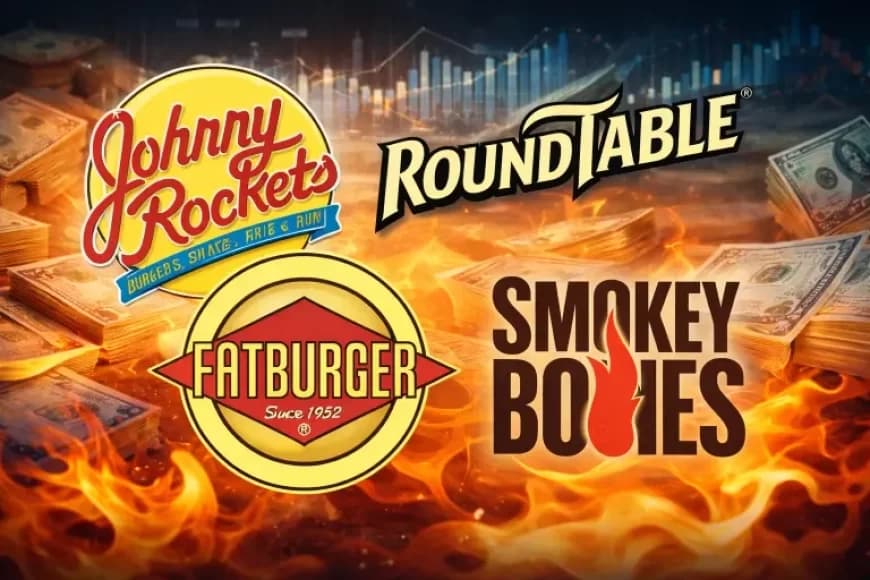
US-based restaurant franchisor FAT Brands and its affiliate Twin Hospitality have filed for Chapter 11 bankruptcy protection as part of a major financial restructuring.
The move is aimed at addressing heavy securitized debt pressures and stabilising the company’s multi-brand restaurant portfolio while continuing normal operations.
Chapter 11 Filing Signals Portfolio-Level Financial Stress
FAT Brands, which owns and franchises several well-known restaurant chains, has initiated voluntary Chapter 11 proceedings in the United States to restructure its balance sheet. Twin Hospitality, the holding company for casual dining brand Twin Peaks, has also filed under Chapter 11 as part of the same restructuring effort.
Importantly, the filings are not related to a sale, merger, or acquisition. Instead, they represent a portfolio-wide financial restructuring designed to address debt accumulated through past expansion.
Heavy Securitization Debt at the Core of the Crisis
$1.3 Billion Debt Stack Under Pressure
The Chapter 11 filings were triggered by approximately $1.3 billion in securitized debt, much of it tied to royalty streams from FAT Brands’ restaurant portfolio. This debt structure became increasingly difficult to manage amid rising interest rates and tighter credit conditions.
In recent months, lenders accelerated repayment demands after certain securitization entities failed to meet payment obligations, creating a liquidity crunch for the company.
Aggressive Expansion Strategy Adds Strain
FAT Brands expanded rapidly over the last few years through acquisitions financed largely by securitized borrowings. While this helped build a diversified restaurant portfolio, it also left the company vulnerable to market volatility and refinancing risks.
What Happens to FAT Brands’ Restaurant Portfolio?
Operations to Continue During Restructuring
The company has confirmed that restaurants will continue operating normally during the Chapter 11 process. FAT Brands’ portfolio includes popular brands such as:
Fatburger
Johnny Rockets
Round Table Pizza
Smokey Bones
Franchise partners, employees, and customers are not expected to see immediate disruption.
Possible Brand-Level Changes Ahead
While no asset sales have been announced, restructuring under Chapter 11 may eventually lead to selective brand divestments, refinancing, or ownership changes as part of a court-approved plan.
Market and Investor Impact
Following news of the bankruptcy filings, FAT Brands’ stock came under sharp pressure, reflecting investor concerns over dilution and the future treatment of existing equity. In many Chapter 11 cases, current shareholders face significant dilution or loss if creditors convert debt into equity.
The restructuring will primarily focus on negotiations with bondholders and securitization trustees to reduce leverage and extend maturities.
Unlike distressed brand sales or takeovers, this filing represents a financial reset rather than a change in control. The company’s leadership has emphasized that the goal is to preserve long-term value across the entire restaurant portfolio, not to exit the business.
This distinction makes the FAT Brands case a notable example of post-pandemic debt stress in the global restaurant and franchising industry.
A Critical Test for Multi-Brand Restaurant Groups
The Chapter 11 filings by FAT Brands and Twin Hospitality highlight the risks of highly leveraged growth strategies in a higher interest rate environment.
While the restructuring offers a path to stability, its success will depend on creditor negotiations, cash flow performance, and long-term brand strength. The coming months will be crucial in determining whether FAT Brands emerges leaner—or faces deeper structural changes.
FAQs
1. Why did FAT Brands file for Chapter 11 bankruptcy?
FAT Brands filed for Chapter 11 to restructure more than $1.3 billion in securitized debt after lenders accelerated repayment demands.
2. Are FAT Brands restaurants closing?
No. The company has stated that restaurants will continue operating as usual during the restructuring process.
3. Is FAT Brands being sold or acquired?
No. This is not a merger or acquisition. The filing is a financial restructuring aimed at reducing debt.
4. What is Twin Hospitality’s role in this filing?
Twin Hospitality, the parent company of Twin Peaks, filed alongside FAT Brands as part of a coordinated restructuring plan.
5. What does this mean for franchise owners?
Franchise operations are expected to continue, though long-term outcomes will depend on the final court-approved restructuring plan.