
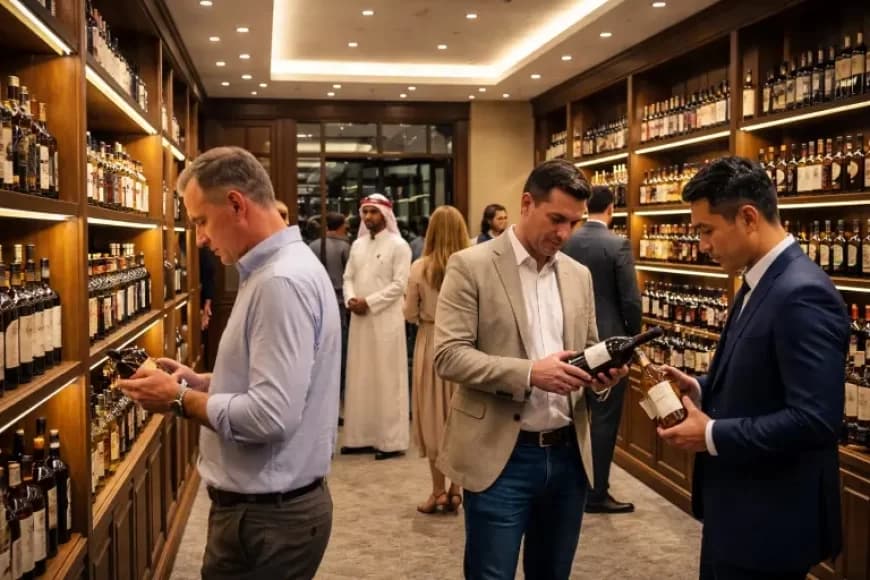
Saudi Arabia has quietly introduced a major change to its long-standing alcohol ban by allowing wealthy foreign residents to legally purchase alcohol under controlled conditions. The move marks a significant shift in the kingdom’s social policy and could eventually open the door for broader access, including tourists.
Saudi Arabia Begins Controlled Alcohol Sales for Foreign Residents
Saudi Arabia, which banned alcohol sales in 1952, has started permitting select foreign residents to buy alcohol legally from a government-monitored store in Riyadh. The initiative is being seen as part of the kingdom’s larger transformation agenda aimed at modernising society and improving its global business image.
The development is particularly notable because Saudi Arabia is home to Islam’s two holiest cities, Mecca and Medina, making alcohol policy a highly sensitive issue in the country.
Alcohol Store in Riyadh Expands Access Beyond Diplomats
From Diplomatic Use to Wealthy Expat Eligibility
The liquor store, located in Riyadh’s high-profile Diplomatic Quarter, reportedly opened in January 2024. Initially, access was limited strictly to non-Muslim diplomats.
However, according to reports, the kingdom introduced new eligibility rules quietly in late 2025, expanding access to include wealthy foreign residents.
The store remains discreet, operating within an unmarked building and functioning under strict monitoring.
Who Can Buy Alcohol in Saudi Arabia Under the New Rules?
Eligibility Criteria for Foreign Residents
Under the updated guidelines, alcohol purchases are allowed only for non-Muslim foreigners who meet specific income or residency requirements.
To qualify, expats must either:
Hold a Premium Residency Permit (costing 100,000 Saudi riyals per year, roughly $27,000), or
Earn at least 50,000 Saudi riyals per month
The Premium Residency program is typically designed for high-level professionals such as:
Senior corporate executives
Foreign investors
Highly skilled professionals
Specialized global talent
Strict Security Checks and Religious Verification in Place
Despite the easing of restrictions, the system remains tightly controlled.
Foreign residents must present their Saudi residence ID card at the entrance. This ID reportedly includes details such as:
Religion status
Residency type
Personal identification information
Security personnel verify the ID before allowing entry, ensuring only eligible individuals can purchase alcohol.
This indicates Saudi Arabia is taking a cautious approach—testing controlled alcohol access without making it publicly widespread.
Part of Saudi Arabia’s Wider Social and Economic Reform Drive
Vision 2030 and Saudi Modernisation
The move is being widely linked to Saudi Arabia’s broader Vision 2030-style transformation strategy under Crown Prince Mohammed bin Salman.
In recent years, the kingdom has introduced several major reforms, including:
Reopening cinemas
Hosting international music festivals
Allowing women to drive
Reducing the influence of religious police
Expanding tourism and foreign investment initiatives
Allowing controlled alcohol sales could be another step toward positioning Saudi Arabia as a more globally competitive destination for expatriates, business leaders, and international investors.
Could Alcohol Access Expand to Tourists in the Future?
While Saudi authorities have not officially announced a tourist-focused alcohol policy, analysts believe the current approach may serve as a pilot program.
If the model proves manageable, controlled alcohol access may eventually expand to:
International tourists
High-end hotel zones
Tourism-focused economic areas
Mega projects such as NEOM
For now, the policy remains limited and quietly implemented, suggesting Saudi Arabia wants to avoid backlash while still moving toward gradual liberalisation.
A Carefully Managed Social Shift in Saudi Arabia
Saudi Arabia’s decision to allow wealthy foreign residents to purchase alcohol marks one of the kingdom’s most significant cultural policy shifts in decades. While still highly restricted and limited to select expats, the move signals a gradual rebranding effort as Saudi Arabia seeks to attract global talent, investors, and international business confidence.
If the controlled system succeeds, the kingdom may consider broader expansion—potentially including tourist access in the coming years.
FAQs: Saudi Arabia Alcohol Ban Changes
1. Has Saudi Arabia officially lifted the alcohol ban?
Not fully. Saudi Arabia has not removed the national ban entirely, but it has allowed controlled alcohol sales for certain eligible non-Muslim foreigners in Riyadh.
2. Who can buy alcohol legally in Saudi Arabia now?
Only wealthy non-Muslim foreign residents who either hold a Premium Residency permit or earn at least 50,000 riyals per month can access the store.
3. Where is the alcohol store located in Saudi Arabia?
The store is located in Riyadh’s Diplomatic Quarter, an exclusive area known for embassies and upscale residential communities.
4. Is alcohol available for tourists in Saudi Arabia?
Currently, alcohol sales are not available for tourists. However, experts believe Saudi Arabia may expand access to tourists in the future as part of its reform strategy.
5. Why is Saudi Arabia changing its alcohol policy now?
The move is seen as part of Saudi Arabia’s broader economic and social reforms aimed at attracting investment, global talent, and improving its international image under long-term modernisation plans.