

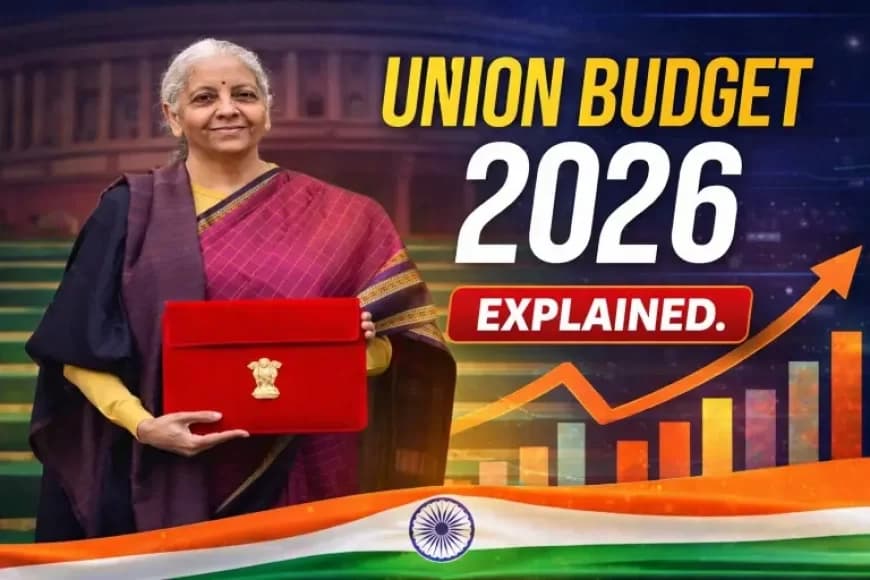
The Union Budget 2025–26, presented by Nirmala Sitharaman, places food, consumption and employment-led growth at the centre of India’s economic strategy. From farm productivity to food processing, MSME funding and tourism, the budget creates strong tailwinds for the food industry, FMCG companies and the hospitality sector.
Agriculture Push Lays Foundation for Food Industry Growth
A major pillar of Budget 2025–26 is strengthening agriculture to ensure stable supply chains for food manufacturers and consumer brands.
Key agricultural measures
Launch of Prime Minister Dhan-Dhaanya Krishi Yojana covering 100 low-productivity districts
Focus on crop diversification, irrigation and post-harvest storage
Kisan Credit Card loan limit increased to ₹5 lakh
Special mission for self-reliance in pulses and expanded support for fruits and vegetables
Why it matters
Improved farm productivity and better storage infrastructure reduce raw material volatility for food processors, FMCG brands and restaurant chains. A more reliable farm-to-market pipeline also supports long-term pricing stability.
Food Processing Gets Institutional and Infrastructure Support
Food processing emerges as a clear beneficiary in this year’s budget, especially in eastern India.
Budget highlights
Establishment of a National Institute of Food Technology, Entrepreneurship and Management in Bihar
Support for farmer producer organisations (FPOs) and cooperatives
Customs duty relief for select marine and food-processing inputs
Expansion of cold-chain, warehousing and logistics infrastructure
Industry impact
These steps encourage value addition, reduce food wastage and improve export competitiveness. Small and mid-sized food processors are expected to benefit from better access to skilled manpower and technology.
MSME Reforms Boost Small Food and FMCG Businesses
With a large part of India’s food and beverage ecosystem operating as MSMEs, the budget’s credit and classification reforms are significant.
Major MSME announcements
Higher investment and turnover limits for MSME classification
Credit guarantee cover doubled to ₹10 crore
Introduction of ₹5 lakh credit cards for micro enterprises
New Fund of Funds with fresh government support
What this means
Food startups, bakeries, cloud kitchens, regional FMCG brands and D2C food companies gain easier access to capital, enabling faster expansion and formalisation.
Income Tax Relief Expected to Lift FMCG and Food Demand
One of the biggest indirect benefits for FMCG and food services comes from changes in personal income taxation.
Tax changes
No income tax payable up to ₹12 lakh under the new regime
Higher take-home income for salaried middle-class households
Consumption impact
Higher disposable income typically translates into increased spending on branded groceries, packaged foods, eating out, food delivery and premium FMCG products, providing demand-side support to the sector.
Hospitality and Tourism See Employment-Led Growth Push
Hospitality and tourism are positioned as key employment generators in Budget 2025–26.
Key initiatives
Development of 50 major tourist destinations
Hotels included under infrastructure classification
MUDRA loans for homestays
Expansion of hospitality skilling institutes
Improved air connectivity and visa facilitation
Sector outlook
Better financing access and rising tourist footfall are expected to support hotels, restaurants, cafés and food-led tourism businesses across religious, cultural and medical tourism hubs.
Logistics and Supply Chains Get a Boost
Efficient logistics is critical for perishable food, FMCG distribution and horeca supply chains.
Budget focus areas
India Post repositioned as a national logistics service provider
Warehousing upgrades for air cargo and perishables
Simplified customs processes and export documentation
These reforms help reduce delivery timelines, lower logistics costs and improve export readiness for food and FMCG companies.
A Long-Term Growth Budget for the Food Economy
Union Budget 2025–26 takes a structural approach rather than offering short-term incentives. By strengthening agriculture, supporting MSMEs, increasing consumption power and promoting tourism, the budget builds a strong foundation for sustained growth in food processing, FMCG and hospitality. The full impact is expected to unfold over the next few years as supply chains, consumer demand and investment cycles align.
FAQs: Union Budget 2025–26 and the Food & Hospitality Sector
1. How does Budget 2025–26 help the food industry?
The budget supports agriculture, food processing infrastructure, MSME credit and logistics, ensuring stable raw material supply and easier business expansion.
2. Will FMCG companies benefit from income tax changes?
Yes. Higher disposable income is expected to boost consumer spending on packaged foods, beverages and daily-use FMCG products.
3. What support does the budget offer to food startups?
Food startups benefit from higher MSME limits, improved credit guarantees, micro-enterprise credit cards and startup-focused funding schemes.
4. How does the budget support hotels and restaurants?
Hospitality gains from infrastructure status for hotels, tourism development, skilling programmes and easier financing for homestays.
5. Is this budget favourable for food exports?
Yes. Improved logistics, customs simplification, cold-chain support and export facilitation measures strengthen India’s food export ecosystem.