

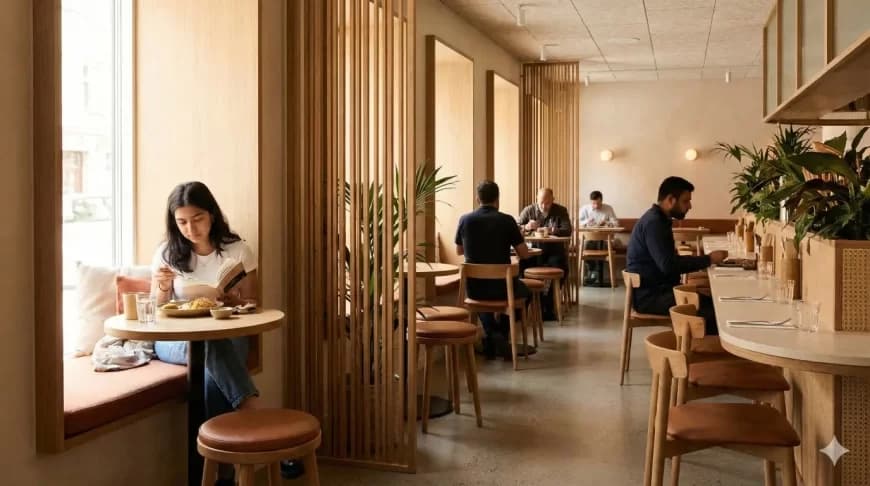
The idea that eating alone is awkward is rapidly fading. Across India and global markets, solo dining is emerging as a powerful consumption trend, pushing restaurants to rethink seating layouts, menus, and service models. What was once seen as a compromise is now becoming a profitable and intentional choice for diners and businesses alike.
Solo Dining Trend: Why Eating Alone Is on the Rise
Industry indicators suggest solo dining is no longer niche. Changing lifestyles, remote work, urban migration, and a growing focus on personal time are reshaping how people eat out.
Globally, more than half of diners now say they are fully comfortable eating alone, while reservation platforms report a sharp rise in bookings for one. More importantly for restaurateurs, solo diners often spend more per person—opting for premium drinks, starters, or desserts rather than shared platters.
The High-Value Solo Customer
Contrary to older assumptions, solo diners are not “low-yield” guests. Hospitality data shows:
Higher per-head spending compared to group diners
Greater willingness to experiment with premium menu items
Increased frequency of visits, especially during non-peak hours
This makes them especially valuable during slow afternoon or weekday slots.
India’s Quiet Solo Dining Boom
India is witnessing a quieter but equally significant shift. While dine-in data is fragmented, delivery and urban living patterns clearly point to a strong solo economy.
Platforms such as Zomato and Swiggy report that single-meal orders account for a large share of urban demand, especially in metro cities.
Key Drivers in the Indian Market
Urbanisation & migration: Young professionals living alone in metros
Remote and hybrid work: Meals blending into work-from-cafe culture
Rising one-person households: Estimated to be around 16% and growing
Cities like Mumbai, Bengaluru, Hyderabad, and Delhi NCR lead this shift, with solo diners helping restaurants monetise otherwise idle hours.
How Restaurants Are Redesigning for the Solo Economy
Restaurants are no longer treating solo guests as an exception. Instead, they are redesigning spaces to make dining alone comfortable, productive, and aspirational.
1. Counter Seating and Open Kitchens
Bar-style seating facing chefs or windows is replacing isolated corner tables. This setup provides visual engagement and eliminates the discomfort of eating alone with nothing to focus on.
2. Semi-Private Communal Tables
Long tables with subtle dividers, lamps, or greenery allow solo diners to enjoy a lively atmosphere without forced social interaction—being “alone, together.”
3. Compact Single-Diner Pods
Inspired by global formats, especially from Japan, select cafés and casual dining brands are introducing single-seat nooks with charging points. These appeal to remote workers and introverted diners seeking privacy.
4. Phone-Friendly Table Design
Acknowledging smartphones as companions, tables for one increasingly include phone stands, charging ports, and handbag hooks—quietly signalling acceptance rather than judgment.
Menu and Service Changes Targeting Solo Diners
Physical design is only part of the shift. Menus and service language are evolving too.
Aspect Traditional Approach Solo-Focused Approach Portions Large sharing plates Half portions, tasting sets Service tone “Are you waiting for someone?” Confident, assumption-free seating Beverages Bottle-centric wine lists Strong by-the-glass options Pricing No solo-specific offers Curated “solo meals” or bundles
These changes reduce friction and encourage repeat visits.
Why Solo Dining Makes Business Sense
For restaurants, the logic is clear. A solo diner occupying a counter seat is more profitable than an empty four-top table. With higher per-head spends and flexible timing, solo guests improve both revenue efficiency and table turnover.
As urban India continues to evolve, the solo diner is no longer a fringe customer—but a core audience shaping the future of dining spaces.
The Future Is Built for One
Solo dining has moved from social stigma to lifestyle statement. Restaurants that adapt early—through thoughtful design, inclusive service, and flexible menus—stand to gain loyalty from a growing, high-spending customer base. The “table for one” is no longer an afterthought; it is fast becoming a symbol of modern urban living.
FAQs: Solo Dining and the Restaurant Industry
Q1. Why is solo dining increasing in India?Rising urban migration, single-person households, and work-from-anywhere culture are making solo dining more common and socially accepted.
Q2. Do solo diners really spend more?Yes. Studies indicate solo diners often spend more per person, especially on premium drinks, desserts, and add-ons.
Q3. How are restaurants redesigning spaces for solo diners?They are adding counter seating, semi-private communal tables, single-diner pods, and phone-friendly tables with charging points.
Q4. Which Indian cities see the most solo dining?Mumbai, Bengaluru, Delhi NCR, Hyderabad, and Pune lead due to corporate hubs and migrant populations.
Q5. Is solo dining just a trend or a long-term shift?Industry data suggests it is a structural change driven by demographics and lifestyle patterns, not a temporary trend.