

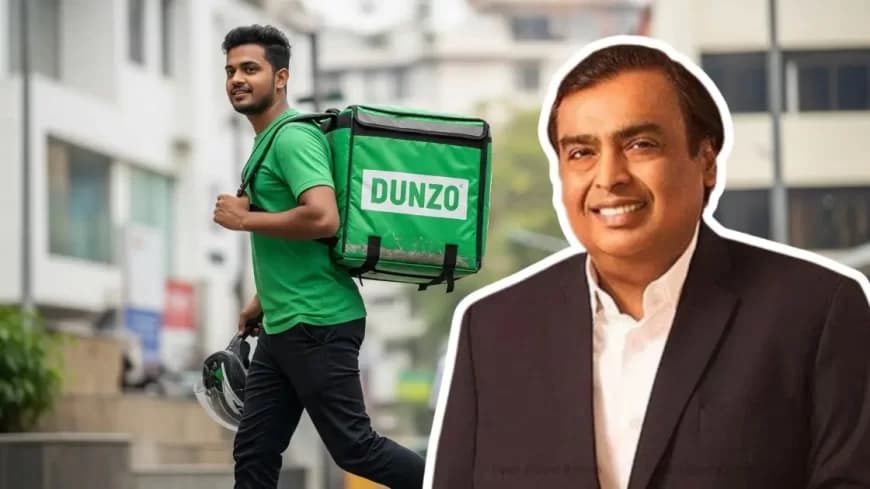
Reliance Retail has officially written off its entire ₹1,645 crore ($200 million) investment in Dunzo, marking the end of its stake in the troubled quick commerce startup. The disclosure came in Reliance Industries’ FY 2025 annual report, just 18 months after acquiring a 26% stake in Dunzo during a $240 million funding round.
Once valued at $700 million and backed by Google, Dunzo aimed to dominate the Indian quick commerce market with its “Dunzo Daily” 15–20 minute delivery model. However, by early 2025, the Dunzo app and website went offline, co-founder and CEO Kabeer Biswas exited to join Flipkart’s quick commerce arm, and the company faced a severe liquidity crunch.
The Downfall of Dunzo: What Went Wrong?
1. High-Burn Pivot to Quick Commerce
Originally launched in 2014 as a hyperlocal concierge service for errands, Dunzo found initial success with small deliveries and personal tasks. But in 2021–22, it pivoted heavily to the capital-intensive quick commerce model through Dunzo Daily. This shift required expensive dark stores, large delivery fleets, and deep discounts — pushing operational costs to unsustainable levels.
2. Unsustainable Cash Burn
By FY 2023, Dunzo’s losses had ballooned to ₹1,800 crore, nearly four times the previous year. Despite a modest revenue rise to ₹226 crore, each order reportedly lost around ₹230. Lavish marketing, including IPL campaigns, worsened the Dunzo collapse.
3. Operational Strain from Reliance Partnership
After Reliance’s entry, Dunzo’s resources were also channelled into JioMart logistics support. This diverted focus from its core quick commerce business and strained its already limited operational bandwidth.
4. Delayed Salaries & Vendor Payments
The Dunzo downfall was accelerated by unpaid wages, vendor defaults, and legal troubles. Creditors approached the NCLT for recovery, and multiple Dunzo dark stores shut down in key markets.
5. Leadership Exodus
The resignation of co-founders and, eventually, CEO Kabeer Biswas left the company without strong leadership. His move to Flipkart was followed by the platform going completely offline.
6. Intense Competition in Indian Quick Commerce Market
Rivals like Blinkit (Zomato), Zepto, and Swiggy Instamart aggressively expanded with deep funding reserves, squeezing Dunzo’s market share and making it harder to recover.
Lessons from Dunzo’s Quick Commerce Failure
The Dunzo shutdown news highlights critical takeaways for startups:
Unit economics matter more than rapid expansion.
Over-reliance on investor funding without profitability leads to vulnerability.
Operational focus is essential — partnerships must align with the company’s core mission.
With Reliance now writing off its entire stake, Dunzo’s story stands as a cautionary tale in India’s quick commerce history — from a pioneering hyperlocal delivery app to a victim of over-expansion, cash burn, and leadership churn.