
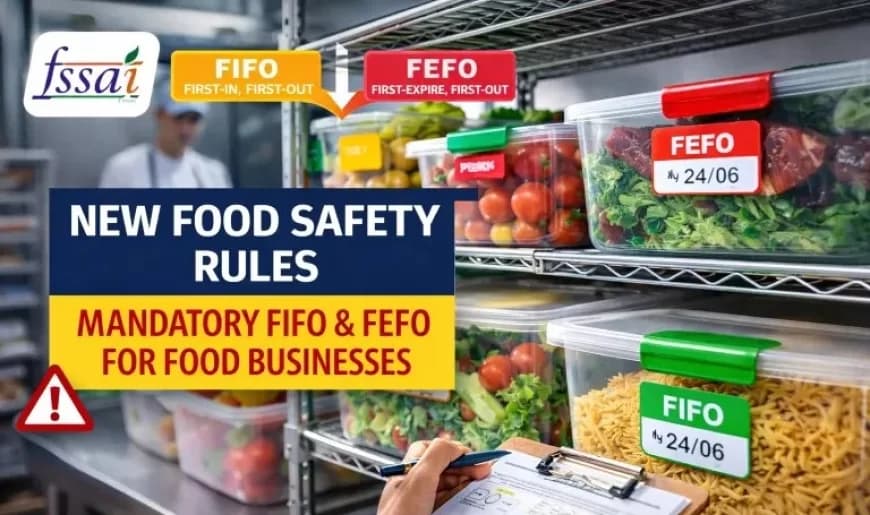
India’s food safety regulator has proposed a major change in how food businesses manage inventory. The Food Safety and Standards Authority of India (FSSAI) has introduced draft amendments that would make FIFO and FEFO storage practices mandatory for food manufacturers, aiming to curb unsafe stock handling and expired food circulation.
The proposal is part of the Food Safety and Standards (Licensing and Registration of Food Business) Amendment Regulations, 2026, notified in the Gazette of India on January 20, 2026, and is currently open for public feedback.
What Is the New FSSAI FIFO–FEFO Proposal?
Under the draft amendment, FSSAI plans to revise Schedule 4 of the licensing regulations to standardise inventory rotation practices across food manufacturing units.
The objective is clear: ensure that older or near-expiry food stocks are used first, reducing health risks and improving traceability during audits and inspections.
Who Will Be Covered Under the New Rules?
Mandatory Applicability
The proposed FIFO and FEFO norms will apply to:
Food manufacturers
Repackers
Relabellers
These entities will need to follow inventory rotation rules across:
Raw materials and ingredients
Work-in-progress (WIP) items
Cooked, processed, and packaged food products
Who Is Exempt?
To avoid regulatory pressure on micro businesses, small retail shops and non-manufacturing traders are currently excluded from this specific provision.
FIFO vs FEFO: What Food Businesses Must Follow
FSSAI has clearly differentiated between the two inventory principles based on product nature.
FIFO (First-In, First-Out)
FIFO requires businesses to use stock based on the date of receipt.
Best suited for:
Dry goods
Non-perishable items
Products without fixed expiry dates
FEFO (First-Expire, First-Out)
FEFO prioritises stock based on the nearest expiry or “use by” date, regardless of arrival time.
Best suited for:
Dairy products
Meat and poultry
Ready-to-eat foods
Short shelf-life products
Stronger Documentation and Reporting Requirements from 2026
The draft amendment goes beyond storage practices and introduces tighter compliance mechanisms.
Daily Production and Usage Records
Manufacturers will be required to maintain daily logs covering:
Raw material usage
Batch-wise production data
This will help auditors verify whether FIFO or FEFO principles are actually being followed.
Quarterly Reporting on Expired and Rejected Food
FSSAI has proposed mandatory quarterly data submission via the FoSCoS portal, covering:
Expired food
Rejected or returned stock
The move aims to prevent illegal diversion of expired food into unauthorised channels.
New E-Commerce Shelf-Life Rule
For food sold through e-commerce platforms, FSSAI has proposed a minimum shelf-life requirement at the time of delivery:
At least 30% of total shelf life, or
45 days remaining, whichever is earlier
This provision is intended to protect consumers from receiving near-expiry food products.
Penalties for Non-Compliance
The amendment significantly increases the consequences of ignoring storage and reporting rules.
Financial Penalties
Delayed annual return filing (Form D1) may attract fines up to five times the annual licence fee
Licence Suspension
Failure to submit mandatory returns or safety data by the 181st day can lead to deemed suspension of the FSSAI licence
Increased Audit Scrutiny
Inspectors will check expiry labels on all stored items
For decanted or repackaged food, the original expiry date must be clearly mentioned
What Food Businesses Should Do Now
Industry experts suggest early preparation even before the rules are finalised.
Key Action Points
Shift to digital inventory or WMS systems
Introduce expiry-based colour coding for FEFO compliance
Train staff and Food Safety Supervisors on batch-level documentation
Audit internal storage SOPs for FIFO and FEFO gaps
Why This Matters for India’s Food Industry
With rapid growth in cloud kitchens, QSR chains, and food manufacturing startups, inventory mismanagement has become a major food safety concern. The proposed rules aim to bring consistency, accountability, and consumer trust across the supply chain.
If implemented, the 2026 amendment could mark one of the most significant operational changes for India’s food manufacturing sector in recent years. While compliance may increase short-term costs, experts believe it will strengthen food safety standards, reduce wastage, and improve long-term industry credibility.
Food businesses are advised to submit feedback during the public consultation phase and start aligning systems ahead of enforcement.
FAQs: FSSAI FIFO and FEFO Rules Explained
1. What is FIFO and FEFO under FSSAI rules?
FIFO means using stock based on arrival date, while FEFO prioritises items closest to expiry.
2. Are small retailers required to follow FIFO and FEFO?
No. Small retail shops and non-manufacturing traders are currently exempt.
3. When will the FIFO–FEFO rules come into effect?
The rules are proposed for 2026 and will be enforced after final notification.
4. Is digital inventory management mandatory?
Not mandatory, but strongly recommended to meet audit and reporting requirements.
5. What happens if a business fails to comply?
Non-compliance may lead to heavy fines, licence suspension, and stricter inspections.