

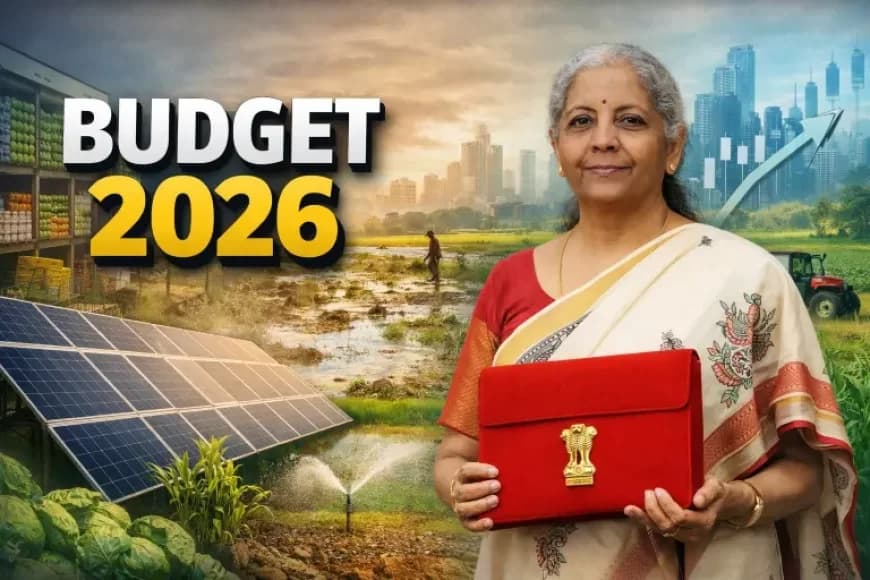
As the Finance Ministry enters the final stretch of Budget 2026 preparations, a notable shift is emerging in corporate expectations. India’s leading FMCG companies are moving beyond demands for tax relief, instead calling for large-scale investment in climate-resilient agricultural infrastructure to stabilise food prices and protect supply chains.
This change in stance follows a turbulent 2025, when sharp fluctuations in essential commodities such as tomatoes and onions disrupted manufacturing costs, rural demand, and consumer sentiment.
FMCG Sector’s New Budget Priority: Climate Resilience
Unlike earlier budgets that focused on subsidies and short-term relief, FMCG leaders now want structural solutions that can reduce volatility caused by extreme weather. Companies such as Nestlé and Godrej believe predictable agri-supply chains are critical for long-term growth.
Industry executives argue that climate shocks are no longer isolated events—they are becoming a recurring risk that directly impacts pricing, margins, and consumption.
Scaling Green Cold Chain Infrastructure
One of the strongest proposals is to expand solar-powered cold storage networks closer to farms. Post-harvest losses in vegetables and fruits are still estimated at 15–20%, largely due to inadequate storage and transport.
Why Cold Chains Matter
Reduce wastage during heatwaves and unseasonal rains
Smoothen supply, limiting sudden price spikes
Improve farmer incomes and raw material availability for FMCG firms
Budgetary support for decentralised, renewable-energy-based cold chains is being positioned as a long-term inflation control tool rather than a subsidy.
Fast-Tracking AgriStack for Predictive Farming
Another major demand is the acceleration of AgriStack, the government’s digital agriculture framework designed to link farmer databases with weather data and crop intelligence.
Industry Expectations from AgriStack
Shift from post-disaster compensation to pre-emptive crop planning
Enable FMCG-backed R&D in climate-resilient and bio-fortified crops
Introduce weighted tax deductions for private investment in agri-innovation
According to EY India, productivity-led reforms are essential if agriculture is to support India’s consumption-driven economy.
“Agriculture must move beyond income support and focus on resilience and productivity. Climate-ready infrastructure is now a business imperative,” said Amit Vatsyayan.
GST Relief on Biofertilisers and Biopesticides
The FMCG sector is also lobbying for GST rationalisation on sustainable farm inputs. A proposal to bring biopesticides and biofertilisers under a flat 5% GST slab is gaining traction.
Lower taxes on bio-inputs could:
Reduce farming costs for small and marginal farmers
Encourage sustainable sourcing for FMCG supply chains
Support India’s broader climate and ESG commitments
Budget 2026: The Economic Backdrop
The push for reform comes at a sensitive moment for the economy. FMCG growth remains stable, but much of it is driven by price increases rather than higher consumption volumes.
Indicator Current Status Medium-Term Outlook Agriculture Budget ₹1.37 lakh crore ₹1.50 lakh crore (expected) Agri Market Size ₹31 lakh crore ₹38 lakh crore by FY30 Workforce in Agriculture ~45% Largely unchanged GVA Share ~18% Targeting 20%+
With food inflation having a direct impact on household spending, any weather-related supply shock in 2026 could slow broader economic recovery.
Policy Dilemma for the Government
Finance Minister Nirmala Sitharaman faces a complex balancing act. A large portion of agricultural spending is still tied to food and fertiliser subsidies, primarily for rice and wheat.
Redirecting funds toward horticulture, storage, and climate resilience may be economically sound—but politically sensitive.
What This Means for FMCG Companies
If Budget 2026 signals a clear shift toward productivity-focused agriculture, it could benefit large FMCG players such as Hindustan Unilever and ITC by:
Lowering raw material volatility
Improving margin stability
Supporting long-term rural demand
Final Thoughts: Toward a Productivity-Led Agri Budget?
Industry leaders are watching closely for signs that Budget 2026 will mark a transition from welfare-heavy agriculture to a business- and productivity-oriented agri model. By prioritising climate resilience, the government could tackle food inflation at its root—benefiting farmers, companies, and consumers alike.
Frequently Asked Questions (FAQs)
Q1. Why are FMCG companies focusing on climate-resilient supply chains?Extreme weather events are increasing price volatility in key commodities, directly impacting FMCG costs and consumer demand.
Q2. What is AgriStack and why is it important?AgriStack is a digital agriculture initiative aimed at integrating farmer data, weather forecasting, and crop planning for better productivity.
Q3. How can cold chain investments reduce food inflation?Improved storage reduces wastage and supply shocks, helping stabilise prices of perishable goods.
Q4. What GST changes are FMCG firms seeking in Budget 2026?They are seeking a reduced GST rate on biopesticides and biofertilisers to promote sustainable farming.
Q5. Will these reforms impact FMCG stocks?Yes, improved supply stability and lower input risks could positively influence long-term valuations of FMCG companies.