
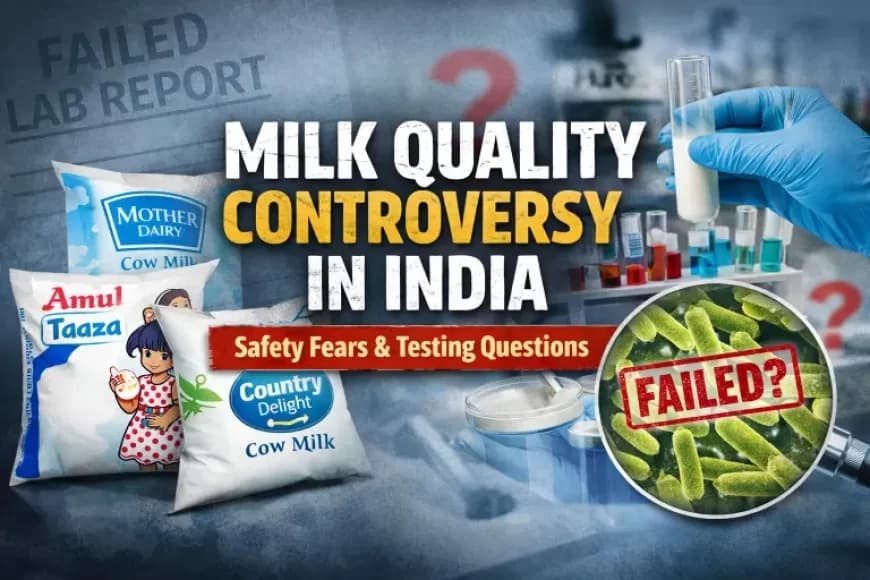
A fresh wave of viral “milk quality test” reports has triggered panic across India, with claims that popular brands like Amul, Mother Dairy, and Country Delight have failed key microbiological safety standards. However, dairy industry experts and brand officials argue that the controversy lacks proper transparency, and may be driven more by sensational content than verified regulatory action.
Viral Milk Testing Reports Trigger Consumer Panic
Over the past few days, social media platforms have been flooded with “blind testing” videos and reports suggesting that several popular pouch milk variants in India are “unsafe.”
The controversy has primarily gained traction through private independent testing platforms like Trustified, which claim to have tested samples from leading dairy brands and found microbiological parameters exceeding FSSAI limits.
The issue has now evolved into a nationwide discussion on milk safety in India, cold chain infrastructure, and the credibility of third-party testing reports.
What the Reports Claim: Alleged FSSAI Failures
According to the viral findings, certain milk products allegedly failed on parameters such as:
Coliform bacteria count
Total Plate Count (TPC)
Yeast and microbial load
The reports claim that bacterial levels were above the permissible limits prescribed under FSSAI microbiological standards, leading to strong public reactions and widespread sharing on WhatsApp, Instagram, and YouTube.
While the numbers being circulated appear alarming, experts highlight that microbiological testing is highly sensitive and can be impacted by multiple external factors.
The Big Question: Were Samples Handled Under Proper Cold Chain Conditions?
One of the biggest concerns raised by dairy industry observers is the missing clarity around cold chain storage and sample handling.
Milk is a perishable biological product and is extremely dependent on maintaining temperatures below 4°C. Even minor temperature fluctuations during transport, storage, or retail handling can significantly increase bacterial growth.
Why Cold Chain Matters
If a milk pouch is:
stored in a malfunctioning shop refrigerator,
transported without proper cooling, or
kept at room temperature for hours,
then bacterial counts can rise rapidly, regardless of how safe the product was when it left the factory.
This raises a crucial question:
Are brands being blamed for issues caused during last-mile retail mishandling?
Testing Transparency Under Scrutiny
Another major concern is the lack of publicly available details about the testing process.
Experts say that for microbiological testing to be considered credible at a national scale, reports must clearly mention:
purchase location
batch number
manufacturing date
temperature conditions during transport
chain of custody documentation
lab accreditation and methodology
Without these details, it becomes difficult to judge whether a result reflects a genuine manufacturing failure or a sample mishandling issue.
Single Sample Testing May Not Reflect Large-Scale Production
India’s biggest dairy cooperatives process milk at massive scale, producing millions of packets daily. Industry professionals argue that testing a single pouch without statistical sampling may not represent an entire brand’s production quality.
Where is FSSAI? No Official Recall Yet
Perhaps the biggest reason why many experts are skeptical is that the Food Safety and Standards Authority of India (FSSAI) has not issued any nationwide recall, warning notice, or public advisory regarding these viral claims.
If the allegations indicated a systemic safety breakdown, it would likely trigger:
emergency regulatory inspections
public safety advisories
product recalls across states
So far, none of these steps have been officially announced.
This regulatory silence suggests that the situation may not be as severe as social media headlines claim.
Brands Respond: Amul, Country Delight and Mother Dairy Deny Claims
Following the controversy, major dairy brands have responded strongly.
Amul’s Stand
Amul has reportedly dismissed the viral claims as misleading and questioned the sample handling process. The cooperative maintains that its milk products comply with FSSAI standards and undergo extensive internal testing before distribution.
Country Delight’s Response
Country Delight has highlighted its quality assurance practices, claiming it conducts multiple daily quality checks and provides lab reports to customers through its app for transparency.
Mother Dairy’s Position
Mother Dairy has emphasized that its milk goes through stringent pasteurization processes designed to eliminate harmful pathogens. The brand has also indicated that spoilage complaints often arise due to cold chain breaks during retail or delivery stages.
Experts Say the Debate Needs Scientific Context, Not Viral Panic
Many dairy experts believe the issue is being presented in a “viral investigation” format rather than a verified scientific public health concern.
They argue that microbiological reports require deeper interpretation, because not all bacteria automatically mean the product is unsafe.
For example, fermented products like curd (dahi) naturally contain active cultures, and improper interpretation may lead to confusion between healthy bacterial presence and harmful contamination.
What Consumers Should Do Right Now
While the debate continues, consumers can take practical steps to ensure safety:
1. Always Check if Milk Pouch is Cold
If the pouch is not chilled, avoid buying it.
2. Boil Pouch Milk
Boiling milk remains one of the most effective ways to eliminate bacterial risk.
3. Store Milk Immediately in Refrigerator
Do not keep milk packets at room temperature after purchase.
4. Follow Official FSSAI Updates
Instead of relying on viral videos, consumers should check for verified notices from FSSAI or state food departments.
Milk Safety Concerns Need Regulation, Not Sensationalism
The viral milk quality controversy has once again exposed how quickly food panic spreads online in India. While consumer awareness is important, food safety discussions must be backed by transparent testing methods, clear sampling documentation, and official regulatory verification.
Until FSSAI confirms these findings through official channels, the controversy appears to be more of a public trust and transparency debate than a proven nationwide milk quality crisis.
The coming days will be crucial, as public pressure may push regulators and brands to release detailed reports and stronger public clarifications.
FAQ: Milk Quality Testing in India
Q1. Is Amul milk unsafe as per the viral reports?
There is no official confirmation from FSSAI declaring Amul milk unsafe. Amul has denied the allegations and questioned sample handling and testing conditions.
Q2. What is Total Plate Count (TPC) in milk testing?
TPC measures the total number of microorganisms in milk. High TPC may indicate poor storage, delayed refrigeration, or contamination during handling.
Q3. Can cold chain failure increase bacteria in milk packets?
Yes. Milk is highly temperature-sensitive. If stored above 4°C for long periods, bacterial growth can rise quickly even if the milk was safe at production stage.
Q4. Has FSSAI issued any recall for Mother Dairy, Amul or Country Delight milk?
As of now, there is no nationwide recall or public advisory issued by FSSAI based on these viral test reports.
Q5. How can consumers ensure milk safety at home?
Consumers should buy properly chilled milk, store it immediately in the refrigerator, and boil pouch milk before consumption for maximum safety.