

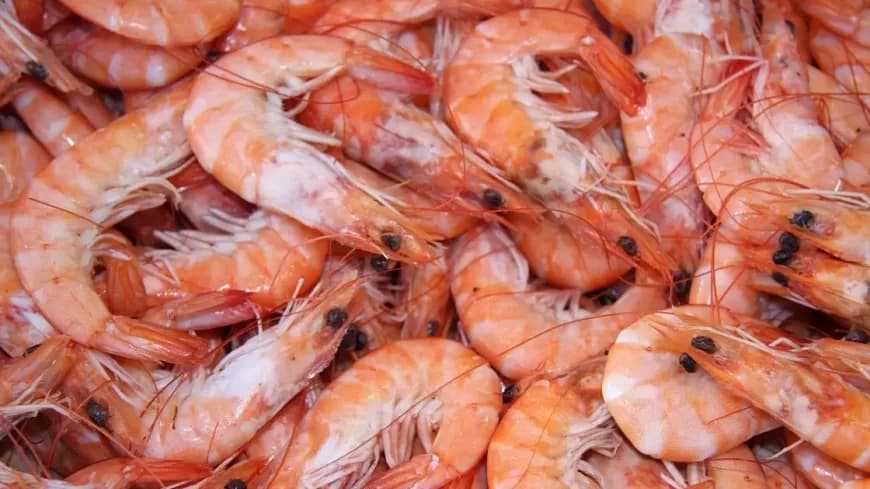
In a major boost for India’s seafood sector, Australia has granted conditional approval for the import of unpeeled prawns from Andhra Pradesh — marking the first such approval since 2017. The move ends an eight-year restriction imposed after the detection of the white spot virus in Indian consignments.
The decision is expected to benefit Andhra Pradesh, which contributes nearly 80% of India’s shrimp exports and was heavily impacted by the 2017 ban and the subsequent U.S. tariffs during the Trump era.
A Major Breakthrough for Andhra Pradesh’s Shrimp Industry
Andhra Pradesh IT and Electronics Minister Nara Lokesh, currently on a seven-day business visit to Australia, announced the approval on social media, calling it a “major step forward” for Indian seafood exporters.
Lokesh highlighted that Australia’s decision would open new opportunities for exporters who have long sought access to the Australian and New Zealand markets. “A long-standing hurdle for Indian seafood exporters has been Australia’s restrictions on unpeeled prawns due to white spot virus detection. Today, the first import approval for Indian prawns has been granted,” he posted on X (formerly Twitter).
Conditional Approval: New Standards to Ensure Disease-Free Imports
According to Dileep Maddukuri, CEO of Auckland-based Hasper Brand Labs, Australia has allowed the consignment under new, stricter biosecurity conditions. The prawns must be organically harvested in disease-free zones, frozen, and deveined before export — measures aimed at preventing white spot virus contamination.
These revised standards align with pre-2017 requirements but add new layers of scrutiny to ensure the highest levels of food safety. Importers must also apply for specific permits indicating the source country for each shipment.
Impact of U.S. Tariffs and Global Shrimp Trade Shifts
India’s shrimp exporters have faced challenges since the U.S., under the Trump administration, imposed tariffs of up to 59.72% on Indian shrimp. Andhra Pradesh, which previously exported around 70% of its shrimp to the U.S., saw a significant decline in shipments.
The Australian market reopening could help diversify India’s export base, reducing dependency on the American market while strengthening trade ties in the Indo-Pacific region.
Positive Signs for Indian Seafood Exporters
Industry experts see this move as a turning point for India’s seafood trade, signaling trust in India’s improved aquaculture and disease-control standards. If successful, this approval could pave the way for broader import permissions across more regions in Australia and New Zealand.
FAQs
1. Why did Australia ban Indian prawn imports in 2017?Australia imposed a ban in January 2017 after detecting the white spot virus in several prawn consignments from India, which posed a risk to local aquaculture.
2. What has changed in 2025?After years of review and improvements in India’s aquaculture monitoring, Australia granted conditional approval for unpeeled prawn imports from Andhra Pradesh under strict disease-free conditions.
3. How will this decision affect Indian shrimp exporters?It will open a new export destination for Indian prawns, especially from Andhra Pradesh, which had been struggling due to U.S. tariffs and restricted markets.
4. What are the new import conditions set by Australia?The prawns must be organically farmed, sourced from disease-free zones, frozen, and deveined before shipment to Australia.
5. Which Indian state will benefit the most from this approval?Andhra Pradesh, contributing about 80% of India’s shrimp exports, will be the biggest beneficiary of this policy shift.
Australia’s decision to lift the eight-year ban represents renewed confidence in India’s seafood safety and quality standards. With Andhra Pradesh leading the charge, this move could revitalize shrimp exports, expand market access, and mark a significant milestone in India’s journey toward becoming a global seafood powerhouse.