
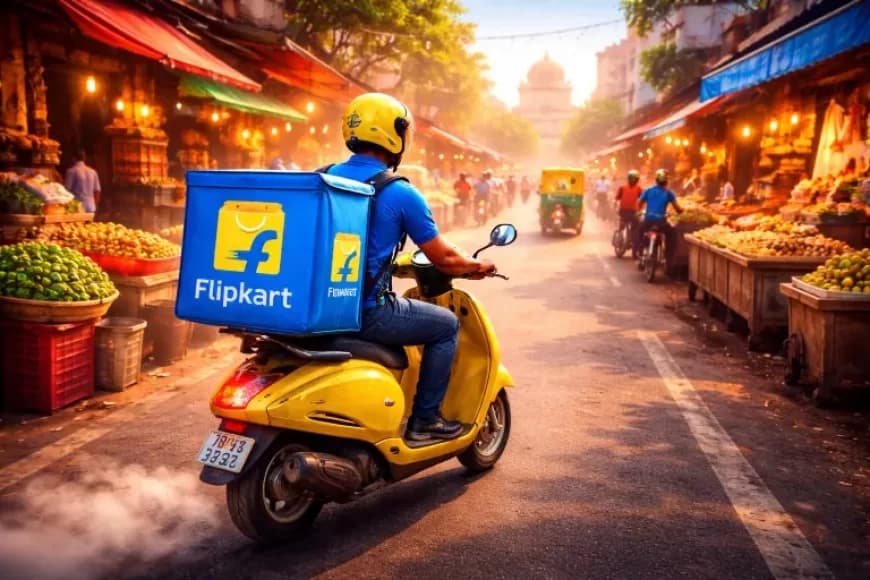
Flipkart is reportedly planning to step into India’s booming food delivery industry, with a pilot launch expected in Bengaluru by May–June 2026. The Walmart-backed e-commerce giant is also evaluating ONDC integration as a faster and cost-effective entry strategy.
Flipkart Eyes Food Delivery Expansion in India
India’s food delivery market, currently dominated by Zomato and Swiggy, could soon face disruption as Flipkart prepares for a major entry. According to industry sources, the company is working on a Bengaluru-based pilot project that may go live in the second quarter of 2026.
The move signals Flipkart’s renewed interest in food delivery after earlier internal discussions reportedly took place around two years ago but did not materialize into a launch.
If the pilot delivers strong results, Flipkart may consider expanding operations into multiple cities across India by late 2026 or early 2027.
Bengaluru Chosen for Flipkart’s Food Delivery Pilot
Why Bengaluru is the First Market
Bengaluru has emerged as one of India’s most competitive food delivery hubs, driven by a dense population of young professionals, high digital adoption, and a strong restaurant ecosystem.
Flipkart’s pilot launch in Bengaluru will likely serve as a test of:
Delivery efficiency
Restaurant onboarding capability
Customer adoption
Pricing competitiveness
Sources suggest Flipkart is also building a dedicated internal team to manage this segment, indicating the project may be more than an experimental rollout.
Flipkart’s Two Possible Models: Standalone App or ONDC Strategy
1. Standalone Food Delivery Platform
One route Flipkart is considering is creating its own food delivery system integrated within the Flipkart ecosystem. This would involve direct restaurant tie-ups, delivery partner management, and customer support operations—similar to Swiggy and Zomato’s model.
This approach could give Flipkart full control over user experience and profitability, but would also require heavy investment in logistics and restaurant onboarding.
2. ONDC Integration for Faster Expansion
Flipkart is also evaluating operating as a buyer-side platform on the Open Network for Digital Commerce (ONDC). This would allow the company to access ONDC-listed restaurants and logistics providers without building a large delivery infrastructure from scratch.
This strategy could reduce initial operational costs and speed up market entry, similar to how Paytm and other apps have experimented with ONDC-based food delivery.
Flipkart Minutes Could Give an Edge in Hyperlocal Delivery
Flipkart already operates Flipkart Minutes, its quick commerce and hyperlocal delivery service. With a reported network of 800+ dark stores, Flipkart has built significant logistics capacity that could support food delivery operations.
Industry analysts believe this existing infrastructure could help Flipkart compete on:
Delivery speed
Last-mile efficiency
Lower delivery costs
Faster scaling in metro cities
If leveraged correctly, Flipkart’s hyperlocal network could become a major advantage against the established duopoly.
Food Delivery Market Impact: Zomato and Swiggy May Face New Pressure
Flipkart’s entry into the food delivery segment is expected to intensify competition in a market where Zomato and Swiggy currently control the majority share.
Reports suggest the news of Flipkart’s pilot led to a short-term dip in competitor stock prices, reflecting investor concerns about rising competitive threats.
Current Market Share Snapshot (Early 2026 Estimates)
Zomato: approx. 50–55%
Swiggy: approx. 45–50%
Others (ONDC players, regional apps): minimal share
While smaller players have not made a major dent, new experiments like Rapido-backed platforms and zero-commission restaurant models indicate that the market is ripe for disruption.
India’s Food Delivery Market is Growing Rapidly
India’s food delivery market is expected to expand significantly over the next five years. Estimates suggest the industry could grow from around $9 billion in 2025 to nearly $25 billion by 2030, driven by:
Urbanization
Rising disposable income
Demand for convenience
Growth of cloud kitchens
Rapid adoption of quick commerce
This growth makes food delivery one of the most attractive high-frequency consumer categories for companies like Flipkart.
Why Flipkart is Entering Food Delivery Now
Building Daily Engagement Before IPO
For Flipkart, food delivery is not just about expanding into a new category—it’s about increasing customer engagement.
Food delivery encourages frequent daily usage, unlike traditional e-commerce shopping which is often occasional. This can strengthen Flipkart’s ecosystem and unlock cross-selling opportunities across groceries, electronics, fashion, and essentials.
With Flipkart expected to explore a public listing in the future, a successful food delivery segment could boost its business valuation by showcasing recurring user activity and diversified revenue streams.
A High-Stakes Entry That Could Reshape the Market
Flipkart’s planned food delivery pilot in Bengaluru could mark one of the biggest shake-ups in India’s online food ordering industry in recent years. Whether it builds a standalone platform or scales through ONDC, Flipkart appears serious about challenging the Zomato-Swiggy dominance.
The Bengaluru rollout in mid-2026 will be closely watched, as it may decide whether Flipkart can successfully build India’s next major food delivery contender.
FAQs
1. Is Flipkart launching a food delivery service in India?
Flipkart is reportedly planning to enter food delivery, with a pilot launch expected in Bengaluru by May–June 2026.
2. Will Flipkart use ONDC for food delivery?
Flipkart is exploring the possibility of operating through ONDC as a buyer-side platform, which could allow faster scaling without building full infrastructure.
3. When will Flipkart food delivery start?
The pilot is expected to begin in Bengaluru during the second quarter of 2026, likely between May and June.
4. Can Flipkart compete with Zomato and Swiggy?
Flipkart has strong logistics capabilities through Flipkart Minutes and its dark store network, which could help it compete on speed and cost efficiency.
5. Why is Flipkart entering the food delivery market now?
Food delivery is a high-frequency business that can increase daily app usage, strengthen Flipkart’s ecosystem, and improve long-term growth prospects ahead of a potential IPO.