

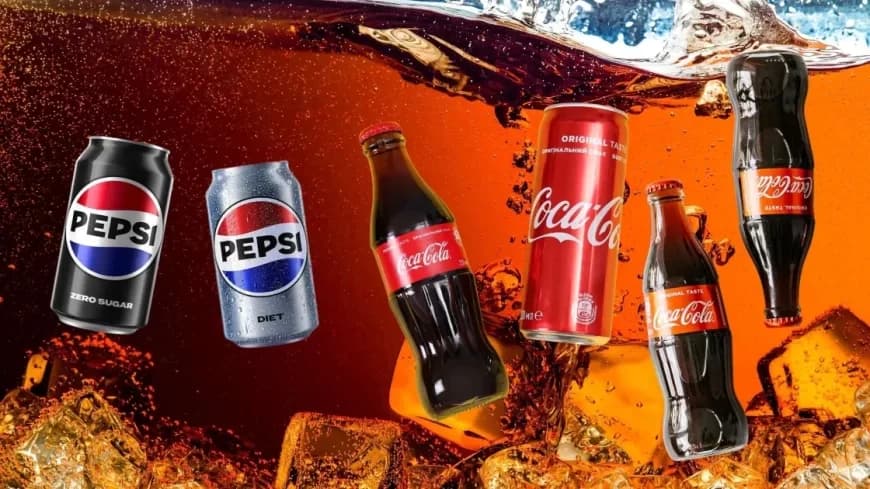
The Indian Beverage Association (IBA), which represents major companies like Coca-Cola, PepsiCo, and Reliance Consumer Products, has written to the finance ministry urging a shift to a sugar-based taxation model for beverages. The request comes ahead of a crucial GST Council meeting in early September 2025, which is expected to review tax slabs for several consumer goods.
Currently, all aerated drinks—including low-sugar, no-sugar, and fruit-based beverages—are taxed at 28% GST plus 12% compensation cess, taking the total levy to a steep 40%. This classification places soft drinks in the same “sin goods” category as tobacco and pan masala.
IBA Pushes for Sugar-Based GST Model
In a letter dated August 25, IBA Secretary General Dr. D.S. Gangwar highlighted that the current GST framework ignores healthier alternatives like low-sugar and no-sugar soft drinks as well as fruit-based beverages. The association argued that a sugar-content-based taxation structure, widely adopted in advanced economies, would be more fair and aligned with global health practices.
The letter also stated that categorizing aerated beverages as sin goods is a misclassification, since they cannot be equated with the severe public health risks linked to tobacco or pan masala.
Rising Demand for Low-Sugar Drinks in India
The call for a sugar-based GST system comes at a time when consumer demand for low-sugar and no-sugar beverages is rising rapidly in India.
PepsiCo India’s bottling partner Varun Beverages reported that in the first half of 2025, 55% of its total sales came from low- or no-sugar drinks, marking a historic shift.
Industry data shows that in 2024, sales of low-sugar and no-sugar drinks doubled, touching ₹700-750 crore, and now account for over 10% of the overall beverages market.
The trend reflects urban India’s growing preference for healthier beverages, driven by health and wellness concerns.

Expanding Portfolios of Coca-Cola and PepsiCo
To cater to this rising demand, both Coca-Cola and PepsiCo are aggressively expanding their low-calorie and no-sugar drink portfolios:
PepsiCo offers 7 Up No Sugar, Pepsi Black, and Gatorade No Sugar.
Coca-Cola has expanded its lineup with Thums Up X Force, Sprite Zero, Coke Zero, Diet Coke, and functional low-calorie drinks such as BodyArmor Lyte, Honest Tea, and Charged.
What’s Next?
With the upcoming GST Council meeting 2025, the Indian beverage industry is awaiting clarity on whether the government will consider a sugar-based GST model that incentivizes the production and consumption of healthier beverage alternatives.