

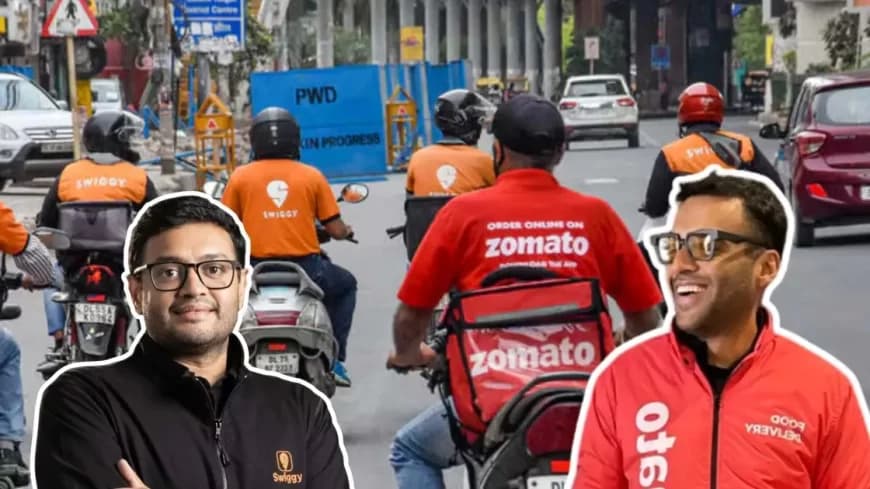
The Indian food delivery landscape is undergoing a major shift after the Goods and Services Tax (GST) Council introduced new rules that clearly separate tax liabilities for food aggregators like Zomato and Swiggy and restaurants that manage their own deliveries. What may seem like a small tweak in tax rates is, in reality, a significant change shaping consumer costs, restaurant strategies, and the overall food delivery market in India.
The New GST Regime Explained
At the heart of “GST 2.0” lies the distinction in how delivery services are taxed.
For Food Aggregators (Zomato, Swiggy, etc.):The GST Council now requires e-commerce operators (ECOs) such as Zomato and Swiggy to charge 18% GST on delivery services. Until now, delivery charges were treated as “pass-through costs,” meaning platforms collected the fee from customers but were not responsible for paying GST on it. Under the new rules, these charges fall under Section 9(5) of the CGST Act, making aggregators directly liable to collect and remit the 18% GST.Importantly, this is in addition to the 5% GST already charged on the food from restaurants.
For Direct Restaurant Deliveries:If you order directly from Domino’s, McDonald’s, Pizza Hut, or cloud kitchens like Rebel Foods (Faasos, Behrouz Biryani, Oven Story), the entire bill—including food, delivery, and packaging—is taxed only at 5% GST. This is because the restaurant itself provides both the food and the delivery, making it a single taxable service instead of two separate ones.
The Financial Impact: How Consumers and Companies Are Affected
This new structure creates a two-tier pricing model with very different outcomes for consumers and businesses.
1. Consumers Pay More on Aggregator Platforms
For orders placed on Zomato or Swiggy, the final bill now includes:
5% GST on the food
18% GST on the delivery charge
Even if the increase per order is only ₹2–₹3, frequent users could end up paying significantly more over time. This cost disparity may push price-sensitive customers toward direct restaurant delivery channels or hyperlocal delivery services that don’t fall under the aggregator model.
2. Aggregators Face Rising Costs and Pressure
The new GST rule adds hundreds of crores in annual tax liability for Zomato and Swiggy. To offset this, both platforms are expected to pass the cost on to customers. However, this comes at a time when they have already raised platform fees to improve profitability. The additional burden may slow order growth and impact their Gross Order Value (GOV), a critical performance metric that has already shown signs of deceleration.For companies already operating on thin margins, the path to profitability just got more complex.
3. A Boost for QSRs and Cloud Kitchens
The real winners in this regime are quick-service restaurants (QSRs) and cloud kitchens that handle deliveries themselves. By sticking to the 5% GST slab, they enjoy a price advantage over aggregator channels. For instance, ordering a pizza directly from Domino’s app is now cheaper than ordering the same pizza through Zomato.
Additionally, recent GST rationalizations on inputs like cheese and packaging (which restaurants cannot claim as Input Tax Credit) further benefit QSRs and cloud kitchens, helping them reduce costs and improve margins. This may encourage more restaurants to invest in their own delivery fleets or direct-order apps, bypassing aggregators altogether.
Market Dynamics: What’s Next?
The food delivery market in India is entering a phase of realignment:
Restaurants are expected to push direct ordering apps, loyalty programs, and discounts to attract customers away from aggregators.
Consumers may increasingly compare prices across direct apps and aggregator apps before ordering.
Cloud kitchens like Rebel Foods and QSR giants like Domino’s, McDonald’s, and KFC could strengthen their direct-to-customer strategies, capitalizing on their GST advantage.
Food aggregators may need to innovate with value-added services or exclusive deals to retain users despite the higher GST on delivery fees.
Final Thought:
The introduction of GST 2.0 marks a turning point for the Indian food delivery ecosystem. While Zomato and Swiggy struggle with an additional 18% GST burden on delivery services, restaurants with direct delivery models remain under the 5% GST bracket, making them more competitive. For consumers, this means that ordering directly from restaurants is now more cost-effective than ever, and for the market, it signals a shift toward direct-to-customer strategies and reduced aggregator dependency.