

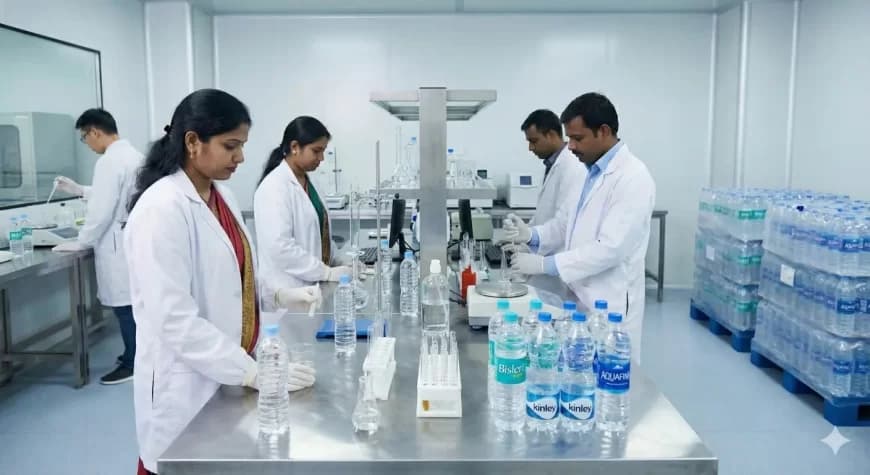
The Food Safety and Standards Authority of India (FSSAI) has announced a new testing framework for packaged drinking water and mineral water, removing the requirement for mandatory Bureau of Indian Standards (BIS) certification from January 1. While this change may reduce dual approval processes for manufacturers, it introduces tougher quality checks, frequent testing, and stronger compliance measures.
FSSAI Tightens Quality Checks for Packaged Water
Under the latest guideline, packaged water manufacturing units will now operate under a testing-driven regulation system led by FSSAI. The authority has rolled out a structured testing scheme that manufacturers must follow starting January 1. The decision aims to ensure higher quality control across the sector, which currently sees widespread operations across Tamil Nadu.
Industry representatives believe the shift will reduce reliance on dual certification but will also increase operational expenses due to repeated laboratory testing, especially for microbiological safety.
Nearly 1,600 Units in Tamil Nadu to Come Under New Norms
Tamil Nadu hosts close to 1,600 packaged drinking water production units, of which nearly 40% have already opted out of BIS renewal anticipating FSSAI’s new framework. Operators say that failure to meet FSSAI-set standards could lead to penalties, suspension of licenses, or legal action, pushing manufacturers to strengthen compliance systems.
A large portion of packaged water consumption is concentrated in Chennai and surrounding areas, accounting for nearly 3 crore litres out of 5 crore litres consumed daily in the state. Despite heavy competition, demand has remained stable, even as the entry of new businesses slows down.
Consumer Bodies Demand More Testing Labs & Regular Inspections
Consumer rights organisations have welcomed the move but emphasise the need for more government-recognised laboratories to speed up testing. They also urge authorities to carry out periodic third-party inspections to prevent the operation of unauthorised units.
Industry associations further requested similar monitoring norms for non-carbonated beverages and herbal infused waters, stating that the segment also requires regulatory attention.
BIS Applications Drop, but Certification Continues Voluntarily
Though the BIS mandate is no longer compulsory, the bureau still receives applications from manufacturers seeking certification for market credibility. Officials noted that BIS continues surveillance to prevent illegal use of the ISI mark.
Health officials clarified that packaged drinking water falls under the high-risk food category, and extensive sample testing will remain central to safety checks. Agencies approved by the Quality Council of India (QCI) will assist in conducting laboratory assessments.
The new FSSAI regulations mark a significant shift in India's packaged water industry. While easing certification requirements may reduce procedural delays, the introduction of stricter testing standards aims to enhance consumer safety and product quality. Industry experts expect the coming months to involve structural changes, increased monitoring, and possibly higher compliance costs for manufacturers.
FAQ – FSSAI Packaged Drinking Water Regulations
1. What has changed under the new FSSAI regulation for packaged drinking water?
The mandatory BIS mark has been removed, and a new testing-based compliance system is introduced from January 1. Manufacturers must follow frequent quality checks under FSSAI norms.
2. Is BIS certification still required for selling packaged water?
It is no longer mandatory, but manufacturers may still obtain BIS certification voluntarily to strengthen market credibility.
3. Will packaged water become costlier for consumers?
Manufacturers expect operational costs to rise due to increased testing, which may reflect in future pricing, though no immediate price change has been confirmed.
4. Why are consumer groups calling for more labs?
To ensure faster testing, prevent unauthorized units, and improve monitoring efficiency across regions.
5. How much packaged water does Tamil Nadu consume daily?
Tamil Nadu consumes around 5 crore litres per day, with Chennai alone accounting for nearly 3 crore litres.