

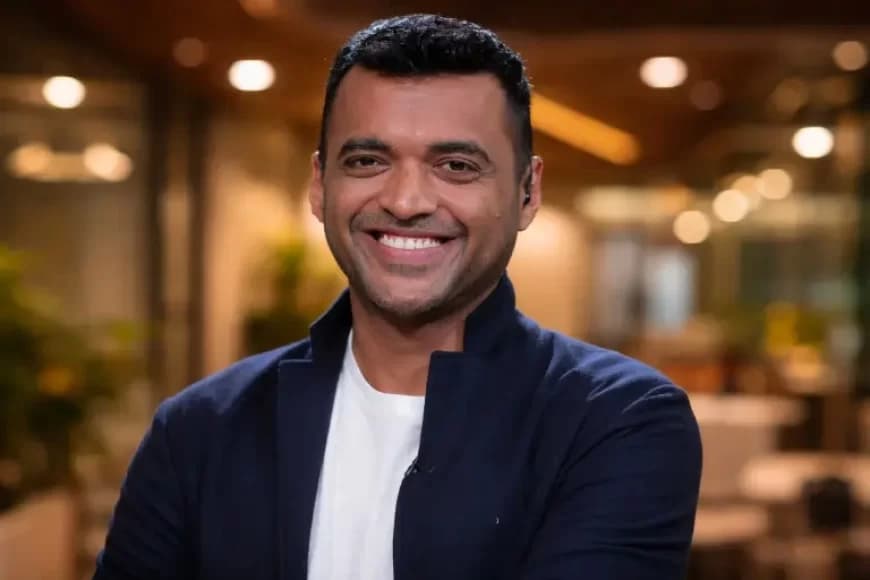
In a rare and striking move in India’s startup ecosystem, Deepinder Goyal, Founder and CEO of Zomato, has chosen to work without a salary until the end of FY2026. More than just a symbolic gesture, the decision reflects a deeper strategy tied to equity ownership, governance, and long-term value creation.
Recent regulatory disclosures and board-level changes show that Goyal’s personal wealth remains directly linked to Zomato’s market performance—placing him firmly in the category of founders with true “skin in the game.”
Zero Salary, Bigger Signal: What Goyal Is Giving Up
Deepinder Goyal has not drawn a base salary since April 1, 2021, and will continue to forgo it until March 31, 2026.
Key details
Annual salary forgone: Around ₹3.5 crore
Total duration: Five consecutive years
Immediate impact: Reduced executive cash outflow, though modest relative to Zomato’s overall scale
While the salary waiver attracts headlines, it is only a small part of the larger financial picture.
Equity Over Paycheck: Where the Real Wealth Lies
Goyal currently owns an estimated 4.2% stake in Zomato, making equity—not salary—his primary source of wealth.
Estimated value of stake: ₹10,000–₹11,000 crore (subject to market prices)
Implication: Any rise or fall in Zomato’s stock directly affects his personal net worth
This structure aligns the CEO’s incentives entirely with public shareholders, eliminating concerns around fixed compensation in a capital-intensive business.
The ₹1,000 Crore ESOP Surrender: What Changed in January 2026
In January 2026, Goyal took another significant step by surrendering unvested Employee Stock Ownership Plans worth nearly ₹1,000 crore as part of a leadership restructuring at Eternal, the parent brand overseeing Zomato, Blinkit, and District.
Why this matters
Prevents shareholder dilution: Returned ESOPs reduce the need to issue fresh equity
Strengthens talent incentives: Shares can now be reallocated to senior leaders and high-performing employees
Signals governance discipline: Rare among founders with such large equity exposure
For institutional investors, this move was widely viewed as governance-positive.
Founder Mentality Explained:
Business strategists define “founder mentality” as a leadership approach where long-term ownership and value creation take priority over fixed compensation.
Compensation Structure:
Conventional CEO: Earns a fixed salary along with performance-linked bonuses.
Founder-led Model (Deepinder Goyal): Takes no salary, with personal wealth linked entirely to equity performance.
Approach to Risk:
Conventional CEO: Tends to be cautious, focusing on short-term stability and quarterly results.
Founder-led Model: Willing to absorb short-term volatility in pursuit of long-term growth.
Incentive Alignment:
Conventional CEO: Motivated by income security and career progression.
Founder-led Model: Incentivised by shareholder value creation and long-term market success.
Why It Stands Out in Food Tech:
In India’s food-tech sector—characterised by thin margins and high cash burn—this ownership-first leadership model is rare and sends a strong confidence signal to investors and employees alike.
Shareholder wealth creation
In India’s food-tech sector—known for thin margins and high cash burn—this approach stands out.
How Goyal Compares Globally
Deepinder Goyal joins a small group of global tech leaders who chose minimal or zero salaries to reinforce confidence in their companies:
Elon Musk – Tesla
Mark Zuckerberg – Meta
Steve Jobs – Apple
In each case, equity performance—not cash pay—defined leadership compensation.
Why This Matters for Investors and Employees
Investor confidence: Signals that the CEO is fully invested in long-term stock performance
Cultural impact: Encourages ownership mindset across teams
Governance clarity: Reduces the agency gap between management and shareholders
In competitive battles like Zomato vs Swiggy, such signals often matter as much as quarterly numbers.
A Long-Term Bet on Zomato
Deepinder Goyal’s decision to waive his salary and give up ₹1,000 crore in ESOPs is not an act of sacrifice—it is a calculated bet on Zomato’s future. By tying his fortunes almost entirely to equity performance, he has sent a clear message to markets: leadership wins only if shareholders win.
As Zomato moves deeper into profitability and platform expansion, this founder-led alignment could prove to be a decisive advantage.
FAQs
Why is Deepinder Goyal not taking a salary?
He has voluntarily waived his salary to align his interests fully with shareholders and focus on long-term value creation.
Until when will Zomato CEO work without pay?
Goyal will not draw a salary until the end of FY2026, i.e., March 31, 2026.
What is the value of ESOPs surrendered by Goyal?
He gave up unvested ESOPs worth approximately ₹1,000 crore in January 2026.
Does this affect Zomato shareholders?
Yes, positively. The ESOP surrender helps avoid equity dilution and strengthens governance.
Is this common among startup founders?
No, it is relatively rare—especially at this scale—making Goyal’s move notable in India’s startup ecosystem.