

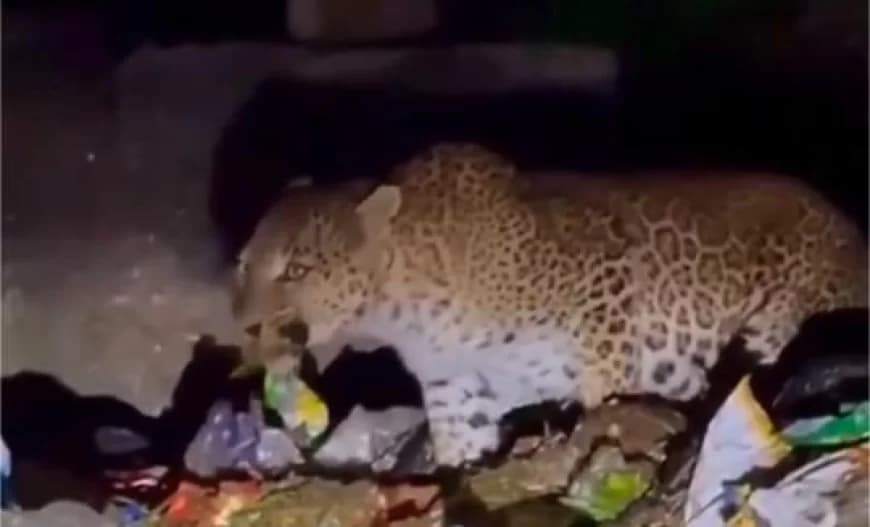
A heartbreaking video showing a leopard rummaging through a pile of garbage near Mount Abu, Rajasthan, has gone viral on social media. The 17-second clip, shared by Indian Forest Service (IFS) officer Parveen Kaswan, has reignited conversations about how unchecked urbanisation and waste mismanagement are endangering India’s wildlife.
In the video, the leopard—an apex predator known for its stealth and strength—can be seen desperately searching for food amidst plastic waste and dirt, a stark reminder of how human negligence is affecting forest ecosystems.
Viral Video Shared by Forest Officer
IFS officer Parveen Kaswan shared the clip on X (formerly Twitter) with a powerful message:
“What a sad visual. Shri Shivansh Sah recorded this #leopard near Mount Abu. See how our trash is reaching the wild! Let’s be better, protect forests, manage waste, and give the wild its home back.”
The video, which has now been viewed thousands of times, shows the leopard navigating through piles of waste in search of food—an image that has shocked environmentalists and citizens alike.
Public Reaction: ‘We Are Taking Away Their Home’
The viral footage has triggered a wave of emotional responses online. Many social media users expressed sadness and frustration over the growing human interference in wildlife habitats.
One user commented, “Very sad. We will not change our civic sense voluntarily; it has to be enforced with strict penalties.” Another added, “Their habitat is taken away in the name of development. Forests are shrinking, and animals are paying the price.”
Local residents from Mount Abu have also reported similar incidents, mentioning that animals like bears, buffaloes, and cows are often seen scavenging in dumping grounds near the area.
Leopard Population and Conservation Efforts
According to a 2023 report by the Environment Ministry, India’s leopard population stands at 13,874, showing a modest 1.08% annual growth between 2018 and 2022.
Madhya Pradesh has the largest leopard population (3,907), followed by Maharashtra (1,985), Karnataka (1,879), and Tamil Nadu (1,070).
However, experts warn that habitat fragmentation, deforestation, and rapid urbanisation continue to threaten leopards despite conservation gains.
A Reminder to Manage Waste and Protect Forests
The Mount Abu incident serves as a grim reminder of how poorly managed waste disposal is encroaching into natural habitats. Environmentalists urge local authorities and citizens to act responsibly—by reducing plastic use, managing waste properly, and safeguarding wildlife corridors.
FAQs About the Mount Abu Leopard Incident
1. Where was the leopard spotted eating from garbage?
The leopard was seen near Mount Abu in Rajasthan, rummaging through a pile of trash in search of food.
2. Who shared the viral video of the leopard?
The video was shared by Indian Forest Service officer Parveen Kaswan, who highlighted the issue of human waste reaching wildlife zones.
3. Why are leopards entering human areas?
Due to habitat loss, urban expansion, and deforestation, many wild animals, including leopards, are forced to move closer to human settlements in search of food.
4. What is the leopard population in India?
As per the Environment Ministry’s latest report, India has 13,874 leopards, with the highest numbers in Madhya Pradesh.
5. What can be done to prevent such incidents?
Experts suggest better waste management, forest protection, and strict anti-littering enforcement to reduce human–wildlife conflicts.