

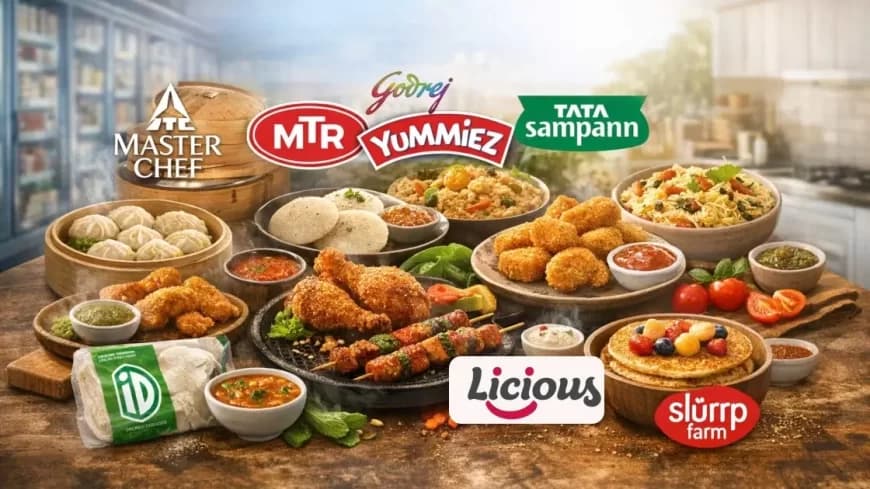
India’s Ready-to-Cook (RTC) and Heat-and-Eat (H&E) food segment is entering a decisive growth phase, driven by urban consumers seeking speed, taste and cleaner labels. Valued at around $6.7 billion in 2024, the market is expanding rapidly as legacy FMCG players and startups reshape how India eats at home.
India’s RTC & Heat-and-Eat Market: Size and Growth Outlook
The Indian RTC market is projected to grow at a 6–8% CAGR through 2029, powered by rising disposable incomes, smaller households and time-constrained urban lifestyles. Consumers are increasingly shifting away from highly processed foods toward preservative-free, regional and health-focused convenience meals.
Industry experts say the category is no longer niche—it is becoming a core part of India’s daily food consumption.
FMCG Giants Tighten Grip on Convenience Foods
ITC Ltd. Bets Big on Frozen and Premium RTE
ITC has emerged as one of the most aggressive players in the RTC and frozen foods space. Its recent acquisition of Prasuma in February 2025 strengthened its presence in frozen momos and Asian snacks, while expanding its cold-chain infrastructure.
By integrating hotel-chef expertise with packaged foods under brands like ITC Master Chef and Kitchens of India, ITC is positioning itself as a premium convenience food leader.
MTR Foods Defends Regional Breakfast Leadership
MTR continues to dominate India’s breakfast mix category with strong roots in South Indian cuisine. The company is now pushing faster-to-prepare formats, including 3-minute poha and upma, to attract younger consumers without diluting its traditional image.
Godrej Tyson Foods Expands ‘Ghar Ka Fast Food’
Godrej Tyson remains a leader in non-vegetarian frozen RTC products through its Yummiez brand. With at-home fried chicken and snackable formats, the company is directly competing with QSR chains while also investing in vegetarian manufacturing capacity to widen its audience.
Tata Consumer Products Focuses on Health and Shelf-Stable Innovation
Tata Consumer is targeting the intersection of health and convenience. Using advanced food preservation technologies, the company is offering ready meals that stay fresh at room temperature without added preservatives, addressing one of India’s biggest logistics challenges.
Startups Redefining ‘Fresh’ and ‘Clean Label’ Convenience
iD Fresh Food Moves Beyond Batter
Known for its preservative-free batters, iD has entered the ready-to-heat segment with fresh sambar and chutneys. The move targets India’s fast-growing breakfast accompaniment market and signals deeper expansion into homestyle convenience foods.
Licious Shifts to Value-Added RTC Products
Licious is evolving from a raw meat platform to a ready-to-cook specialist, focusing on marinated meats and quick-cook formats. The strategy improves margins while changing consumer behaviour from raw buying to premium convenience.
Slurrp Farm Builds Kid-Friendly RTC Category
Clean-label millet-based mixes for children are gaining traction as parents seek instant foods without the “junk” stigma. This niche is fast becoming one of the most trusted segments in the RTC ecosystem.
Key Trends Reshaping India’s Ready-to-Cook Market
Clean-Label Takes Centre Stage
Consumers are actively rejecting artificial preservatives and complex ingredients. Brands offering transparency and short ingredient lists are gaining trust and repeat purchases.
Regional Foods Drive Differentiation
From Chettinad gravies to ghee roast pastes, companies are moving beyond generic “North Indian” offerings to hyper-regional flavours.
Room-Temperature Innovation Reduces Costs
Technologies that eliminate deep freezing while maintaining taste and texture are helping brands scale distribution beyond metro cities.
What Lies Ahead for the RTC Industry?
India’s ready-to-cook market is set for deeper consolidation, stronger private-label competition and rapid innovation in shelf-life technology. With FMCG majors acquiring startups and startups redefining freshness, the next phase will be about trust, taste and time-saving convenience.
The Indian kitchen is no longer choosing between fresh and fast—it increasingly expects both.
Frequently Asked Questions (FAQs)
1. How big is India’s ready-to-cook food market in 2026?
The Indian RTC and H&E market is estimated to be over $6.7 billion, with steady growth expected through 2029.
2. Why are clean-label foods gaining popularity?
Urban consumers are becoming health-conscious and prefer foods without artificial preservatives, additives or complex chemical ingredients.
3. How did ITC’s Prasuma acquisition impact the market?
The deal strengthened ITC’s frozen food portfolio and highlighted the growing value of premium frozen snacks like momos and baos.
4. Are startups still relevant despite FMCG dominance?
Yes. Startups lead innovation in freshness, regional foods and niche segments like kids’ nutrition and premium meats.
5. What will drive future growth in RTC foods?
Technology-led shelf stability, regional product launches, and rising demand for quick home meals will be key growth drivers.