
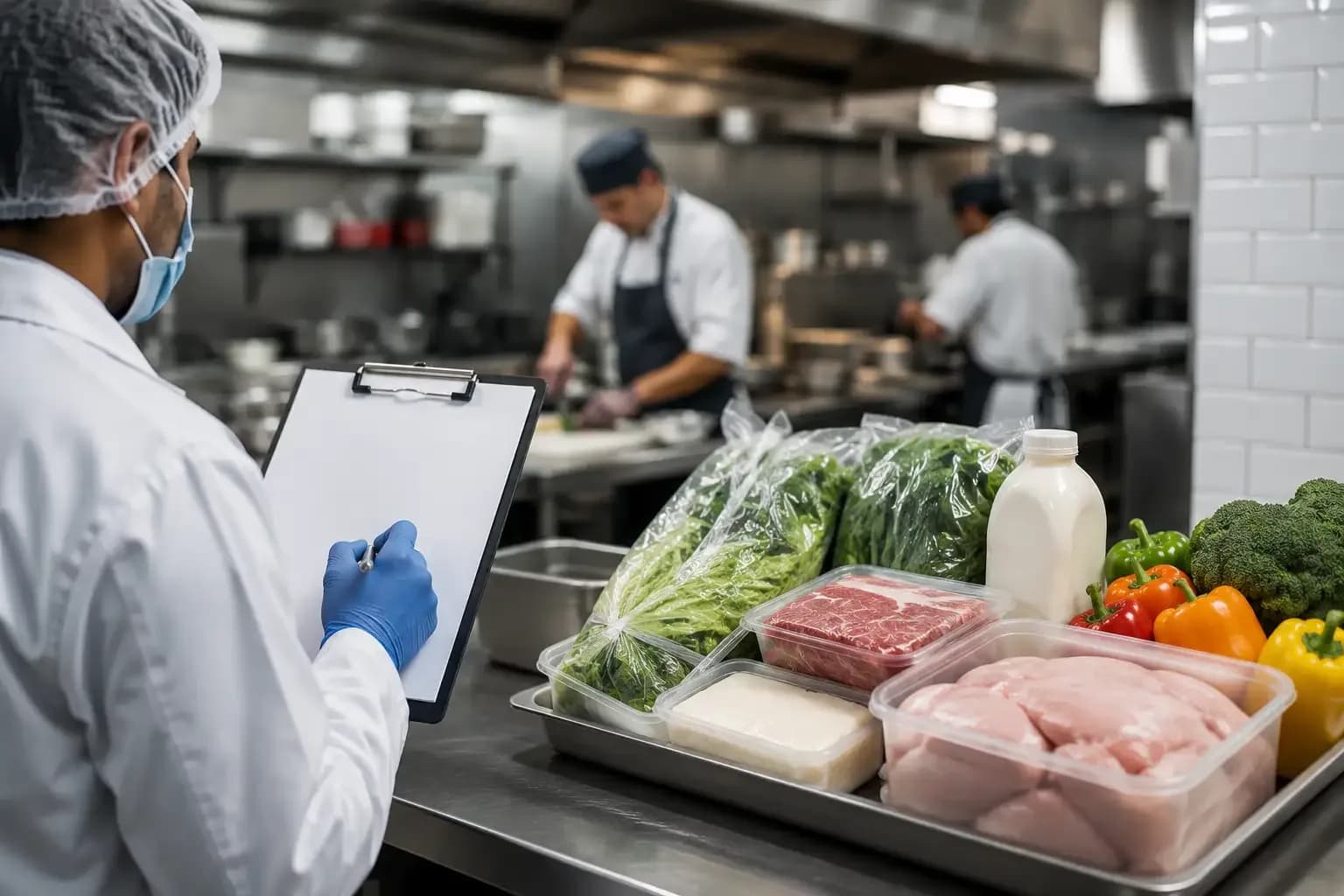
A surprise food safety inspection across some of Bengaluru's leading three-star and five-star hotels has uncovered expired food, fungal growth on vegetables, poor storage practices and other alleged violations, prompting authorities to issue notices to the establishments.
The Karnataka Food Safety and Drug Administration conducted the inspections on Friday, August 7, deploying 30 teams across all Bruhat Bengaluru Mahanagara Palike (BBMP) zones) to check compliance with food safety and hygiene rules.
In total, 26 hotels were inspected and 35 food samples were collected for laboratory testing, according to officials.
The inspections were conducted under the guidance of Karnataka Health Minister UT Khader and covered a range of food products and kitchen practices.
Expired milk, meat and vegetables among items found
Officials reported finding expired milk and dairy products, bakery items, chicken, fish, meat and vegetables at some establishments.
Inspectors also found fungal growth on vegetables, unhygienic kitchen and storage conditions, and problems with the way food was stored and handled.
At some hotels, vegetarian and non-vegetarian food was reportedly not being stored separately. Officials also flagged improper labelling, misbranding and non-compliance with mandatory Food Safety and Standards Authority of India (FSSAI) labelling requirements.
The checks also examined meat-handling practices, including the separation of raw and cooked food, measures to prevent cross-contamination and compliance with cold-chain and temperature-control requirements.
More than 500 kg of food seized
The inspection resulted in the seizure and destruction of substantial quantities of food that officials considered expired or unsuitable for consumption.
At The Lalit Ashok (Annex South), officials seized 76 kg of meat and 200 kg of vegetables, along with 32 litres of expired milk, which was destroyed.
At Radisson Blu (The Atria), officials reported one of the largest seizures, involving 105 kg of expired food, including 50 kg of chicken, 25 kg of meat, 23 kg of fish and 7 kg of vegetables.
Other reported seizures included:
Taj Yeshwantpur: 72 kg of meat and fish
Shangri-La Bengaluru: 15 kg of meat
Four Seasons Hotel Bengaluru: 19 kg of meat
Vivanta Bengaluru Whitefield: 3 kg of expired bakery products, which were seized and destroyed
Taken together, the reported seizures exceeded 500 kg, although the individual figures reported by authorities cover different categories of seized food and should not be interpreted as laboratory-confirmed unsafe food.
35 samples sent for testing
The inspection was not limited to visibly spoiled or expired food.
Officials collected 35 samples for laboratory analysis, covering products such as:
Chicken
Mutton
Fish
Milk
Edible oil
Tea powder
Chilli powder
Turmeric
Pepper and other spices
Tomato sauce
Lemon juice
Cheese
Papad
Cashew nuts
Ginger
The laboratory results will determine whether further action is required in cases where violations need scientific confirmation.
The authorities have already issued notices to the concerned Food Business Operators (FBOs), with adjudication proceedings being initiated under the Food Safety and Standards Act, 2006.
Why were Bengaluru's luxury hotels targeted?
The inspections followed complaints about food quality, hygiene and safety, including complaints raised by members of the public.
Officials said the objective was to ensure that premium hospitality establishments were also meeting the same food safety requirements expected of other food businesses.
The decision to begin with three-star and five-star hotels was deliberate.
Health Minister UT Khader said the government wanted the action to send a wider message to the hospitality industry: premium establishments would not be exempt from food safety enforcement.
Inspections to continue
The enforcement drive is not expected to end with Friday's inspections.
FDA Commissioner Srinivas K said inspections would continue, including checks of hotel kitchens, warehouses and centralised kitchens.
Officials have been instructed to use the FSSAI checklist while examining areas such as:
Meat storage
Cold-storage facilities
Temperature control
Raw and cooked food segregation
Cross-contamination prevention
Cold-chain management
Food labelling
Calorie information displayed on menus
Questions raised over imported meat
The inspection drive also brought attention to the sourcing of ingredients.
According to The News Minute, officials found imported meat from Denmark in one hotel kitchen. Health Minister Khader questioned the supply chain and raised concerns about transportation time and freshness.
However, the presence of imported meat does not itself establish that the product was unsafe. Any such conclusion would require appropriate inspection or laboratory evidence.
The immediate next step is laboratory analysis of the 35 samples collected during the inspections.
Authorities have said that further legal action will be taken where violations are confirmed. The concerned food businesses have also received notices and face adjudication proceedings under the Food Safety and Standards Act.
For consumers, the inspections highlight a broader issue: food safety does not depend on the price of a meal or the number of stars attached to a hotel.
For the hospitality industry, meanwhile, the episode puts renewed attention on inventory management, expiry tracking, cold-chain controls, kitchen hygiene, food segregation and regulatory compliance.
And with inspections continuing, Bengaluru's hotel and restaurant sector could face further scrutiny in the days ahead.