

The Maharashtra Food and Drug Administration (FDA) has suspended the food-business licence of a Parle Agro-linked warehouse in Chembur, Mumbai, after officials found expired beverage stock worth ₹99,970 during an overnight inspection.
The action took place at a Velocity Express warehouse near Chembur Naka, where an eight-member FDA team conducted an inspection beginning at around 6 pm on August 13 and continuing until approximately 5 am on August 14. The premises were subsequently sealed and the expired stock was seized.
The enforcement action comes amid an intensified statewide food-safety campaign led by Maharashtra FDA Commissioner Tukaram Mundhe, which has increasingly brought warehouses, restaurants, hotels, food manufacturers, retailers and online food businesses under regulatory scrutiny.
Expired beverage stock worth ₹99,970 seized
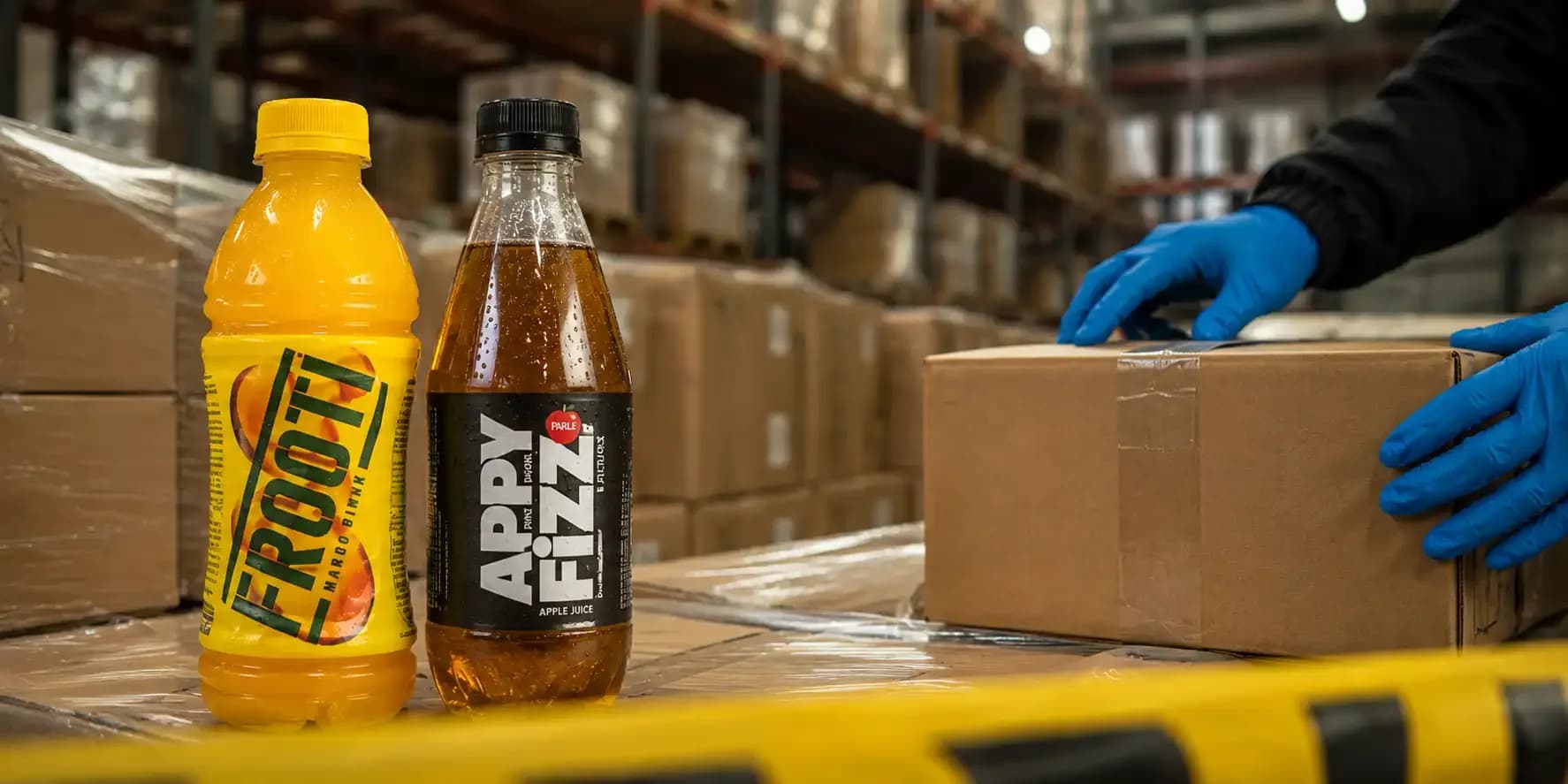
According to reports on the FDA action, officials discovered expired batches of Frooti, Appy Fizz and Candy Juice at the Chembur facility. The total value of the seized stock was assessed at ₹99,970.
The Hindustan Times report on the incident refers to the products as Frooti, Appy and Apple Fizz, while several other reports identify the products as Frooti, Appy Fizz and Candy Juice. Given the discrepancy, the exact product-wise seizure inventory would need to be confirmed from the FDA's official seizure documentation.
Reports also indicate that nearly 1,000 bottles of expired flavoured beverages were involved in the seizure, although the exact quantity of each product has not been consistently reported.
11-hour overnight FDA operation
The inspection was not a routine short visit. An eight-member FDA team reportedly entered the warehouse at around 6 pm on August 13 and continued its operation through the night, concluding at approximately 5 am on August 14.
Following the discovery of expired stock, the authorities took enforcement action against the premises. Reports state that the warehouse was sealed, while two vehicles associated with the facility were also detained or impounded.
The licence suspension means the concerned food business cannot simply continue operations as normal while the regulatory action remains in force.
Importantly, the action should not be interpreted as a shutdown or cancellation of Parle Agro's entire business. The available reporting concerns the licence associated with the particular establishment/warehouse involved in the inspection.
What the FDA action means
Finding expired food products inside a food-business premises is a serious regulatory issue because food products that have passed their applicable expiry or use-by date cannot legally be sold or distributed for human consumption.
Under the Food Safety and Standards Act, 2006, food-safety authorities have powers to inspect premises, seize food suspected of contravening food-safety requirements and take action against licensed food businesses.
The Act also provides for suspension of a food licence in circumstances involving public-health concerns and establishes an appeal mechanism for affected food-business operators.
However, the seizure itself does not establish that the expired beverages had been sold to consumers.
At present, there is no verified information establishing that the specific seized stock had reached consumers, that anyone had consumed it or that anyone had fallen ill after consuming it. The known facts establish that expired stock was found at the warehouse and subsequently seized by the regulator.
A larger food-safety crackdown in Maharashtra
The Parle Agro-linked warehouse action comes against the backdrop of a much larger enforcement campaign underway across Maharashtra.
Since Tukaram Mundhe took charge as Maharashtra FDA Commissioner on May 25, 2026, the department has significantly intensified inspections of food businesses across the state.
Between May 25 and July 31, the FDA inspected 3,137 food establishments, according to figures reported by the Free Press Journal and Indian Express. Of these, 2,373 establishments, or 75.6%, were found compliant and did not require corrective action.
The enforcement figures for that period included:
3,137 food establishments inspected
764 improvement notices issued
165 licences suspended
28.66 lakh kg of food products seized
Seized food valued at approximately ₹55.72 crore
890 hotels, restaurants and dhabas inspected
116 hotel, restaurant and dhaba licences suspended
The figures illustrate that the FDA's current campaign extends well beyond restaurants and street-food establishments and increasingly covers the broader food supply chain.
Quick-commerce and online food businesses also under scrutiny
The Chembur warehouse raid followed another major FDA enforcement exercise targeting establishments associated with online food and quick-commerce operations.
The FDA inspected 86 establishments linked to online food delivery and quick-commerce activities, issuing 60 improvement notices and suspending multiple licences. Inspections reportedly identified problems including pest infestations, rodent droppings, expired food, poor storage practices and inadequate hygiene controls.
The campaign has placed companies operating in the rapidly expanding online food and grocery ecosystem under greater scrutiny, with regulators examining not only restaurants and kitchens but also warehouses and storage facilities from which food products reach consumers.
Why the Parle Agro case matters beyond ₹99,970
The monetary value of the seized stock—₹99,970—is relatively modest when compared with the scale of a major beverage company.
The regulatory significance, however, is considerably larger.
A warehouse is an important link between manufacturing, distribution and retail. Expired products being found there raises questions about inventory management, stock rotation, expiry monitoring, segregation of expired goods and the systems used to prevent non-saleable products from entering the distribution chain.
The FDA's action therefore highlights an issue that extends beyond one beverage brand: food safety does not end at the factory gate or restaurant kitchen. It also depends on how products are stored, monitored and controlled throughout the supply chain.
Does the seizure mean the beverages were sold after expiry?
Not necessarily.
The available reports establish that expired products were found at the warehouse. They do not establish that the same stock had already been sold to consumers.
There is also no verified evidence at present that Parle Agro deliberately attempted to sell expired products.
Several questions remain unanswered, including how long the products had remained at the facility after their expiry dates, whether they had been segregated from saleable inventory, whether they were awaiting disposal or return, and whether any of the seized stock had entered the distribution network.
Those details will depend on the FDA's inspection and seizure records and any subsequent proceedings.
What happens next?
The immediate regulatory consequences are the seizure of the expired stock, sealing of the premises and suspension of the relevant food-business licence.
The next stage could involve further regulatory proceedings depending on the FDA's findings.
The Food Safety and Standards Act provides mechanisms for enforcement action as well as an appeal against licence suspension. The final outcome will therefore depend on the regulatory proceedings and any response or corrective action by the concerned food-business operator.
As of August 16, there is no verified public information establishing that the seized products have already been destroyed or that criminal prosecution specifically arising from this incident has been completed.
Parle Agro's response
As of publication, no detailed public statement from Parle Agro addressing the specific Chembur warehouse seizure and licence suspension could be independently verified from the company's publicly available channels.
Parle Agro lists a dedicated media contact on its official website, but a company response to this particular FDA action was not available in the sources reviewed for this report.
Indian Food Times will update this report if Parle Agro or the Maharashtra FDA releases further details, including the exact licence involved, batch numbers, quantities, expiry dates, disposal status or the company's response.
The larger message for India's food industry
The Chembur action is another indication that food-safety enforcement in Maharashtra is moving beyond conventional checks at restaurants and manufacturing units.
Warehouses, distributors, quick-commerce facilities and other points in the supply chain are increasingly becoming part of the regulator's focus.
For food companies, the episode underscores a basic but critical principle: an expired product sitting in a warehouse can become a regulatory liability even if it has not yet reached the consumer.
For consumers, meanwhile, the case reinforces the importance of checking expiry or use-by information before purchasing packaged beverages and other food products.
And for the food industry, the message from the Maharashtra FDA's ongoing campaign is increasingly clear: food-safety compliance is being examined across the entire journey of a product—from storage and distribution to the final point of sale.
This article is based on available reports from the Maharashtra FDA's ongoing enforcement campaign and multiple independent news reports. Product-wise quantities, the precise licence details and the final regulatory outcome remain subject to confirmation from the authorities.