
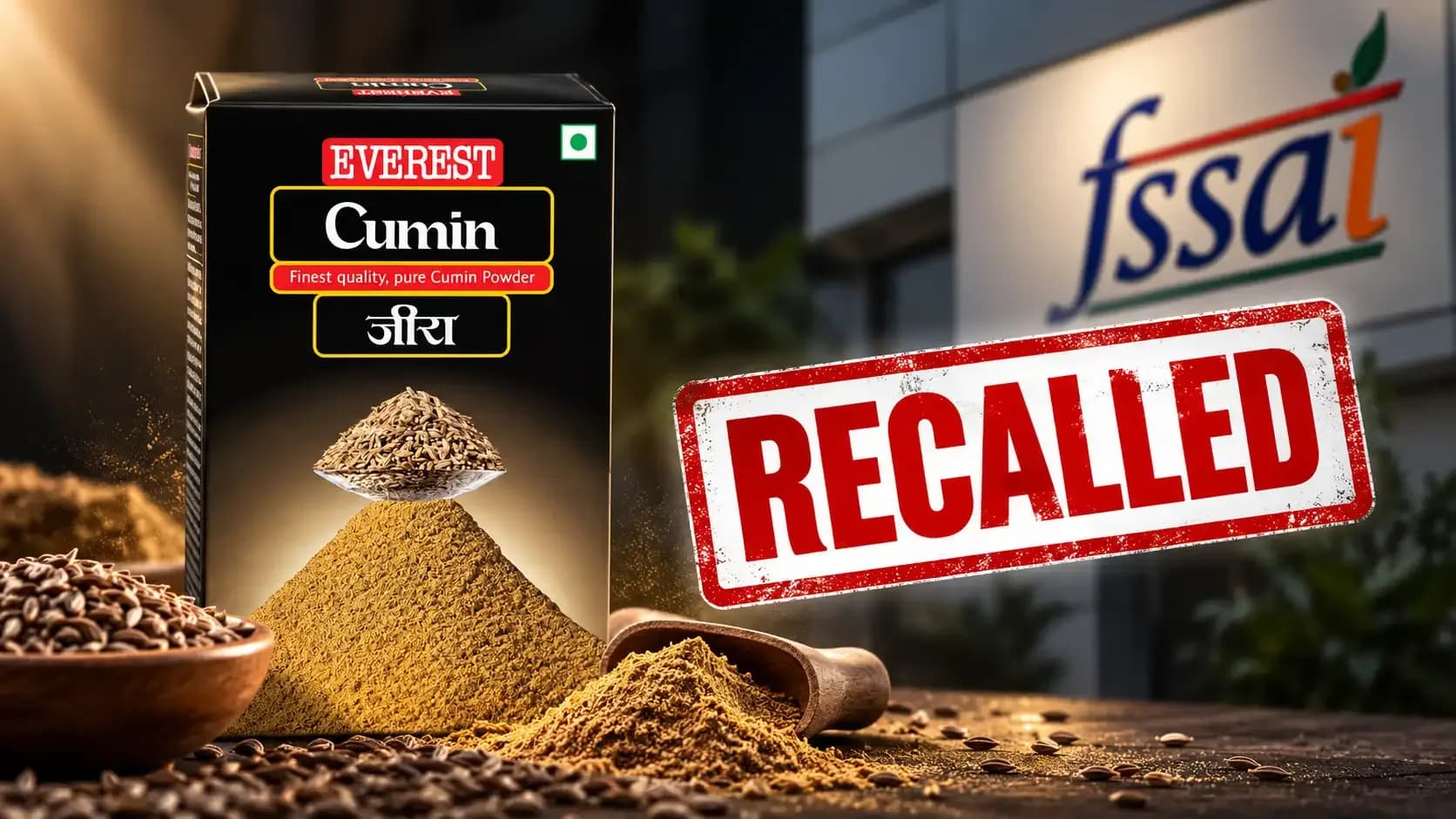
The Food Safety and Standards Authority of India (FSSAI) has ordered the immediate recall of a specific batch of Everest Cumin Powder after regulatory testing found pesticide residues above the prescribed limits, leading the product to be classified as “unsafe” under India’s food safety regulations.
The action concerns Batch No. E080668761 of Everest’s pre-packed Cumin Powder.
According to the regulatory findings, the sample contained residues of Azoxystrobin and Thiamethoxam exceeding the applicable maximum residue limits (MRLs).
Sample Collected in Goa
The regulatory sample was collected from Riverside Resorts & Holiday Homes Pvt. Ltd. in Goa as part of food-safety surveillance.
The sample was subsequently analysed by a Food Analyst, who found that the pesticide residues did not comply with the prescribed standards. The product was consequently classified as unsafe.
The matter did not end with the initial laboratory finding.
The company was provided an opportunity to challenge the result, following which the sample was referred for further examination by a Referral Food Laboratory.
The referral testing also confirmed the product as unsafe.
Following the confirmation, FSSAI directed the recall of the implicated batch from the market.
Which Everest Product Is Affected?
The enforcement action specifically identifies:
Brand: EverestProduct: Cumin PowderBatch: E080668761Issue: Pesticide residues above permitted limitsRegulatory classification: UnsafeAction: Immediate recall
The action is batch-specific. It should not be interpreted as a recall of all Everest Cumin Powder products or all products manufactured by Everest Food Products.
What Were the Pesticide Findings?
The laboratory testing identified two pesticide residues:
Azoxystrobin
Azoxystrobin is a fungicide widely used in agriculture to control fungal diseases affecting crops.
Thiamethoxam
Thiamethoxam is a systemic insecticide used to control a range of agricultural pests.
The regulatory concern in this case is not simply the presence of these substances. The issue identified by the laboratory testing was that their residues were above the maximum levels permitted under applicable food-safety standards.
Maximum residue limits are established to regulate the amount of pesticide residue that may legally remain in food following agricultural use.
Why the Second Laboratory Test Matters
One of the significant aspects of the case is that the finding was not based solely on the initial laboratory analysis.
After the initial test classified the sample as unsafe, the company was given an opportunity to contest the finding. The sample was then examined by a Referral Food Laboratory.
The subsequent confirmation strengthened the regulatory basis for the recall order.
FSSAI thereafter directed the food business operator to initiate the recall of the affected batch and comply with the regulator's requirements regarding recall documentation and corrective action.
What Consumers Should Know
Consumers who have Everest Cumin Powder should check the batch number printed on the packaging.
The FSSAI action concerns Batch E080668761.
Consumers should not assume that every pack of Everest Cumin Powder is affected by this particular order. The available regulatory information identifies a specific batch rather than announcing a blanket recall of Everest's cumin powder range.
Anyone possessing the identified batch should follow the recall instructions issued by the company or food-safety authorities rather than continuing to use the product.
A Wider Food-Safety Question
The action also highlights the importance of pesticide-residue monitoring in India's packaged-spice industry.
Spices such as cumin pass through multiple stages before reaching consumers, including cultivation, harvesting, processing, grinding, packaging and distribution. Controlling pesticide residues therefore requires compliance and monitoring across the supply chain.
For regulators, batch-level testing provides a mechanism to identify products that do not meet prescribed safety standards and remove them from circulation.
For consumers, the case is a reminder that brand recognition alone does not replace batch-level traceability and regulatory testing.
The FSSAI action against Everest is therefore significant not because it concerns the company's entire product portfolio, but because a specific packaged-food batch was tested, found non-compliant for pesticide residues, independently reviewed through the referral process and subsequently ordered to be recalled.