

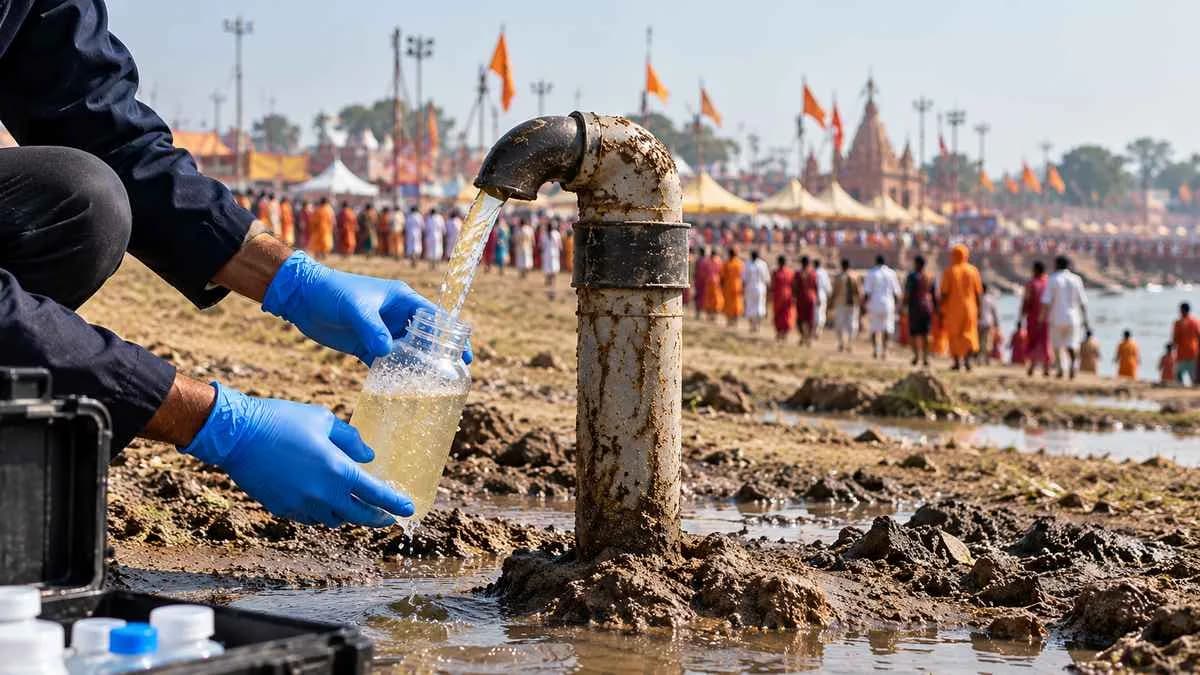
NASHIK, Maharashtra: Groundwater contamination in Ambad, Nashik, has raised serious environmental and public-health concerns ahead of the upcoming Nashik-Trimbakeshwar Kumbh Mela, after laboratory tests cited by environmental organisation South Asia Network on Dams, Rivers and People (SANDRP) reportedly detected exceptionally high levels of hexavalent chromium, a toxic chemical associated with cancer risk.
According to SANDRP, a groundwater sample collected from the affected locality contained hexavalent chromium at 50.3 milligrams per litre (mg/L), significantly exceeding the drinking-water limit of 0.05 mg/L cited in its report. If independently confirmed, the reported concentration would be approximately 1,006 times that limit.
The findings have renewed scrutiny of industrial pollution in Nashik’s Ambad industrial area, the safety of groundwater used by nearby communities and the potential implications for the Godavari River as preparations for the religious gathering progress.
Groundwater contamination raises public-health concerns
SANDRP’s October 8 statement described a situation in which groundwater in an affected residential settlement had reportedly turned bright yellow. The organisation said local concerns about the water prompted sampling and laboratory testing.
The reported results showed total chromium concentrations of 50.5 mg/L, including 50.3 mg/L of hexavalent chromium, also known as chromium-6 or Cr(VI).
Hexavalent chromium is a hazardous form of chromium used in certain industrial processes, including metal finishing and electroplating. Exposure can occur through contaminated drinking water, inhalation or direct contact, depending on the circumstances.
Certain chromium(VI) compounds are classified as carcinogenic to humans by the International Agency for Research on Cancer. Exposure can also cause skin irritation, dermatitis and ulcers, while sufficiently high exposures may damage organs.
However, the reported laboratory findings and their implications for the wider area require independent verification by the relevant regulatory authorities. The extent of contamination, the duration of exposure and the precise pathways through which residents may have been exposed have not been established by the reported figures alone.
Residents report skin problems and other health complaints
Reports from the affected locality have described residents experiencing skin rashes, blisters and ulcers, raising concerns about prolonged exposure to potentially contaminated water.
Subsequent media reports have cited 119 people with skin-related complaints in the area, where the local population has been reported to be approximately 25,000.
Residents have also reportedly raised concerns about inadequate access to alternative water supplies, potentially increasing their dependence on local groundwater sources.
The reported health complaints warrant an independent medical assessment and a public-health investigation. While chromium exposure can cause skin problems and certain forms of chromium are associated with cancer, a direct causal relationship between the reported contamination and individual illnesses has not been established in the available reporting.
Public-health experts and district authorities would need to assess residents, examine their exposure histories and determine whether contaminated water is responsible for the observed symptoms.
Industrial pollution under scrutiny
The contamination has placed industrial activity around the Ambad Maharashtra Industrial Development Corporation (MIDC) area under scrutiny.
Industrial processes involving chromium, including electroplating and metal treatment, can generate hazardous wastewater if effluent is not adequately treated before discharge. Improper disposal of industrial waste can contaminate soil, groundwater and nearby water bodies.
However, the identification of the precise pollution source remains critical. The reported test results do not, by themselves, establish which facility or facilities may be responsible for the contamination.
According to SANDRP’s account, the Maharashtra Pollution Control Board (MPCB) had issued a show-cause notice to a company in connection with the matter in late September.
A subsequent report by Marathi news outlet Loksatta stated that 13 factories had been shut and their electricity and water supplies disconnected over inadequate effluent treatment. The specific orders, the reasons for each closure and the relationship between these enforcement measures and the reported chromium contamination require confirmation from the authorities.
The MPCB’s findings will be important in determining whether illegal industrial discharges occurred, identifying any responsible operators and establishing what corrective measures are necessary.
Godavari River and Kumbh Mela preparations add urgency
The reported contamination has taken on additional significance because Nashik is preparing for the Nashik-Trimbakeshwar Kumbh Mela, which is expected to bring large numbers of pilgrims to the region.
SANDRP has raised concerns that contaminated water may be reaching the Godavari River through a local drainage channel. If confirmed, such a discharge would require an urgent assessment of water quality and potential exposure risks.
The concern extends beyond the immediate neighbourhood. Groundwater contamination can persist after a pollution source is removed, while contaminated industrial wastewater entering a river may affect water quality downstream.
Nevertheless, the reported groundwater results do not establish that the entire Godavari River or all designated bathing ghats are contaminated. Determining the actual risk to pilgrims requires systematic sampling at specific locations, including upstream and downstream points, drainage outlets and bathing areas.
With preparations for the gathering underway, timely testing and transparent publication of the results would help authorities determine whether restrictions or additional safeguards are necessary.
Calls for safe water, medical screening and environmental remediation
SANDRP has called for immediate intervention to protect affected residents and prevent further pollution.
Its demands include providing a reliable supply of safe drinking water, arranging medical screening for residents, investigating potential industrial sources and testing the Godavari River and connected drainage channels.
The organisation has also called for action against industries found to be discharging inadequately treated effluent and for remediation of contaminated groundwater.
Environmental remediation can be complex, particularly when pollutants have entered an underground aquifer. The appropriate response depends on the extent of contamination, the geological conditions, the source of the pollutant and whether contamination is continuing.
Authorities will need to determine the affected area, identify safe alternative water sources and develop a scientifically appropriate plan to prevent further exposure and address existing contamination.
Regulatory response will be crucial
The reported findings place the focus on the speed and transparency of the official response. Independent confirmation of the laboratory results, disclosure of sampling locations and methods, and publication of follow-up test results will be essential to establish the scale of the problem.
The immediate priorities are to protect residents from potentially contaminated water, establish the source of the pollution and determine whether the Godavari River or any designated Kumbh bathing locations are affected.
The episode also highlights the broader challenge of managing industrial wastewater in rapidly expanding urban and industrial areas, where inadequate treatment and enforcement can create risks for communities and natural water systems.
As Nashik prepares for the Kumbh Mela, the reported contamination underscores the importance of treating water quality as a public-health priority. The next steps taken by the MPCB, district administration and municipal authorities will be critical in determining the extent of the contamination, the accountability of any responsible parties and the measures required to safeguard residents and pilgrims.