

India Is Producing More Rice Than It Can Consume. What Happens to the Growing Surplus?
India's record rice production has strengthened its position in the global food market, but rising stocks are creating new challenges involving storage, government spending, water resources and the future of farming.
India, November 19, 2026
India has spent decades trying to produce enough food for its growing population. Today, the situation has changed considerably. The country is harvesting more rice than it consumes, exporting large quantities to other markets and struggling to manage the growing stock.
According to a Reuters report published on November 18, India's rice production reached a record 154 million tonnes in 2025–26, while domestic consumption was estimated at around 107 million tonnes. That difference is now raising questions about how the country should manage its growing surplus.
From Food Shortages to Record Production
There was a time when producing enough rice was a serious challenge for India. Improvements in agricultural research, better crop varieties and government support gradually changed the situation.
One important development was the introduction of flood-tolerant rice varieties. These helped farmers in eastern states, particularly Bihar and Odisha, protect their crops in areas where floods regularly damaged harvests.
For many farmers, the change has been significant. Fields that once struggled to produce enough food are now giving much higher yields.
India's rice exports have also grown. The country exported around 22.3 million tonnes in 2025, accounting for approximately 40% of global rice trade.
More Rice, But Not Enough Storage Space
Producing more food sounds like good news, but managing such a large quantity is not easy.
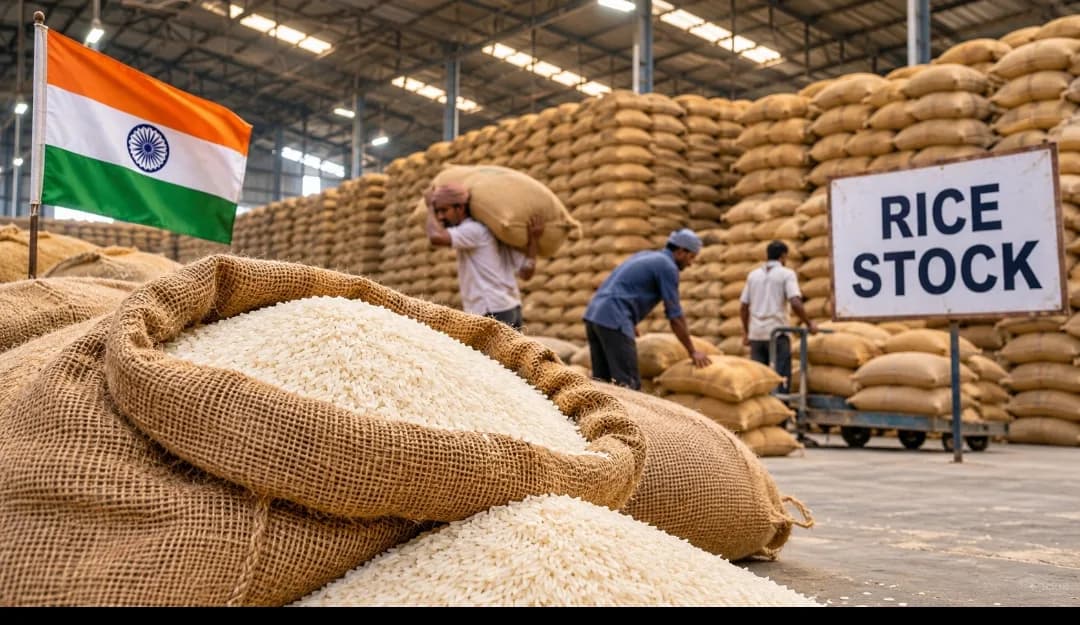
Government warehouses are facing pressure as rice stocks continue to increase. Reuters reported that government rice reserves reached a record 55.47 million tonnes on October 1, 2026, more than four times the official stocking target.
The problem is not simply about growing rice. It is also about storing, transporting and distributing it at the right time.
When warehouses remain occupied with older stocks, there is less room for newly harvested crops. This can create difficulties for procurement agencies and farmers waiting for their produce to be purchased.
The government has planned additional storage capacity, but building warehouses and improving the supply chain takes time.
The Impact Goes Beyond the Rice Market
There is another concern that deserves attention: water.
Rice cultivation requires considerable amounts of water, particularly in regions where farmers depend heavily on irrigation. Continued expansion of rice production can put additional pressure on groundwater resources.
At the same time, India imports large quantities of edible oils and pulses. Experts have raised concerns that the strong focus on rice production may leave fewer resources and incentives for farmers to grow these other crops.
This creates an important question for India's agricultural future: should the country continue increasing rice production, or should it encourage farmers to grow a wider variety of crops?
What This Means for the Food Industry
The growing rice surplus is not just an agricultural issue. It also affects food processing companies, exporters, storage businesses, transport networks and international rice prices.
A larger supply can create opportunities for exports and food processing. However, poor storage management and rising production costs can reduce the benefits.
India's challenge now is not simply to produce more rice. It is to make sure that the rice already being produced is stored properly, distributed efficiently and sold through a sustainable market.
The country has made remarkable progress in food production. The next step is making that progress work better for farmers, consumers and the wider food industry.
Source: Reuters, November 18, 2026.