
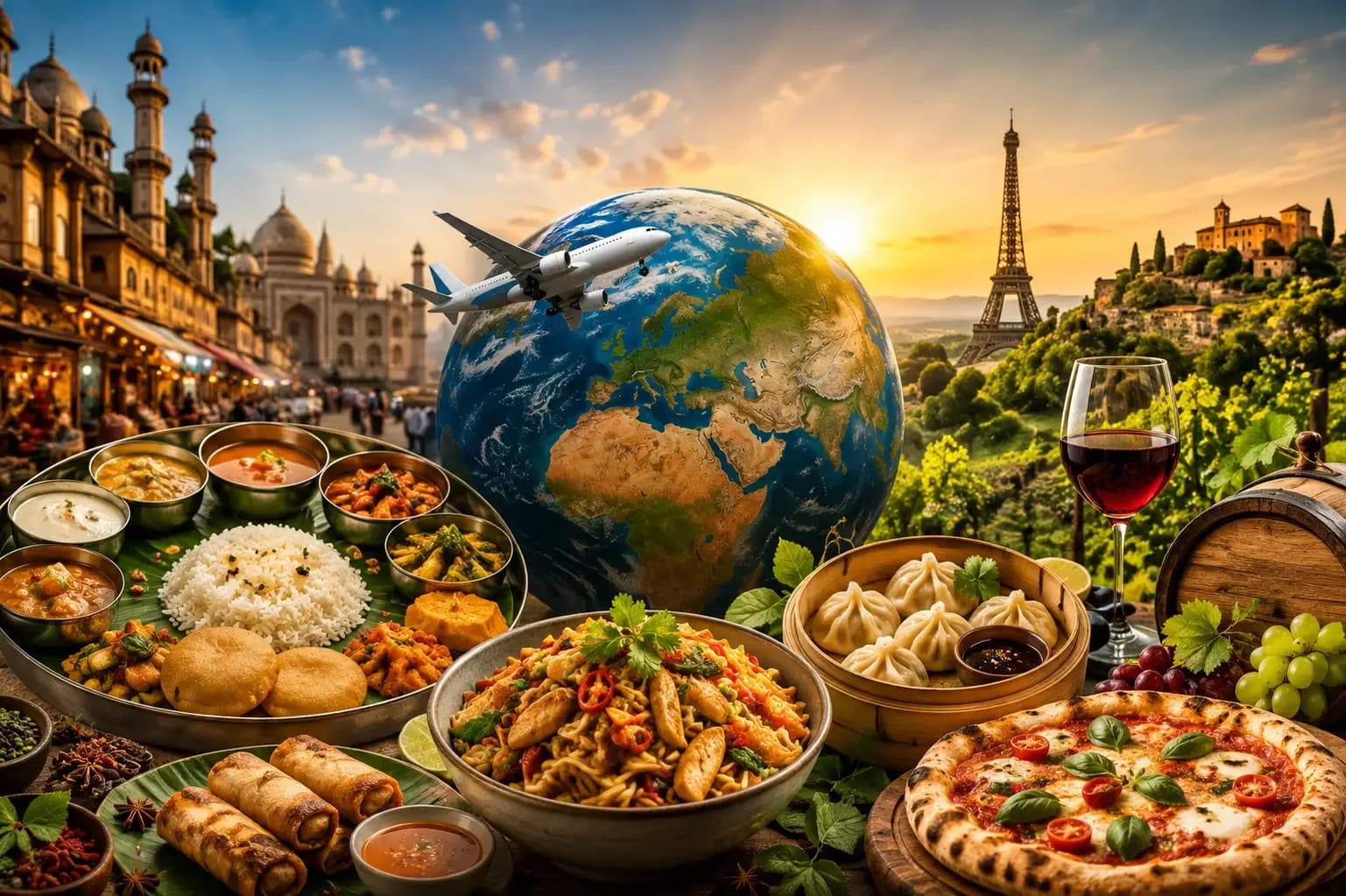
Food is no longer just a part of travel—it has become the journey itself.
From Michelin-starred restaurants in Europe to bustling street food markets across Asia, travelers today are planning vacations around authentic culinary experiences. What was once considered a niche segment has evolved into one of the fastest-growing sectors in global tourism, generating over $1.25 trillion in travel spending worldwide.
According to industry estimates, the global culinary tourism market is entering a period of unprecedented growth. The organized market for food tours, cooking experiences, and gastronomic travel is valued at $19.1 billion in 2026 and is projected to reach $76.4 billion by 2033, growing at an impressive 21.9% compound annual growth rate (CAGR).
For governments around the world, food is no longer just culture—it's becoming a powerful economic engine, a tourism strategy, and an instrument of global soft power.
Why Food Tourism Is Growing Faster Than Ever
Modern travelers are increasingly seeking experiences that connect them with local culture rather than traditional sightseeing alone.
Industry data shows that more than 81% of international travelers consider authentic local cuisine as a major factor when choosing a travel destination. Food and beverages now account for 25% to 35% of a tourist's total travel expenditure, with the share exceeding 40% in leading culinary destinations.
Millennials and Gen Z travelers are driving this transformation. Nearly 40% of culinary tourists belong to the millennial generation, preferring immersive experiences such as street food walks, cooking classes, vineyard tours, spice plantations, and farm-to-table dining over conventional luxury travel.
As a result, governments are increasingly positioning food tourism as a long-term economic growth strategy.
How Countries Are Turning Food into a Tourism Strategy
Several nations have successfully transformed their traditional cuisines into globally recognized tourism brands.
Countries such as Japan, France, and Italy have leveraged UNESCO's Intangible Cultural Heritage recognition to promote iconic culinary traditions like Washoku, French gastronomy, and Neapolitan pizza.
Meanwhile, tourism boards across Asia, Europe, and the Middle East have partnered with internationally recognized restaurant guides such as the Michelin Guide to strengthen their hospitality ecosystems and attract high-spending travelers.
Governments are also investing heavily in specialized food tourism infrastructure, including:
Wine trails across Italy, France, and Spain
Coffee tourism in Colombia and Ethiopia
Spice plantations in Southeast Asia
Seafood routes and farm experiences
Dedicated culinary festivals
Heritage food markets
Rather than concentrating tourism in major cities, these initiatives help distribute visitor spending to rural communities and local producers.
Street Food Is Becoming a National Asset
Street food, once considered informal, is now being recognized as a major tourism attraction.
Countries including Thailand, Singapore, and South Korea have modernized street food ecosystems by investing in hygiene infrastructure, vendor training, waste management systems, and internationally accepted food safety standards.
These improvements have allowed traditional street food cultures to remain authentic while meeting the expectations of international tourists.
As a result, food markets themselves have become globally recognized tourist destinations.
India's Culinary Tourism Industry Is Entering a New Growth Phase
India, home to one of the world's most diverse food cultures, is increasingly positioning itself as a leading culinary tourism destination.
The Indian culinary tourism market is currently valued at $15.9 billion in 2026 and is expected to grow to $67.7 billion by 2036, registering a strong 15.6% CAGR.
Food now accounts for nearly 30–35% of domestic and international travel spending within India, reflecting the growing importance of regional cuisines in travel planning.
From Himalayan cuisine to coastal seafood, royal kitchens to tribal recipes, India's diversity offers one of the richest culinary landscapes in the world.
FSSAI's Clean Street Food Initiative Is Changing Perceptions
One of India's biggest challenges in attracting international culinary tourists has been concerns around food hygiene.
To address this, the Food Safety and Standards Authority of India (FSSAI) has introduced the Clean Street Food Hub initiative.
Under this programme, popular food destinations such as Sarafa Bazaar (Indore), Manek Chowk (Ahmedabad), and Chandni Chowk (Delhi) are being upgraded with standardized food safety practices, improved water quality, better waste management, and vendor hygiene training.
The initiative aims to build greater confidence among both domestic and international tourists while preserving India's vibrant street food culture.
Local Ingredients Are Becoming Tourist Attractions
India's culinary tourism strategy increasingly revolves around showcasing regional identity.
Government initiatives such as One District One Product (ODOP) and Geographical Indication (GI) tagging are helping connect agriculture, culture, and tourism.
Several regional specialties have become important attractions, including:
Mithila Makhana (Bihar)
Kashmir Saffron
Darjeeling Tea
Goan Feni
Alphonso Mangoes
Nagpur Oranges
Basmati Rice
These products are not only strengthening exports but also encouraging travelers to visit the regions where they originate.
Wellness Tourism Is Giving Indian Cuisine a Global Advantage
India is also leveraging its centuries-old wellness traditions.
Ayurvedic diets, millet-based meals, sattvic cuisine, herbal ingredients, and seasonal eating practices are increasingly being integrated into wellness retreats across Kerala, Uttarakhand, Himachal Pradesh, and Karnataka.
As health-conscious tourism grows globally, wellness gastronomy is becoming another major pillar of India's culinary tourism strategy.
States Leading India's Food Tourism Revolution
Several Indian states are developing unique culinary tourism models.
Goa continues to attract visitors with Indo-Portuguese cuisine, seafood experiences, spice plantations, and Feni distillery tours.
Kerala combines Ayurvedic wellness, houseboat Sadya feasts, spice plantations, and farm-to-table experiences.
Uttar Pradesh promotes Awadhi cuisine, royal dining traditions, and heritage street food circuits in Lucknow, Varanasi, and Agra.
Maharashtra is expanding vineyard tourism in Nashik, Konkan coastal food trails, and organized Mumbai street food experiences.
Rajasthan offers royal palace dining, heritage kitchens, traditional thalis, and desert cuisine experiences that showcase centuries-old culinary traditions.
Together, these initiatives are helping diversify India's tourism offerings beyond monuments and natural attractions.
Food Tourism Is Creating New Opportunities for Small Businesses
Beyond attracting tourists, culinary tourism is emerging as a powerful source of income for local communities.
Industry estimates suggest that structured food walks, local cooking experiences, and heritage food markets can generate ₹15–20 crore annually for a single heritage city cluster.
The economic benefits extend across the entire food value chain, supporting:
Street food vendors
Small farmers
Spice growers
Homestay operators
Traditional sweet makers
Local chefs
Tour guides
Artisans
Hotels and resorts are also reporting higher guest spending and longer stays by introducing cooking workshops, farm visits, regional tasting menus, and immersive culinary storytelling.
As global travelers increasingly seek authentic experiences over conventional sightseeing, food has become one of the most influential drivers of tourism.
Countries worldwide are investing billions in culinary branding, rural food trails, food safety infrastructure, and cultural preservation to attract international visitors.
For India, the opportunity extends beyond tourism. Culinary tourism has the potential to strengthen agriculture, preserve regional food traditions, generate employment, empower local communities, and boost exports—all while showcasing the country's incredible culinary diversity on the global stage.
With initiatives such as FSSAI's Clean Street Food Hubs, ODOP, GI-tagged products, wellness gastronomy, and state-led food tourism campaigns gaining momentum, India is steadily building the foundation to become one of the world's leading culinary tourism destinations.
The coming decade may well determine whether India's rich food heritage becomes one of its strongest global tourism assets.