

If Temple Is Not Made for India, Why Should India Buy It?
Deepinder Goyal has a message for Indian consumers: Temple is not made for India. It is made for the world.
But his statement raises another question that deserves attention: if India is not the market Temple is being built for, why does the company expect even 1% of its sales to come from the country?
The Zomato founder has triggered a debate after saying that he does not expect more than 1% of Temple's total sales to come from India. The statement came in response to criticism surrounding the device's reported ₹85,000 price tag.
In a post on X, Goyal said, "Temple is not made for India. It's made for the world."
While the statement may be intended to clarify the company's global ambitions, it also exposes an interesting contradiction. Temple is being developed by an Indian founder, yet the domestic market appears to be almost irrelevant to its commercial strategy.
And if that is the case, why keep India in the sales equation at all?
An ₹85,000 Product With Almost No Expectations From India
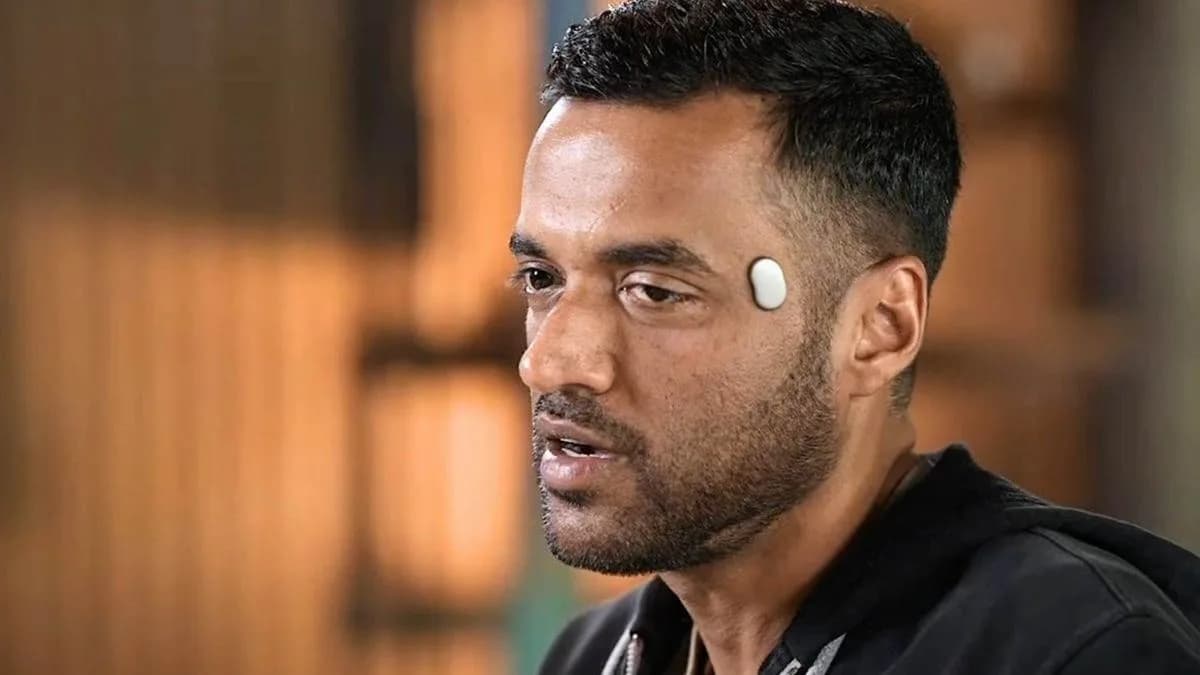
Temple is not an ordinary smartwatch or fitness tracker. The wearable is designed to sit near the forehead and collect physiological data, with ambitions extending into AI-powered personal assistance.
Its reported Indian price of ₹85,000 immediately puts it in a premium consumer technology category.
For most Indian consumers, that is a significant amount to spend on a relatively new wearable technology, particularly when its more ambitious scientific claims are still awaiting broader independent validation.
Goyal's expectation that India will contribute less than 1% of sales suggests that the company understands this limitation.
But it also raises a commercial question. If the product is priced and positioned primarily for international consumers, is the Indian launch intended to establish a domestic customer base, create visibility or simply make the product available in the founder's home country?
The company has not publicly established that the Indian market is a meaningful part of its sales strategy.
Global Ambition Is Fine. But Why Include India in the Target?
There is absolutely nothing wrong with an Indian company building products for international markets.
In fact, Indian founders should aim to compete globally, develop premium technology and build businesses that are not restricted by domestic purchasing power.
However, Goyal's statement goes beyond saying that Temple is a global product.
By suggesting that India will contribute less than 1% of sales, he is effectively acknowledging that the domestic market is not central to the business.
That makes the expectation of even that 1% interesting.
If Temple is not designed around Indian consumer needs, purchasing power or market demand, why should Indian consumers be expected to participate in its commercial success?
Should a product built for global customers be evaluated by its international adoption rather than the small percentage of sales it might generate in its country of origin?
These are questions worth asking, especially when the company is simultaneously presenting itself as an ambitious technology venture founded in India.
Temple Wants to Be More Than a Wearable
The company is not simply selling a device that counts steps or tracks sleep.
Goyal's larger vision includes BrainFlow, Entropy and Roomdeaf AI.
BrainFlow is intended to measure relative changes associated with blood circulation in the brain, while Entropy is described as a measure of the body's physiological workload.
Roomdeaf AI is another ambitious concept that aims to capture the wearer's speech through motion sensors detecting vibrations, without relying on a conventional microphone.
The long-term vision is to create a screen-free personal AI companion that can understand the wearer, remember information and assist with everyday activities.
It is an ambitious proposition, but there is still a gap between the company's technological vision and what has been independently established about the product's capabilities.
Medical professionals have questioned the scientific evidence supporting some of its claims. Goyal, meanwhile, has defended the research and maintained that Temple is a fitness and wellness product, not a medical diagnostic device.
For a wearable commanding ₹85,000, scientific credibility and real-world usefulness will be critical to its adoption.
The Bigger Question: Who Is Temple Actually Building For?
India's startup ecosystem has spent years celebrating the idea of Indian founders creating products for the world.
Temple represents another version of that ambition: a premium technology product that does not depend on the Indian mass market.
But there is a difference between not targeting the mass market and openly stating that the home country is expected to contribute almost nothing to sales.
Goyal is entitled to build for whichever market he believes offers the strongest opportunity. Consumers are equally entitled to question the product's price, relevance and scientific claims.
The real test for Temple will not be whether India contributes 1% or 10% of its sales.
It will be whether global consumers find enough value in the technology to pay ₹85,000 for it.
Until then, one question remains: If Temple is made for the world and not for India, why is India expected to contribute even that 1%?