
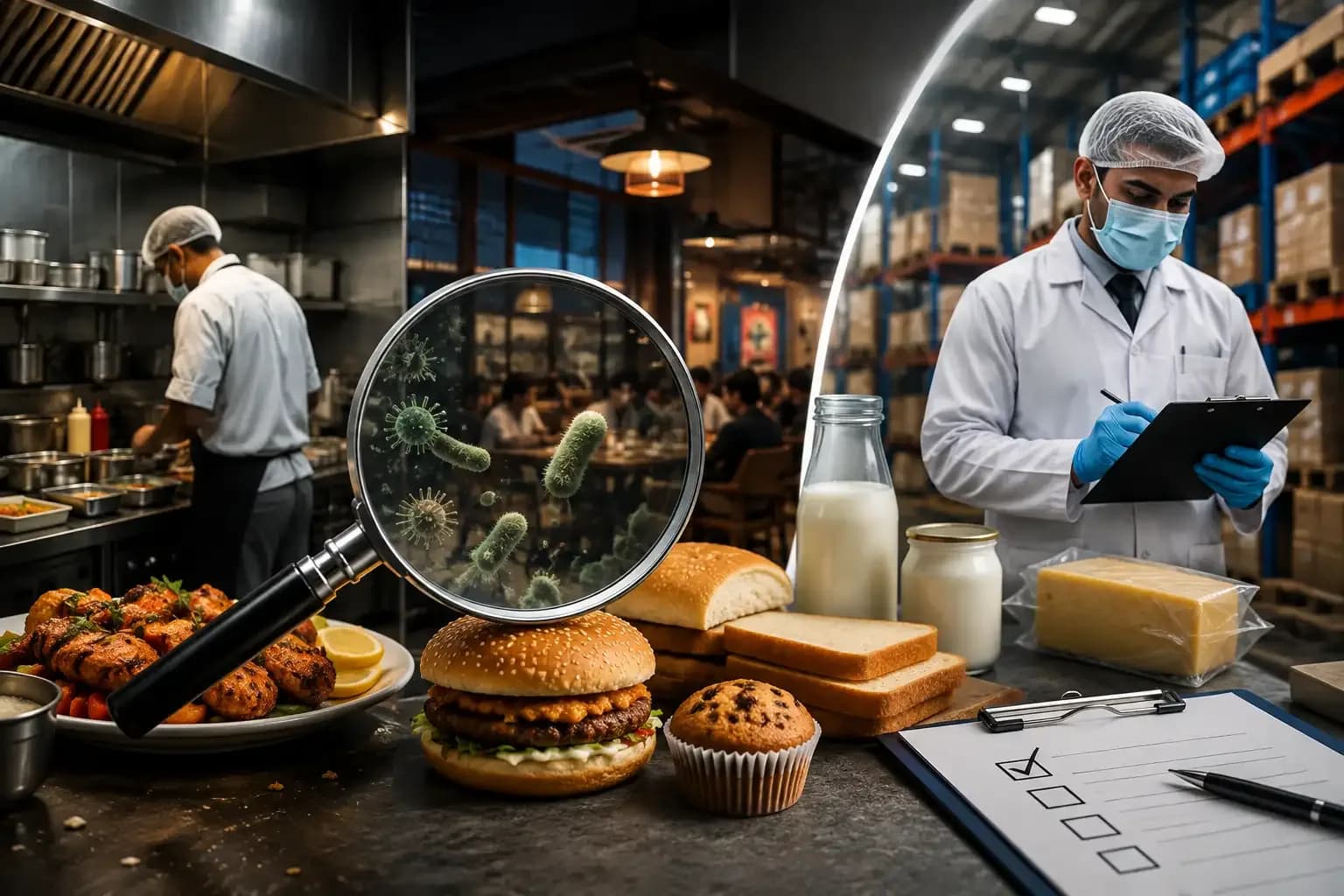
For years, food safety inspections in India rarely dominated national headlines. But over the past several weeks, that has changed dramatically.
From iconic Mumbai restaurants and decades-old bakeries to elite sports clubs and major food manufacturers, the Food Safety and Standards Authority of India (FSSAI) and state Food and Drug Administration (FDA) authorities have launched one of the most visible enforcement drives seen in recent years. Inspections have uncovered pest infestations, poor sanitation, expired ingredients, inadequate record-keeping, and other violations that have resulted in licence suspensions, improvement notices and temporary closures.
The obvious question consumers are asking is:
Why now?
Is this evidence that food safety standards have deteriorated? Or does it reflect stricter enforcement and more aggressive inspections than before?
While only regulators can fully answer those questions, recent events suggest India is entering a far more assertive phase of food safety enforcement.
A Wave of Enforcement Across the Food Industry
The recent actions have not been limited to a single city or one category of business.
In Mumbai alone, inspections have led to action against well-known restaurants, bakeries, clubs, institutional kitchens and food businesses after officials reported hygiene violations including rats, cockroaches, flies, poor storage practices, expired products and failures to maintain required documentation.
Among the highest-profile developments:
Licences of prominent Mumbai clubs, including the Cricket Club of India (CCI), MIG Cricket Club, Willingdon Sports Club and Juhu Gymkhana, were suspended after inspections reportedly found serious hygiene deficiencies.
Several well-known Mumbai restaurants and bakeries faced licence suspensions or stop-business notices following inspections that documented multiple food safety lapses.
Kolkata-based Switz Foods Pvt. Ltd. had its manufacturing licence suspended after regulators reported unhygienic production conditions and pest infestation at its facility.
Taken together, these actions point to a coordinated focus on food safety compliance rather than isolated enforcement.
Does This Mean Indians Were Eating Unsafe Food?
This is perhaps the most important question—and it deserves a careful answer.
The recent inspection findings do not prove that hygiene problems existed for years at every affected establishment. Each case relates to conditions documented during specific inspections, and businesses have legal rights to respond, rectify deficiencies and challenge regulatory findings where appropriate.
However, the inspections do raise broader questions:
Are inspections becoming more frequent?
Are authorities adopting a zero-tolerance approach?
Were some hygiene issues previously going undetected?
Should inspection reports become more transparent for consumers?
These are legitimate public-interest questions, but they should not be confused with conclusions that have not been established.
Why the Crackdown Appears Different This Time
Several developments suggest this enforcement drive is different from earlier ones.
1. No Brand Appears Too Big
Traditionally, enforcement actions against household names or iconic establishments attracted significant public attention because they were relatively uncommon.
This time, regulators have acted against businesses regardless of their reputation or history, signalling that long-standing popularity is no substitute for compliance.
2. Manufacturing Units Are Also Under the Scanner
The focus is no longer limited to restaurants.
Food manufacturers, bakeries and processing facilities are also facing inspections and regulatory action, indicating that authorities are examining the entire food supply chain rather than only retail outlets.
3. Public Communication Has Increased
Inspection findings are receiving greater public visibility through official announcements and widespread media coverage, making food safety a national conversation rather than an internal regulatory matter.
What Does This Mean for the Hospitality Industry?
Restaurants, hotels, cafés and food manufacturers now face heightened expectations around compliance.
Food businesses may need to strengthen:
Kitchen hygiene and sanitation
Pest control systems
Cold-chain management
Staff hygiene training
Food traceability
Documentation and compliance records
Internal audits before official inspections
For many businesses, compliance is increasingly becoming part of brand reputation rather than simply a regulatory requirement.
Hospitality Industry Pushes Back
The enforcement drive has also sparked concern within the hospitality sector.
Leading hospitality associations have appealed to the Prime Minister, Maharashtra Chief Minister and FSSAI, arguing that while they support rigorous food safety inspections, authorities should follow due process before suspending licences or publicly naming businesses. They say procedural safeguards are essential because enforcement actions can significantly affect livelihoods, employment and reputation.
This highlights the central challenge: protecting consumers while ensuring businesses receive fair treatment under the Food Safety and Standards Act.
What Consumers Should Take Away
For consumers, the recent actions reinforce the importance of food safety without creating unnecessary panic.
Rather than assuming every restaurant or food manufacturer is unsafe, the key takeaway is that stronger inspections can improve standards across the industry.
Consumers can:
Look for valid FSSAI licence information.
Report suspected hygiene violations through official channels.
Pay attention to cleanliness and food handling practices.
Follow verified regulatory updates instead of rumours.
Is This the Beginning of a New Food Safety Era?
The recent actions suggest regulators are signalling that food safety enforcement will be more visible, more frequent and less influenced by a business's size or reputation.
Whether this momentum continues will depend on consistent inspections, transparent enforcement and equal treatment across the industry.
For consumers, stronger enforcement could mean greater confidence in the food they eat.
For restaurants and manufacturers, it is a reminder that hygiene is no longer just an operational responsibility—it is becoming a competitive advantage.
One thing is already clear: India's food industry is under closer scrutiny than it has been in years.