
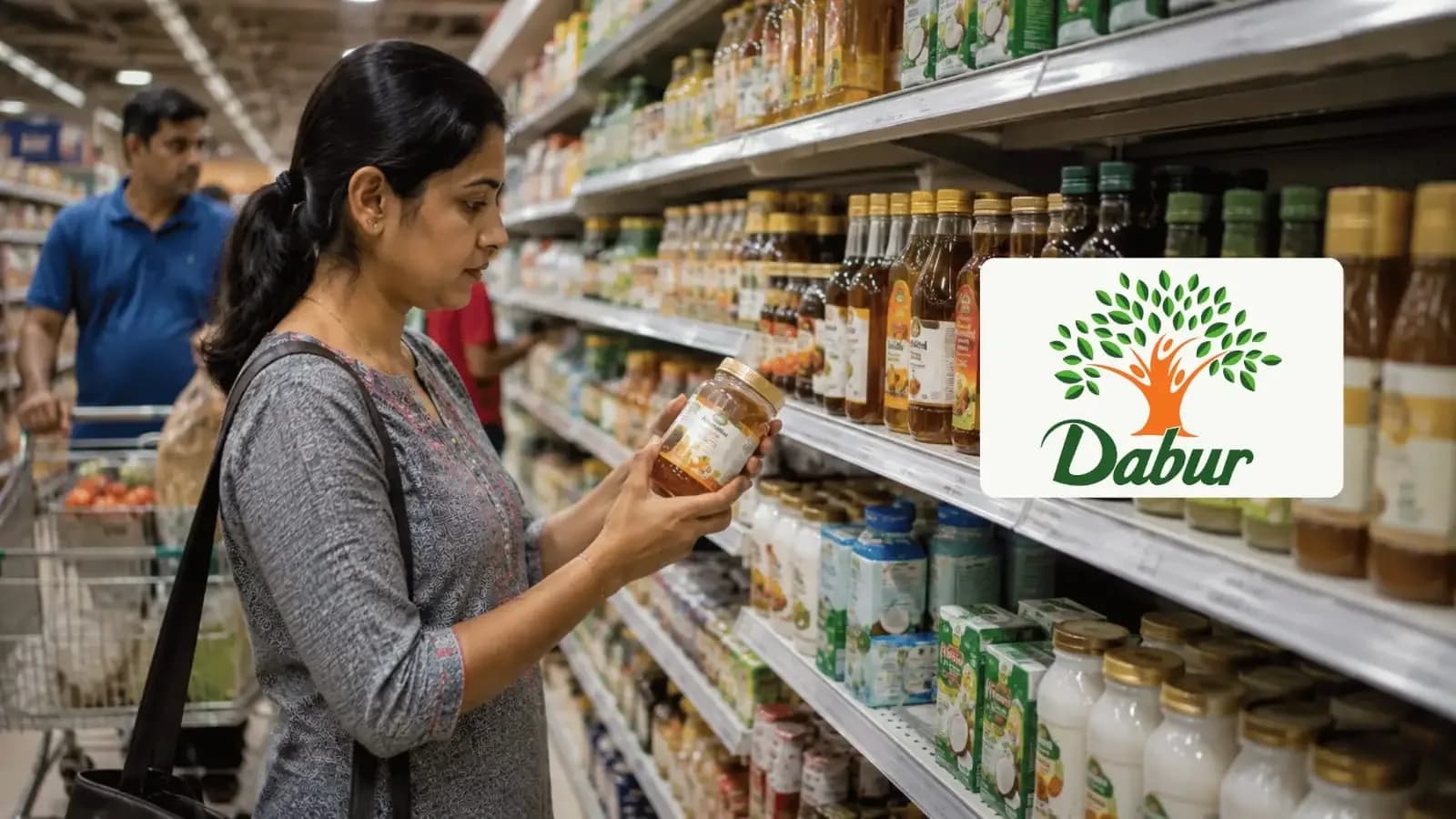
In a significant move aimed at strengthening consumer protection and ensuring truthful food labelling, the Food Safety and Standards Authority of India (FSSAI) has prohibited Dabur India Ltd. from selling several food products carrying '100%' claims, stating that such claims are ambiguous, unverifiable, and capable of misleading consumers.
The regulatory action marks one of the strongest enforcement measures against marketing claims in India's food industry and signals FSSAI's growing focus on eliminating exaggerated or absolute claims from food packaging.
Which Products Are Affected?
According to the prohibition order, the affected products include several popular Dabur food items marketed with '100%' claims, such as:
Organic Honey
Organic Apple Cider Vinegar
Virgin Coconut Oil
Sesame Oil
Cow Ghee
Coconut Water
Coconut Milk
These products reportedly carried labels such as "100% Pure," "100% Natural," "100% Organic," and similar variations intended to highlight product quality.
Why Has FSSAI Taken Action?
FSSAI has clarified that the issue is not related to food safety or product contamination, but rather to misleading marketing and labelling practices.
The regulator believes that the term "100%" is an absolute claim that consumers interpret as a complete guarantee of purity, quality, or authenticity. According to FSSAI, such claims are often impossible to scientifically verify in absolute terms and may create a false impression that competing products are inferior.
As a result, the authority concluded that these claims could mislead consumers and therefore violate India's food labelling regulations.
What Does the Order Mean?
The prohibition order effectively prevents Dabur from selling the affected products with their current labels until the company complies with FSSAI's directions.
The company is expected to:
Withdraw or stop selling products carrying the disputed labels.
Modify packaging and marketing materials.
Remove or revise the "100%" claims in accordance with regulatory guidelines.
Demonstrate compliance before reintroducing the products into the market.
Dabur may also seek legal remedies or work with the regulator to update its packaging.
Are the Products Unsafe?
No.
FSSAI has not stated that the products are unsafe, contaminated, or adulterated.
The regulator's concern is limited to how the products are being advertised and labelled, rather than their quality or safety.
Consumers who have already purchased these products do not need to panic, as the order relates to regulatory compliance rather than food safety.
Part of a Larger Regulatory Crackdown
The action against Dabur reflects a broader regulatory push to improve transparency in food marketing across India.
Over the past year, FSSAI and the Central Consumer Protection Authority (CCPA) have increased scrutiny of exaggerated advertising claims made by food and beverage companies.
Terms such as:
100% Natural
100% Pure
100% Organic
100% Fresh
Completely Chemical-Free
are increasingly being examined to determine whether companies can scientifically substantiate such claims.
Regulators believe that absolute statements may unfairly influence consumer purchasing decisions if they cannot be objectively verified.
Why "100%" Can Be Problematic
Experts note that while consumers often associate "100%" with superior quality, food manufacturing and regulatory standards require claims to be backed by evidence.
For example:
"100% Pure" may imply complete absence of any variation or processing.
"100% Natural" may be interpreted differently by different consumers.
"100% Organic" requires compliance with certified organic standards.
Unless such claims are clearly defined and scientifically supported, regulators may consider them misleading.
Impact on India's FMCG Industry
The decision is expected to have implications far beyond a single company.
Many food brands across categories—including edible oils, honey, juices, spices, dairy products, beverages, and packaged foods—use similar marketing language.
Industry experts believe companies may now review their packaging, advertising campaigns, and product claims to ensure compliance with FSSAI's evolving regulatory standards.
The order also reinforces the message that consumer trust must be built through transparency rather than exaggerated marketing language.
What Consumers Should Do
Food experts advise consumers not to rely solely on bold front-of-pack claims when choosing products.
Instead, buyers should:
Read ingredient lists carefully.
Check nutrition information.
Look for relevant certifications where applicable.
Verify manufacturing and quality standards.
Compare products based on factual information rather than promotional slogans.
A Defining Moment for Food Labelling
FSSAI's action against Dabur is likely to become a landmark case in India's food regulation landscape. While the order does not question the safety of the products themselves, it sends a clear message that marketing claims must be accurate, verifiable, and capable of withstanding regulatory scrutiny.
As India's packaged food industry continues to expand, the decision could pave the way for stricter oversight of advertising practices, encouraging greater transparency and helping consumers make more informed purchasing decisions.