
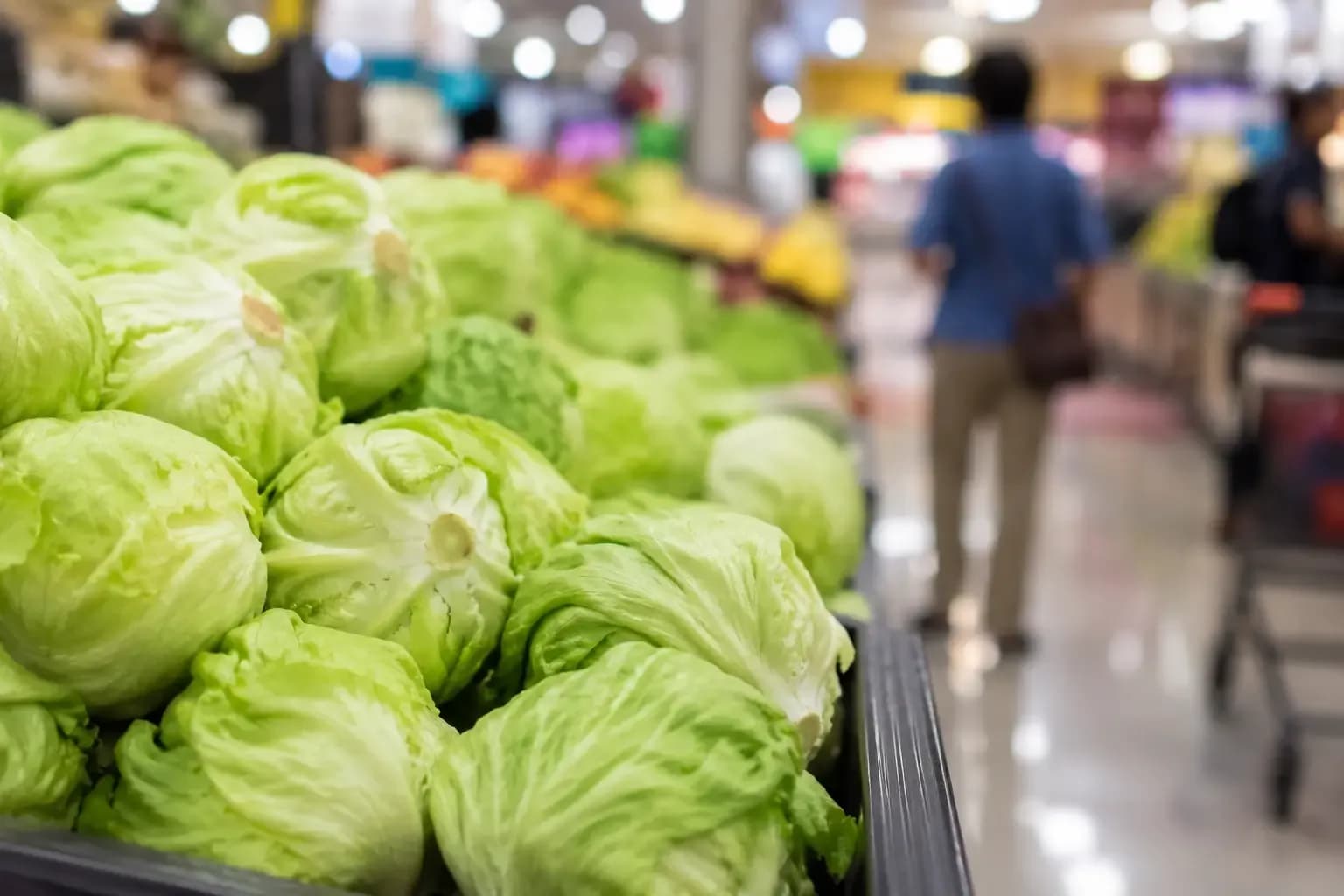
The United States is witnessing one of the most significant foodborne illness outbreaks in recent history after health officials confirmed the first fatalities linked to a nationwide Cyclospora cayetanensis outbreak traced to contaminated imported iceberg lettuce.
What began as scattered reports of gastrointestinal illness has rapidly evolved into a multistate public health emergency affecting tens of thousands of consumers, disrupting restaurant supply chains, triggering massive food recalls, and raising fresh concerns about the safety of imported produce.
According to the U.S. Centers for Disease Control and Prevention (CDC) and multiple state health departments, more than 6,700 laboratory-confirmed infections and over 11,500 suspected cases are under investigation, while Michigan has emerged as the epicenter with more than 11,200 reported illnesses and nearly 200 hospitalizations. Officials have now confirmed the first two outbreak-related deaths, marking a significant escalation in the crisis.
First Deaths Confirmed in the Largest Cyclospora Outbreak in U.S. History
Health authorities in Michigan confirmed that two individuals with significant underlying medical conditions died after contracting cyclospora infections, with severe dehydration contributing to fatal complications.
Although Cyclospora infections rarely prove fatal, medical experts note that elderly individuals, immunocompromised patients, and those with chronic illnesses are particularly vulnerable to severe dehydration caused by prolonged diarrhea.
The CDC acknowledged the deaths while emphasizing that the overall risk of fatal illness remains low for healthy individuals, though the outbreak itself has become one of the largest ever recorded in the country.
Michigan Emerges as the Epicenter
Michigan has experienced an unprecedented surge in infections.
Current Situation
Over 11,234 reported cases
Around 193 hospitalizations
First two confirmed deaths
Highest infection rate nationwide
Neighboring states including Ohio, Indiana, Illinois, Kentucky and Pennsylvania have also reported thousands of infections, making the Midwest the hardest-hit region.
Public health officials believe widespread exposure occurred through contaminated shredded iceberg lettuce supplied to restaurants and retail stores across multiple states.
Nationwide Outbreak by the Numbers
According to federal investigators:
6,707 laboratory-confirmed infections
11,500+ suspected illnesses
Cases reported across dozens of states
Hundreds of hospitalizations
First two fatalities confirmed
Because Cyclospora symptoms often appear one to two weeks after exposure, officials believe many infections remain unreported.
Experts warn the true number of infections could be substantially higher than official counts.
How Investigators Traced the Source
Following weeks of epidemiological investigations, traceback analysis conducted by the FDA and CDC linked the outbreak to shredded iceberg lettuce supplied by Taylor Farms de Mexico.
The contaminated lettuce originated from farms in central Mexico before entering U.S. food distribution channels.
Supply Chain
Central Mexico Farms⬇
Taylor Farms de Mexico⬇
Food Service Distribution⬇
Fast Food Chains + Retail Grocery Stores⬇
Consumers Across the United States
Federal officials say the contaminated lettuce reached both restaurant chains and retail supermarkets, dramatically increasing public exposure.
Massive Recall Across the United States
On July 17, Taylor Farms de Mexico voluntarily removed all iceberg lettuce sourced from central Mexico after the FDA linked the products to the outbreak.
The recall covered products distributed to 27 U.S. states.
Several retailers and food-service distributors removed affected products from shelves while restaurant operators replaced inventory as a precautionary measure.
Taco Bell Among Restaurant Chains Impacted
Federal investigators identified contaminated shredded iceberg lettuce supplied to multiple Taco Bell locations as a major exposure pathway during the investigation.
The company removed the affected supplier's lettuce from restaurants within approximately 24 hours after being notified.
The investigation remains ongoing to determine whether additional food service establishments may also have distributed contaminated produce.
Retail Products Also Recalled
The recall extended beyond restaurants.
Affected iceberg lettuce was supplied for use in packaged salad products distributed through major retailers.
Distribution included products sold in 27 states under multiple private-label brands, prompting widespread recalls and consumer warnings.
Why Cyclospora Is Different from E. coli or Salmonella
Unlike bacteria, Cyclospora cayetanensis is a microscopic parasite.
Once consumed through contaminated food or water, it infects the small intestine and causes prolonged gastrointestinal illness.
What makes Cyclospora particularly dangerous is its ability to evade routine food safety measures.
Key Characteristics
Resistant to Routine Washing
The parasite's microscopic oocysts attach tightly to leafy vegetables.
Simple rinsing or chlorine-based produce washes may reduce contamination but cannot reliably eliminate the organism once attached.
Long Incubation Period
Symptoms usually begin:
2–14 days after exposure
Most commonly around one week
Because illness develops well after consumption, patients often struggle to remember where they ate, making outbreak investigations far more complex.
Relapsing Illness
Unlike many foodborne infections, Cyclospora symptoms often improve before returning again.
Without proper treatment, illness can persist for several weeks or even months.
Common symptoms include:
Explosive watery diarrhea
Severe stomach cramps
Fatigue
Bloating
Nausea
Loss of appetite
Weight loss
Dehydration
Standard Antibiotics Do Not Work
Another major concern is treatment.
Most antibiotics commonly prescribed for bacterial food poisoning have little or no effect against Cyclospora.
Doctors typically prescribe:
Trimethoprim-Sulfamethoxazole (TMP-SMX)
Early diagnosis significantly reduces complications and shortens illness duration.
States Most Affected
The highest concentrations of illness have been reported in:
Michigan
Ohio
Indiana
Illinois
Kentucky
Pennsylvania
West Virginia
Kansas
Oklahoma
Meanwhile, recalled retail products reached consumers across 27 states, greatly expanding the investigation's geographic footprint.
Is India at Risk?
For Indian consumers, experts say the current outbreak presents no known direct risk.
Fresh leafy vegetables have a relatively short shelf life, making long-distance imports commercially impractical.
Major quick-service restaurant brands operating in India—including Taco Bell India, McDonald's India, Subway India, Domino's India and others—primarily source fresh lettuce from domestic contract farms rather than importing fresh greens from Mexico.
At present, there is no evidence linking India's food supply to the contaminated lettuce involved in the U.S. outbreak. However, this assessment is based on current trade patterns and official investigations, which remain focused on North America.
What Consumers Should Do
Health authorities recommend the following precautions:
Dispose of recalled lettuce and salad products immediately.
Check recall notices before consuming packaged salads.
Wash fresh produce thoroughly under running water.
Cook leafy vegetables whenever practical, as heat effectively kills the parasite.
Clean knives, cutting boards and countertops after handling raw produce.
Seek medical attention if persistent diarrhea develops after consuming leafy greens.
Patients experiencing prolonged gastrointestinal illness should specifically request testing for Cyclospora, as it is not detected through many routine stool tests.
Growing Questions About Food Safety
The outbreak has renewed scrutiny over imported produce, food traceability systems and surveillance of foodborne illnesses.
Public health experts argue that modern food distribution networks allow contaminated produce from a single source to reach millions of consumers within days. They have also raised concerns about the challenges of detecting Cyclospora in food products and the need for stronger international food safety monitoring and traceback systems.
Indian Food Times Analysis
While the outbreak is currently confined to North America, it serves as a reminder that food safety has become increasingly global. As supply chains grow more interconnected, rapid traceback investigations, transparent recalls, and robust surveillance systems are critical to containing foodborne illnesses before they escalate.
For India, the incident reinforces the importance of maintaining strong domestic sourcing practices, stringent quality controls, and continuous monitoring of fresh produce to safeguard consumer health.
Frequently Asked Questions (FAQs)
What caused the U.S. Cyclospora outbreak?
The outbreak has been linked to contaminated shredded iceberg lettuce sourced from central Mexico and supplied through Taylor Farms de Mexico.
How many people have been affected?
As of the latest CDC update, there are 6,707 laboratory-confirmed cases, more than 11,500 suspected cases, and two confirmed deaths associated with the outbreak.
Can washing lettuce remove Cyclospora?
Washing may reduce contamination but cannot reliably eliminate the parasite once it adheres to leafy vegetables. Cooking is the most effective method for killing it.
Is India affected?
There is currently no evidence that the contaminated lettuce entered India's food supply, and major restaurant chains in India primarily use domestically sourced lettuce.