
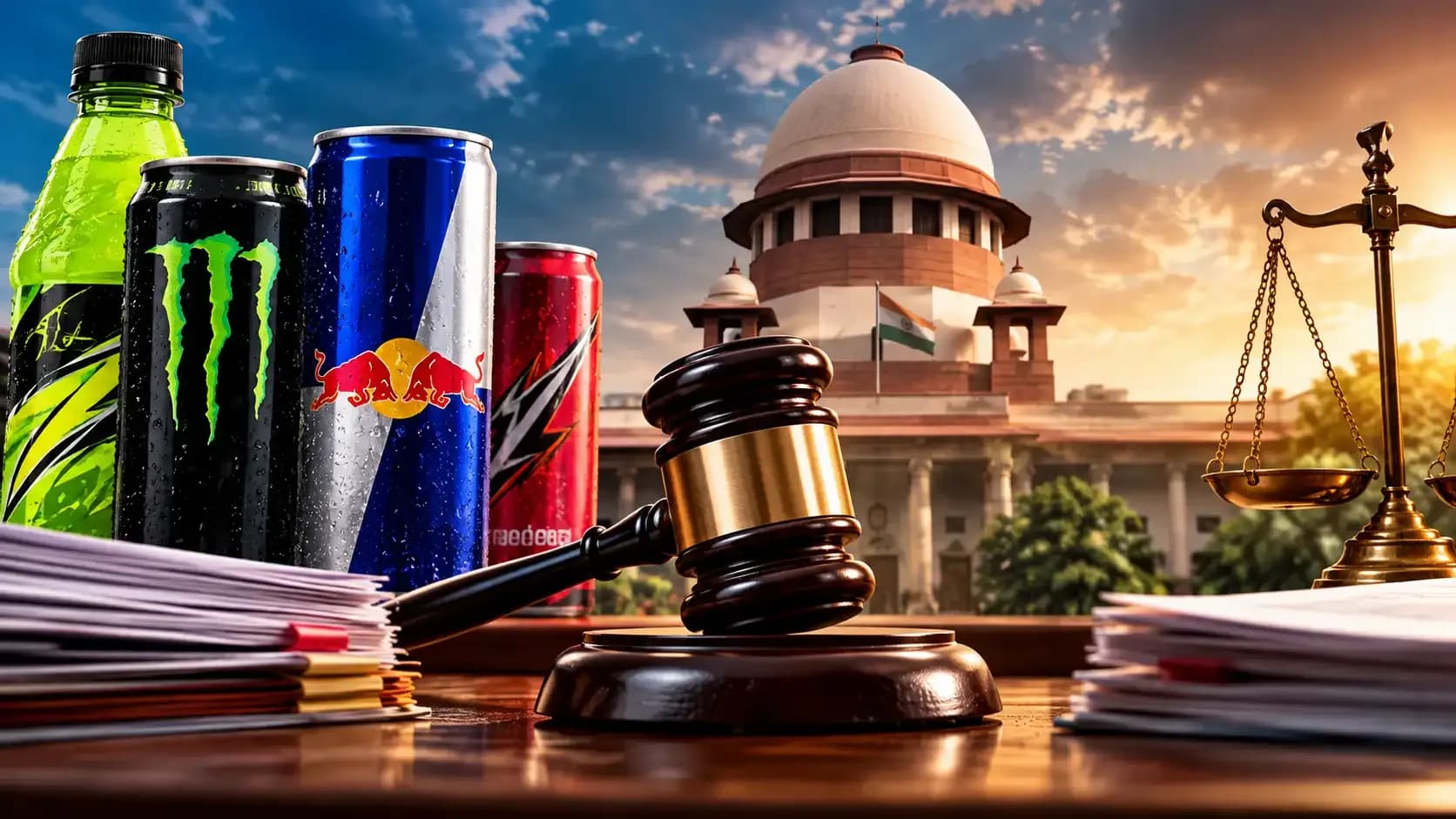
India’s fight over how high-caffeine beverages can be labelled has moved deeper into the courts, with PepsiCo and Monster Beverage challenging the Food Safety and Standards Authority of India (FSSAI) over its order restricting the use of the term “energy drink”.
The legal challenges come just days after the Delhi High Court set aside FSSAI’s order against Red Bull, giving the global energy drink maker a significant reprieve in a regulatory dispute that is now spreading across some of the biggest beverage brands in India.
The dispute centres on FSSAI’s June 2026 direction requiring manufacturers of certain high-caffeine beverages marketed as “energy drinks” to stop using the descriptor. The regulator has argued that there is no separately notified Indian standard for an “energy drink” category and has raised concerns around claims associated with these products.
PepsiCo takes the dispute to court
PepsiCo India has now challenged the regulatory action, arguing that the decision could have significant commercial consequences for its beverage business.
The company has said that it was not given adequate prior notice or an opportunity to present its position before the directive was issued. PepsiCo has also highlighted the scale of existing inventory carrying the disputed terminology.
According to Reuters, PepsiCo said nearly 500 million bottles and cans bearing the relevant labelling were in circulation as of July 31. The company has argued that changing the labelling at such a scale could have substantial business implications.
The issue is particularly relevant to Sting, PepsiCo’s fast-growing caffeinated beverage brand in India. Sting helped accelerate the country's energy-drink market after its launch in 2017, with its ₹20 format contributing to its rapid penetration across urban and rural markets.
PepsiCo had already begun removing the word “energy” from Sting packaging while the regulatory dispute was developing, according to industry reporting.
Monster Beverage joins the legal battle
Monster Beverage’s Indian business has also challenged the FSSAI action.
Monster has argued that it was not given an adequate opportunity to respond before the regulatory decision and has cited financial and reputational consequences from the restrictions, according to Reuters.
The development puts two major international beverage companies on separate legal tracks against the same regulatory action.
It also means the question of whether products can continue to be marketed under the widely recognised “energy drink” category is no longer simply a labelling discussion between manufacturers and the regulator. It is now being tested through multiple court proceedings.
Red Bull gets relief from Delhi High Court
The PepsiCo and Monster challenges follow a major development involving Red Bull India.
On September 29, the Delhi High Court set aside FSSAI’s order directing Red Bull to remove the “energy drink” descriptor from its products.
The court’s decision was based on procedural grounds. It found that Red Bull had not been given an adequate opportunity to respond before the order was passed. The court allowed FSSAI to issue a fresh show-cause notice and take a new decision after following due process.
That distinction is important.
The ruling does not permanently declare that “energy drink” is an approved label under Indian food regulations. Instead, it requires the regulator to follow the appropriate process before taking action against Red Bull.
FSSAI has indicated that it intends to defend its regulatory position, while the Red Bull ruling has created a potentially important precedent for other beverage companies challenging similar orders.
Why the “energy drink” label matters
For beverage companies, the dispute is about considerably more than two words printed on a can.
The term “energy drink” has become a recognised product category in the Indian market. Removing it could affect packaging, marketing, consumer recognition, distribution and existing inventory.
FSSAI's action followed concerns around products containing combinations of caffeine, sugar and taurine, as well as claims suggesting that beverages can “vitalise” the body and mind or provide other functional benefits. The regulator has argued that certain such claims can amount to misleading or impermissible claims for food products.
For manufacturers, however, the companies involved have argued that the sudden restriction creates regulatory uncertainty and can affect established businesses and investments.
A wider battle for India's beverage industry
The dispute involves more than PepsiCo, Monster and Red Bull.
The original regulatory action also affected other major beverage companies, including Reliance and Hell Energy, as FSSAI moved against the use of “energy drink” and similar descriptors for relevant high-caffeine beverages.
Reliance has already introduced Campa Xtra without using the “energy” descriptor, while other companies have been dealing with the implications for existing packaging and inventory.
The stakes are significant because India's energy-drink market has expanded rapidly. Reuters, citing Euromonitor, reported annual retail sales growth of around 12.6%, with the market projected to reach approximately $1.6 billion by 2028.
That growth has made the regulatory classification of these beverages increasingly important for both domestic and multinational players.
The immediate focus will now shift to the courts hearing the PepsiCo and Monster challenges.
The key questions include whether companies were given sufficient opportunity to respond before FSSAI issued its restrictions, how the regulator's interpretation of existing food standards will be applied, and whether similar procedural arguments could affect other companies covered by the order.
At the same time, FSSAI can reconsider its position after following the appropriate process in the Red Bull matter.
For India's beverage industry, the outcome could influence how one of its fastest-growing categories is classified, labelled and marketed in the years ahead.
For now, the message from the market is clear: the battle over India's “energy drink” label has moved from regulatory notices to the courtroom — and with PepsiCo, Monster and Red Bull now involved in separate legal proceedings, the final shape of the category remains unsettled.