


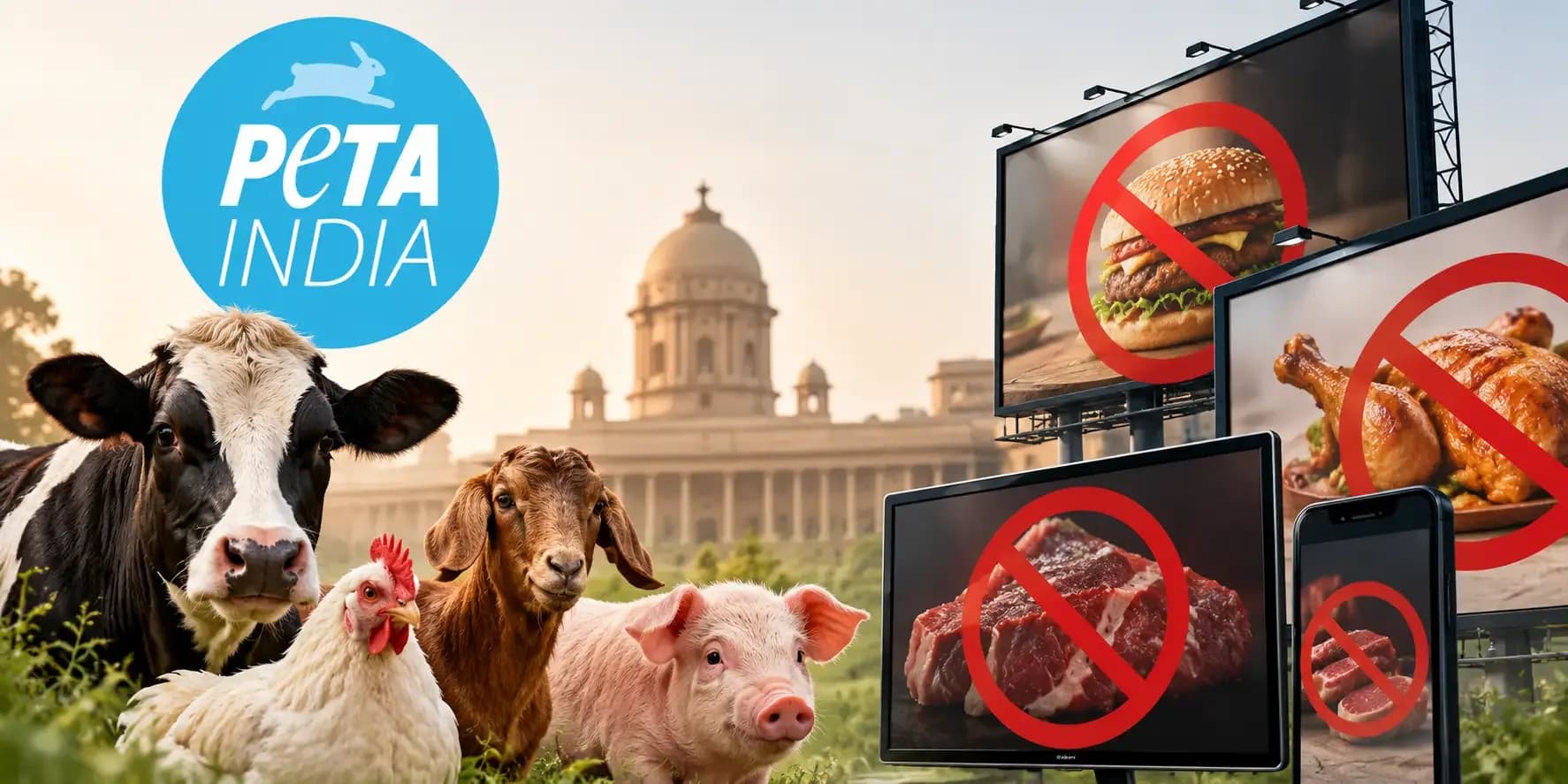
People for the Ethical Treatment of Animals (PETA) India has urged the Centre to prohibit advertisements promoting meat products across the country from October 2, 2026, proposing that the restriction take effect on Gandhi Jayanti.
The animal-rights organisation has written to Union Information and Broadcasting Minister Ashwini Vaishnaw, seeking a nationwide prohibition on meat advertising across different media platforms, including billboards, television and online channels.
The proposal comes ahead of Gandhi Jayanti, with PETA India linking its demand to Mahatma Gandhi's philosophy of ahimsa, or non-violence.
PETA India Seeks Nationwide Restriction on Meat Advertising
PETA India is calling for restrictions on advertisements that promote meat consumption rather than a ban on meat itself.
The organisation's request is therefore focused on the advertising and promotion of meat products. It does not amount to a proposal to prohibit consumers from purchasing or consuming meat, nor does it constitute a government ban on meat sales or restaurants serving meat.
As of September 28, there has been no reported Centre notification announcing a nationwide ban on meat advertisements. The October 2 date represents PETA India's requested implementation date.
Why PETA India Wants Meat Ads Banned
PETA India has cited a combination of animal-welfare, public-health and environmental concerns in its appeal to the government.
According to the organisation, investigations conducted by PETA have raised concerns over the treatment of animals during transportation and slaughter. The group has also highlighted concerns around intensive animal farming and practices that it says cause animal suffering.
The organisation is using these concerns as part of its broader argument that advertising should not encourage greater consumption of meat.
Public Health Concerns Cited by PETA
PETA India has also linked meat production with broader public-health concerns, including antimicrobial resistance (AMR) and infectious diseases.
The organisation has highlighted the use of antimicrobials in food-animal production and argued that excessive or inappropriate use can contribute to antimicrobial resistance.
PETA has also referred to concerns surrounding zoonotic diseases and outbreaks such as H5N1 avian influenza as part of its case for reducing demand for animal-based food products.
These points form part of PETA India's advocacy argument and should not be interpreted as a government finding that meat advertising itself causes these health outcomes.
Environmental Argument Behind the Proposal
Environmental sustainability is another component of PETA India's appeal.
The organisation has pointed to meat-production emissions and resource consumption while arguing that reducing the promotion of meat could encourage consumers to consider plant-based alternatives.
PETA also referenced restrictions on meat advertising introduced in several European cities, including Amsterdam, Haarlem, Utrecht and Nijmegen, as examples of jurisdictions where authorities have considered advertising restrictions in the context of environmental policy.
Why October 2 Matters
PETA India has specifically proposed October 2, Gandhi Jayanti, as the date from which the proposed advertising restrictions should take effect.
The organisation argues that the date would connect the policy with Mahatma Gandhi's philosophy of ahimsa and compassion toward living beings.
PETA India has also highlighted India's long-standing vegetarian food traditions and the availability of plant-based alternatives as part of its appeal.
What Would a Meat Advertising Ban Mean for Businesses?
If the Centre were to accept the proposal and introduce a nationwide advertising restriction, the implications could extend across multiple parts of India's food and advertising ecosystem.
Potentially affected businesses could include:
Meat and poultry brands
Processed-meat companies
Restaurants and QSR chains
Food-delivery platforms
Advertising and media agencies
Digital marketing companies
Influencers and content creators
Packaged-food companies selling meat products
However, the actual impact would depend on the scope and wording of any government notification or regulation. For example, it would need to establish whether sponsored social-media posts, influencer campaigns, food-delivery promotions, restaurant advertising and product packaging would fall within the definition of prohibited advertising.
Meat Industry Not Banned Under the Current Proposal
For consumers and businesses, the distinction between advertising restrictions and a ban on meat is important.
PETA India's request does not mean that meat would become illegal to sell or consume from October 2.
There is currently no reported nationwide government order prohibiting:
Meat consumption
Meat shops
Meat sales
Restaurants serving non-vegetarian food
Poultry sales
Meat production
The immediate development is PETA India's appeal to the Centre seeking restrictions on promotional advertising.
A Potential New Debate for India's Food Industry
If the Centre considers PETA India's request, it could trigger a wider debate around the role of advertising in shaping food consumption, particularly as India's food and beverage industry continues to expand across restaurants, packaged foods, quick commerce and digital platforms.
For businesses, the key issue would be whether any future regulation targets advertising broadly or creates specific restrictions based on the type of meat product, advertising platform or marketing format.
For now, however, October 2 remains PETA India's proposed date rather than a confirmed government implementation date.
Bottom Line
PETA India has asked the Centre to prohibit meat advertisements nationwide from October 2, 2026, coinciding with Gandhi Jayanti. The organisation has cited animal welfare, public health, environmental sustainability and the philosophy of ahimsa behind its request.
The proposal does not represent a nationwide ban on meat, and no such government ban has been announced as of September 28, 2026.