


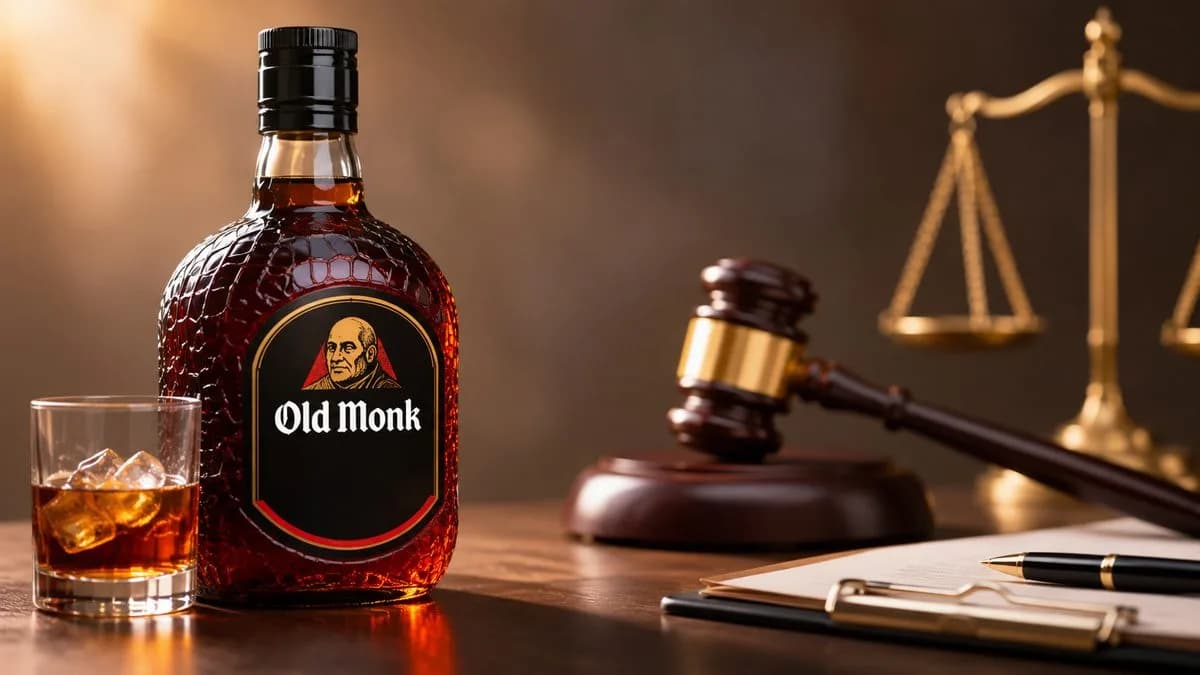
Old Monk Maker Withdraws Legal Challenge Against FSSAI
The manufacturer of Old Monk, one of India's most recognised rum brands, has withdrawn its legal challenge against the Food Safety and Standards Authority of India (FSSAI), opting to revise its product labels instead of continuing its battle before the Bombay High Court.
Mohan Rocky Springwater Breweries Private Limited informed the Bombay High Court on November 5, 2026, that it was no longer pursuing its petition challenging the regulator's restrictions on the sale and distribution of certain alcoholic beverage variants manufactured at its Khopoli facility in Maharashtra.
The company has agreed to submit revised product labels to FSSAI for consideration and regulatory approval. The development marks a significant shift in the dispute, which has centred on how certain Old Monk products are classified, described and marketed.
Why Did FSSAI Object to Old Monk's Product Labels?
The controversy emerged after FSSAI raised concerns about the composition and labelling of certain alcoholic beverages manufactured at the company's Khopoli facility.
The regulator maintained that certain products contained neutral alcohol along with externally added rum flavouring. According to its position, beverages made using this process should not automatically be marketed as conventional rum.
FSSAI argued that such products should instead be appropriately identified as "rum-flavoured spirit" or under the applicable flavoured alcoholic beverage classification.
The regulator also questioned whether the existing product labels adequately disclosed the use of added flavouring ingredients, raising concerns about transparency and consumer understanding.
'7 Years Old Blended' Claim Also Came Under Scrutiny
Apart from product classification, FSSAI raised objections to ageing-related descriptions appearing on certain Old Monk packaging, including "7 Years Old Blended" and "Very Old Vatted".
The regulator questioned whether these descriptions accurately represented the composition and maturation of the products.
According to the findings discussed during the proceedings, Old Monk XXX Matured Rum contained predominantly neutral, unaged spirit, while the proportion of matured rum spirit was reportedly less than 5%.
Under the applicable alcoholic beverage labelling regulations, an age declaration for a blend must reflect the youngest matured spirit used in the blend.
The company had earlier agreed to remove the seven-year ageing description and make changes to its packaging. However, the regulator's objections extended beyond the ageing claim to the fundamental classification of the beverages.
What Happened in the Bombay High Court?
Mohan Rocky Springwater Breweries approached the Bombay High Court in August 2026, challenging FSSAI's restrictions and seeking relief against the prohibition on the sale of the affected products.
During the proceedings, the company defended its manufacturing process and maintained that its products complied with the applicable definition of rum.
However, the court did not grant immediate interim relief against the regulator's restrictions.
On November 5, a Division Bench comprising Chief Justice Mahesh Chandra Tripathi and Justice Advait M. Sethna considered a communication dated November 2, 2026, issued by FSSAI's Chief Executive Officer in proceedings connected with the company's statutory appeal.
Following this development, the manufacturer informed the court that it was no longer pressing its writ petition.
The court subsequently dismissed the petition as not pressed, while allowing the company the liberty to initiate fresh legal proceedings in accordance with the law if required.
The withdrawal does not amount to a final judicial ruling on the merits of the dispute or an admission of wrongdoing by the manufacturer.
Maharashtra Reportedly Faces ₹350 Crore Excise Revenue Impact
The regulatory dispute has also raised concerns about its financial implications for Maharashtra.
During an earlier hearing on October 12, the manufacturer's representatives told the Bombay High Court that the restrictions had resulted in an estimated ₹350 crore loss in excise revenue for the Maharashtra government.
The figure was presented by the company's legal representatives during the proceedings and has not been independently audited.
The sales restrictions have also affected the manufacturer's business operations and the wider distribution network involving wholesalers and retailers.
Will Old Monk Return to Maharashtra?
The manufacturer's decision to withdraw its court petition does not automatically mean that Old Monk products can resume sales in Maharashtra.
The company will need to submit revised product labels and address the objections raised by FSSAI. The revised declarations will be subject to regulatory examination and approval, along with any other applicable requirements.
As of November 11, 2026, there is no independently verified confirmation that FSSAI has approved the revised labels or that sales of the affected variants have resumed in Maharashtra.
The next stage of the dispute will therefore depend on the regulator's assessment of the proposed changes.
A Bigger Regulatory Question for India's Alcoholic Beverage Industry
The Old Monk controversy highlights a wider regulatory challenge for India's alcoholic beverage manufacturers.
The dispute is not limited to packaging changes. It raises important questions about product identity, ingredient declarations, flavouring practices and the claims manufacturers can make about the ageing and composition of their beverages.
For established brands, consumer recognition and decades of market presence may not be sufficient when product descriptions are challenged under regulatory standards.
With the manufacturer now pursuing a regulatory resolution instead of its existing court challenge, the focus shifts to whether revised labelling can address FSSAI's objections and pave the way for the affected products to return to the Maharashtra market.