
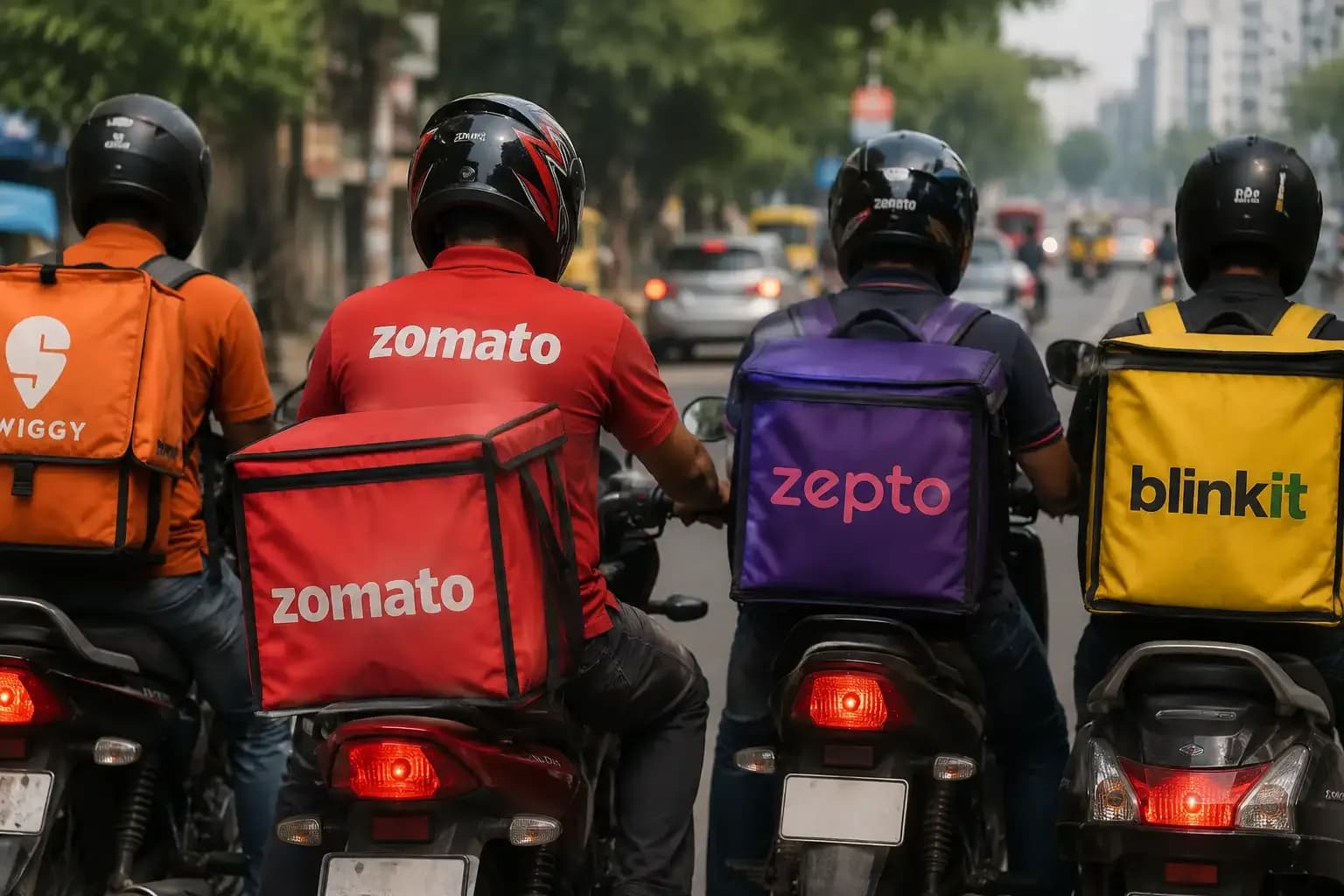
Maharashtra is considering bringing food delivery, quick-commerce and e-commerce platforms such as Swiggy, Zomato, Zepto and Blinkit under the state's bike-taxi regulatory framework, in a move that could significantly change how app-based delivery operations are regulated across the state.
The proposed amendments could require platforms operating doorstep delivery services to maintain electric vehicle (EV) fleets, introduce GPS-based tracking, provide insurance coverage and contribute a portion of each fare towards a welfare fund for delivery riders.
The proposal is currently under consideration and has been sent to the state's Law and Judiciary Department for legal scrutiny. It has not yet become a final rule.
Maharashtra Looks Beyond Passenger Bike Taxis
Maharashtra notified its Bike-Taxi Rules, 2025 to establish a regulatory framework for app-based motorcycle taxi services. The rules cover issues including licensing, vehicle requirements, driver eligibility, GPS tracking, insurance and operational conditions.
The government is now considering extending elements of this regulatory framework to platforms that use two-wheelers to transport food, groceries, parcels and other products.
The proposed move would potentially bring a much larger segment of the state's gig economy under formal transport regulation.
While companies such as Swiggy and Zomato primarily operate food-delivery networks, Zepto and Blinkit rely heavily on two-wheelers for their quick-commerce operations. Bringing these businesses under a common framework could therefore have implications across food delivery, grocery delivery and last-mile e-commerce.
EV Fleets Could Become a Key Requirement
One of the most significant proposals is the requirement for delivery platforms to maintain electric vehicle fleets.
The move would align delivery operations with Maharashtra's broader push towards electric mobility. Under the state's existing Bike-Taxi Rules, licensed bike-taxi operators are required to operate electric bike taxis, with the rules also prescribing requirements around vehicle registration, fitness, insurance and other compliance measures.
For food-delivery and quick-commerce companies, however, the scale would be considerably different.
A large number of delivery riders currently operate using their own motorcycles or scooters, while others work through fleet operators and third-party partners. If an EV mandate is introduced, the final rules will need to clarify whether the responsibility for vehicle conversion or procurement will fall on the platforms, fleet partners or individual riders.
The transition could also increase demand for EV financing, battery-swapping infrastructure and charging facilities.
2% Contribution Proposed for Rider Welfare Fund
Another major element of the proposal is a 2% contribution from the fare of each ride towards a driver welfare fund.
The proposed corpus is expected to support benefits for delivery and gig workers, including:
Pension-related benefits
Accident insurance
Loans to help drivers purchase electric vehicles
Educational assistance for drivers' children
The proposal could mark a significant step towards bringing elements of social security into Maharashtra's rapidly expanding platform-based delivery economy.
However, the final rules will need to clarify how the 2% contribution would be calculated and collected, particularly in cases where delivery riders are employed through third-party fleet operators.
GPS Tracking and Greater Government Oversight
The proposed framework could also increase government oversight of delivery vehicles and riders through GPS-based tracking.
Maharashtra's existing bike-taxi framework contains provisions for GPS tracking and real-time monitoring of vehicles and drivers.
If similar requirements are extended to delivery platforms, authorities could have greater visibility into the movement and operation of delivery vehicles.
For platforms, this could mean additional compliance requirements around vehicle registration, driver identification, tracking systems and data management.
The 15-Km Question
The proposed changes are reportedly linked to the existing framework governing short-distance bike-based transport, with trips of up to 15 km forming an important part of the regulatory framework.
This could have particular significance for quick-commerce operators.
Companies such as Zepto and Blinkit are built around hyperlocal delivery models, with orders typically travelling from neighbourhood dark stores or fulfilment locations to customers within relatively short distances.
However, it remains to be seen exactly how the final amendment will define the delivery operations that fall under the proposed rules.
The government has not yet publicly settled every operational detail, including how different types of delivery arrangements will be treated.
What Could Change for Swiggy and Zomato?
For food-delivery companies, the proposed regulations could increase the cost and complexity of last-mile delivery.
Platforms could potentially face additional expenses related to:
EV adoption: Moving delivery fleets towards electric vehicles could require investment in vehicles, financing, charging and maintenance.
Insurance: Additional insurance requirements could increase the cost associated with each delivery rider.
Welfare contribution: The proposed 2% levy would create an additional financial obligation linked to each ride.
Technology and compliance: GPS tracking, vehicle registration and monitoring could require additional technology infrastructure.
The extent to which these costs are absorbed by platforms, fleet operators or reflected in delivery charges remains unclear.
Quick Commerce Could Face a Different Impact
For Zepto and Blinkit, the proposed rules could be particularly relevant because their business models depend on high-frequency, short-distance deliveries.
Quick-commerce companies have built dense delivery networks around dark stores and large fleets of riders. Any requirement covering vehicle ownership, EV adoption, insurance, tracking or driver welfare could therefore have a direct effect on their last-mile economics.
At the same time, an EV-focused regulatory framework could accelerate the transition towards electric two-wheelers in India's quick-commerce sector.
It could encourage greater use of:
Electric scooters
Fleet leasing models
Battery-swapping networks
Dedicated charging infrastructure
EV financing for delivery partners
A Major Change for Maharashtra's Gig Economy
The proposed move comes at a time when Maharashtra is attempting to establish clearer rules for app-based mobility and aggregator businesses.
The state's Transport Department already has a regulatory framework for bike taxis and has also published draft rules concerning motor vehicle aggregators.
Extending similar regulatory principles to delivery platforms would take the state's oversight beyond passenger mobility and into the broader platform-based delivery economy.
That could make Maharashtra one of the more closely regulated markets for India's food-delivery and quick-commerce companies.
What Is Still Not Final?
Despite the significance of the proposal, several details remain unresolved.
The government still needs to determine how the final rules would address:
Whether every delivery vehicle would need to be electric
Whether riders using their own petrol vehicles would receive a transition period
Who would be responsible for the 2% welfare contribution
How the "fare" would be defined for food and grocery deliveries
Insurance requirements for delivery riders
Licensing and registration requirements
Penalties for non-compliance
The role of third-party fleet operators
The exact categories of delivery and e-commerce services covered
These details will become clearer only after the legal review and subsequent government notification.
The proposal has now been sent to the Law and Judiciary Department for examination. If the government proceeds with the amendments after legal scrutiny, the final notification will determine the exact obligations for platforms and their delivery networks.
For now, Swiggy, Zomato, Zepto and Blinkit should not be described as already being brought under the bike-taxi rules. The proposal is still under consideration.
But if approved, the changes could represent a major shift in how Maharashtra regulates India's platform-based delivery economy — combining transport regulation, electric mobility and gig-worker welfare under one framework.
For restaurants, consumers and delivery workers, the eventual impact could extend well beyond compliance. The biggest question will be whether the additional regulatory costs are absorbed by platforms or ultimately find their way into the economics of food and quick-commerce deliveries.