

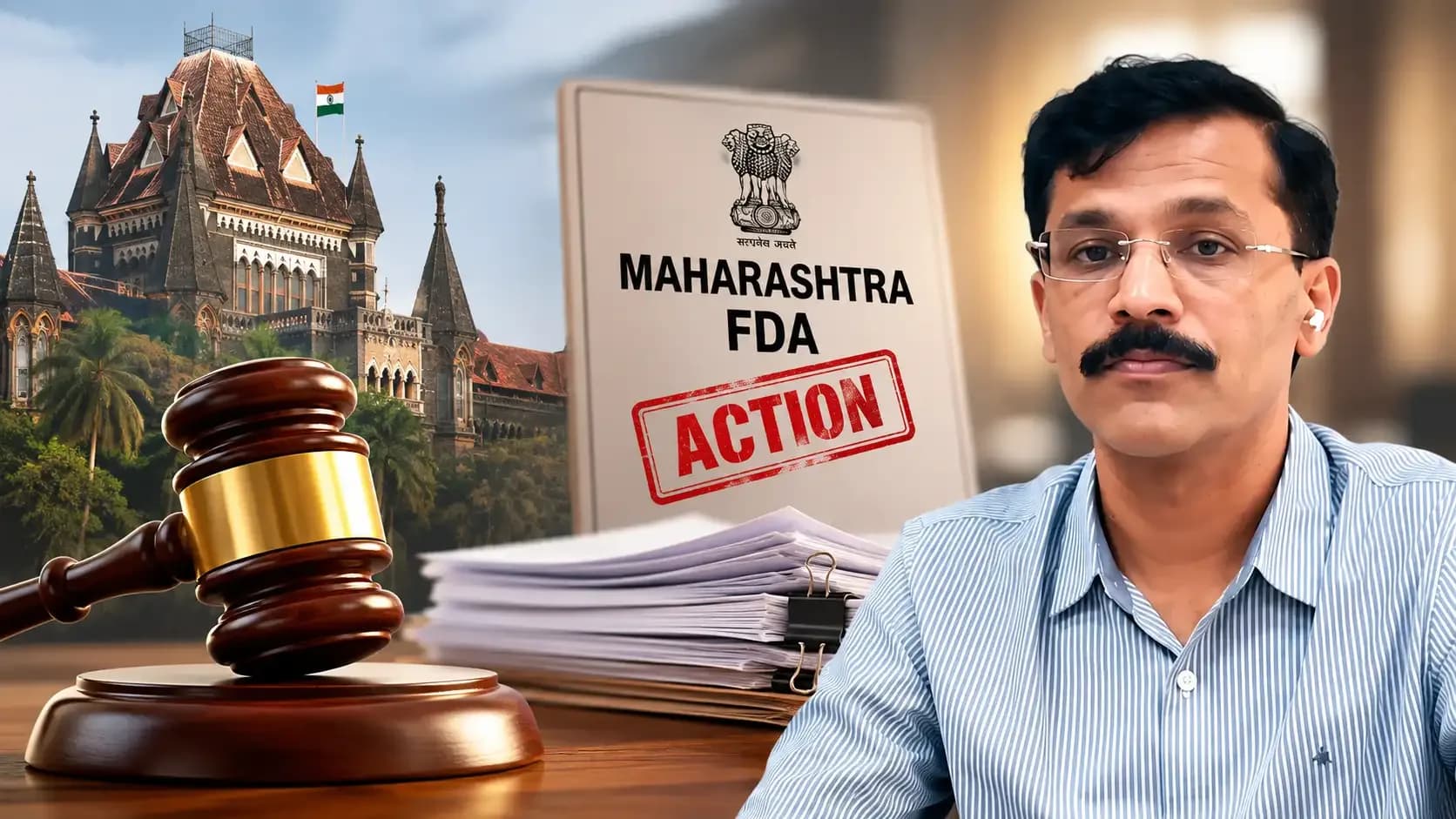
A food-safety enforcement action in Pune has turned into a sharp judicial rebuke for Maharashtra’s Food and Drug Administration (FDA).
The Bombay High Court has directed the Maharashtra FDA to pay ₹5 lakh to a Pune-based dairy and sweets retailer, after the department continued the suspension of the shop’s food licence even though a subsequent inspection found the establishment compliant with 35 out of 36 regulatory parameters.
The court said the FDA’s failure to act on the subsequent compliance report had caused unnecessary hardship and financial loss to the business. The bench went as far as describing the approach as “plain and simple perversity” and questioned whether the continued closure amounted to “torturing citizens.”
How the dispute began
The matter concerns Gurunanak Dairy & Sweets, a Pune establishment in Wadgaon-Sheri.
The dispute originated after a food-poisoning complaint prompted an inspection by Maharashtra FDA officials in June. The inspection identified deficiencies relating to areas including sanitation, maintenance, food-handler records and other compliance requirements.
Following the inspection, the FDA suspended the establishment’s food licence on June 12 and directed it to stop operations.
The business subsequently challenged the action and undertook corrective measures to address the deficiencies identified by the food-safety authorities.
The turning point: 98% compliance
The crucial development came during a subsequent FDA inspection.
According to reports placed before the High Court, the establishment was found compliant with 35 of 36 parameters, with the inspection report recording approximately 98% compliance.
Despite this, the food licence remained suspended.
That became the central issue before the Bombay High Court.
The retailer argued that once the deficiencies had been addressed and the FDA's own re-inspection had established substantial compliance, there was no justification for keeping the business closed.
The continued suspension also resulted in significant financial losses for the establishment.
FDA's defence
The FDA maintained that the matter was pending before the appellate authority.
The department's lawyer informed the court that the appeal had been heard and was reserved for orders.
The High Court, however, questioned why the business should continue to suffer when the department's own inspection had subsequently found the establishment compliant.
The court took particular issue with the continued suspension despite the corrective action and compliance recorded during the re-inspection.
Court says FDA “went overboard”
The bench acknowledged that the FDA's objective of ensuring food safety was legitimate and important.
However, the court said the department had “gone overboard” in the manner in which it dealt with the establishment after the deficiencies had been addressed.
The court's criticism was therefore not directed at food-safety enforcement itself. Instead, it focused on the proportionality of continuing regulatory action after the business had substantially complied with the requirements.
The court's remarks underline an important principle for food businesses: regulators have the power to act when public health is at risk, but enforcement must also remain proportionate and responsive to subsequent compliance.
₹5 lakh compensation ordered
The business told the court that it had suffered substantial financial losses during the period it remained closed.
Its lawyer reportedly submitted that the establishment earned around ₹25,000 per day, with the prolonged closure resulting in losses estimated at more than ₹8 lakh.
The High Court ultimately directed the Maharashtra FDA to pay ₹5 lakh towards the losses suffered by the business.
The amount is more accurately described as compensation/costs, rather than a regulatory “fine” imposed on the FDA.
The court also directed that the amount be deposited within 30 days.
Suspension set aside, shop allowed to reopen
The High Court also set aside the suspension and permitted the Pune establishment to resume its retail operations.
The order effectively brought the immediate regulatory dispute to an end in favour of the business, while placing a financial cost on the FDA for the continued suspension.
Why the ruling matters for food businesses
The case has implications beyond one Pune sweet shop.
For restaurants, bakeries, sweet shops, dairy businesses and other food operators, regulatory inspections can have an immediate commercial impact because a licence suspension can effectively shut down operations.
The ruling highlights the importance of what happens after deficiencies are identified.
If an establishment addresses the violations and a subsequent inspection confirms compliance, the regulatory authority must consider that development while deciding whether continued suspension is justified.
The case also draws attention to the balance between food-safety enforcement and procedural fairness.
The Food Safety and Standards Act gives authorities powers to intervene where public health concerns arise. But the Bombay High Court's observations indicate that those powers cannot be exercised mechanically or continued without considering material changes in the establishment's compliance status.
A warning for regulators and food businesses alike
The judgment sends a dual message.
For food businesses, the case reinforces the importance of maintaining documentation, hygiene, sanitation, staff records and other regulatory requirements — and promptly correcting deficiencies identified during inspections.
For regulators, it is a reminder that enforcement does not end with identifying a violation. Once corrective action has been taken and compliance has been independently verified, authorities must also act on that information.
In this case, the court found that continuing the suspension despite the reported 98% compliance had crossed the line.
The Maharashtra FDA is now examining the High Court's order, with reports indicating that the department may consider further legal options.
For the food industry, the case could therefore become an important reference point in future disputes involving licence suspension, corrective action and post-inspection compliance.
The key numbers
₹5 lakh — compensation/costs ordered by the Bombay High Court
35/36 — compliance parameters achieved during re-inspection
98% — compliance recorded in the FDA's subsequent inspection
₹25,000/day — approximate daily revenue cited by the business
₹8 lakh+ — approximate losses claimed by the establishment
30 days — period given for the FDA to deposit the ₹5 lakh
The case ultimately raises a straightforward question for India's food-regulatory system: once a business fixes the problems identified by the regulator, how long can the regulator keep it shut?
In the Pune sweet-shop case, the Bombay High Court's answer was clear: continued suspension without adequate justification can itself become an injustice.