
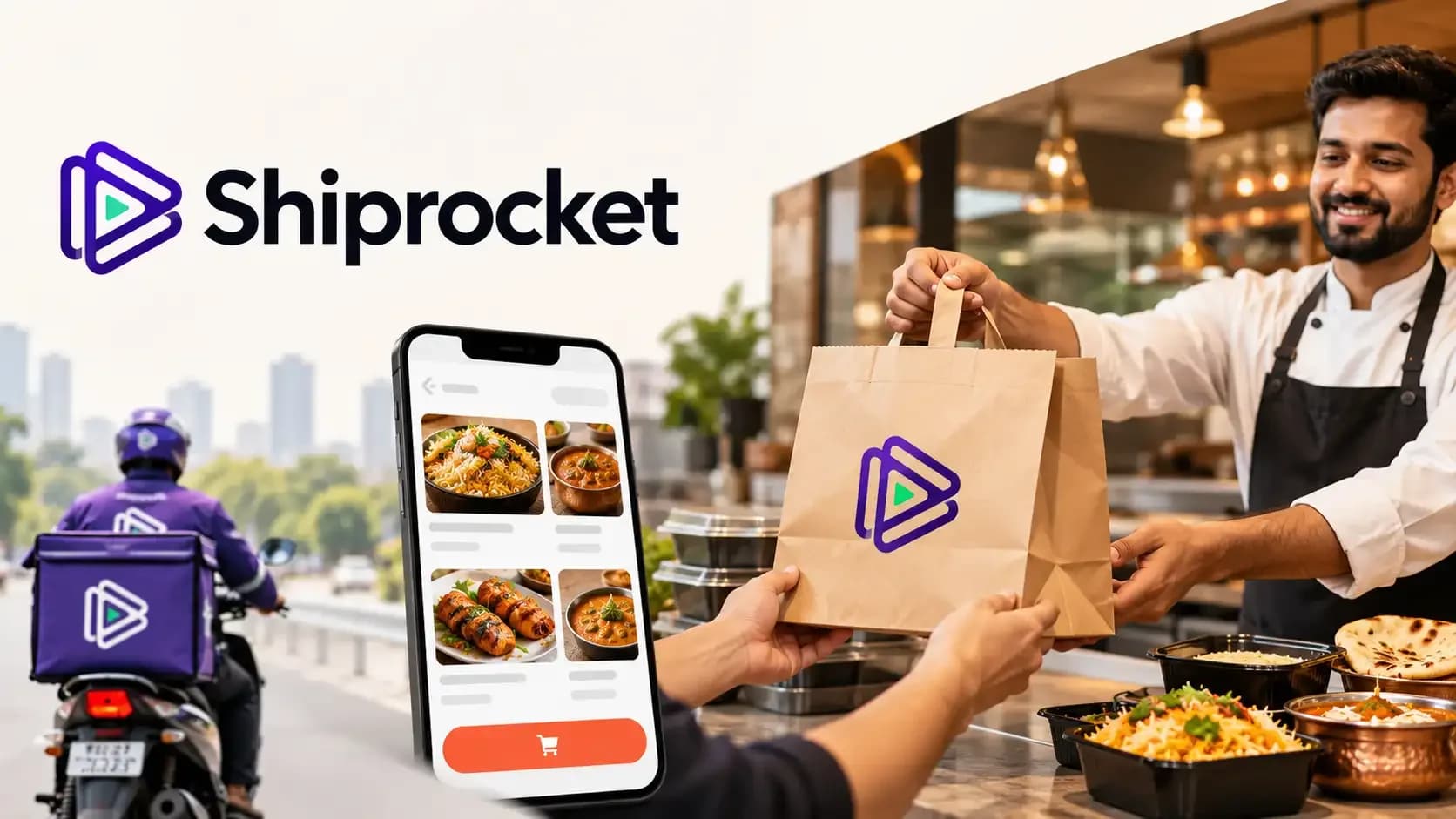
Shiprocket, the Indian logistics and e-commerce technology company, has entered the food-commerce segment through its platform fastrr, partnering with restaurant businesses Punjabi Angithi and Bikkgane Biryani in Delhi-NCR. The move signals an expansion of its commerce and delivery capabilities into the restaurant industry, where businesses are increasingly exploring ways to build direct relationships with customers.
The development, reported by YourStory and ET HospitalityWorld in October 2026, centres on helping restaurants strengthen their digital ordering channels, improve customer engagement and coordinate last-mile deliveries.
Restaurant-Owned Ordering at the Centre of the Strategy
Unlike conventional food-delivery aggregators, which primarily bring customers and restaurants together through a common marketplace, fastrr's approach focuses on enabling restaurants to attract and retain customers through their own digital channels.
The platform's technology supports online ordering and checkout, customer engagement, marketing and repeat-purchase initiatives. This approach can give restaurants greater opportunities to build customer relationships and encourage repeat business beyond third-party marketplaces.
For restaurant operators, direct ordering can also provide another route to reach customers. However, its commercial benefits depend on customer acquisition costs, delivery expenses, technology fees and the restaurant's ability to generate repeat orders.
Punjabi Angithi and Bikkgane Biryani Join the Initiative
The initial partnerships involve two restaurant brands operating in different segments of the food-service market.
Punjabi Angithi, associated with Vegorama Group, operates in the North Indian vegetarian food category. Bikkgane Biryani focuses on biryani and related food offerings.
Through the partnerships, the businesses aim to strengthen their digital commerce capabilities and improve the customer journey from ordering to delivery. The initiative also involves marketing and customer-engagement tools intended to support restaurant growth.
The reported partnerships are centred on Delhi-NCR. A nationwide rollout of the new restaurant programme has not been established by the reports.
How Shiprocket Plans to Support Food Delivery
Shiprocket's existing logistics capabilities provide an important part of the proposition. Its Shiprocket Quick service supports hyperlocal deliveries through a network of delivery partners, helping businesses arrange local fulfilment without necessarily maintaining their own delivery fleets.
The company also offers commerce technology through fastrr, including tools designed to support checkout conversion, customer engagement and marketing campaigns.
Reported capabilities include WhatsApp-based customer communication, abandoned-order recovery, personalised offers and reorder reminders. The broader roadmap also includes features such as loyalty programmes and improved delivery allocation during peak hours.
These capabilities are intended to connect customer acquisition, ordering and fulfilment in a single business workflow. However, planned features should be distinguished from services already available to restaurant partners.
Can This Challenge Zomato and Swiggy?
Shiprocket's entry comes as restaurants continue to assess the costs and benefits of selling through food-delivery marketplaces versus their own ordering channels.
Platforms such as Zomato and Swiggy provide restaurant discovery, customer reach, ordering infrastructure and delivery services. Shiprocket's reported strategy takes a different route by focusing on restaurant-owned digital ordering supported by technology and logistics.
This distinction means the initiative should not yet be described as the launch of a direct consumer-facing competitor to Zomato or Swiggy.
Instead, it positions Shiprocket to serve a related part of the food-delivery ecosystem: the infrastructure that restaurants need to sell directly to customers and fulfil local orders.
The model also faces practical challenges. Restaurants must attract customers to their own channels, maintain a consistent delivery experience and manage marketing expenses. Direct ordering does not automatically guarantee lower costs or higher profitability.
What Comes Next for Shiprocket's Food-Commerce Business?
The expansion could create opportunities for Shiprocket to work with more restaurant chains, quick-service restaurants, cloud kitchens, bakeries and other food businesses seeking digital ordering and local delivery solutions.
The company's existing experience in e-commerce logistics and digital commerce provides a foundation for expanding into these categories. The scale of the opportunity, however, will depend on restaurant adoption, customer demand and the economics of direct food ordering.
Key details that remain to be established include the programme's broader geographic expansion, commercial pricing for participating restaurants and the extent of its planned service rollout.
For India's restaurant industry, the development highlights a growing focus on digital channels that help businesses retain customers and manage ordering and fulfilment more directly.
For now, Shiprocket's food-commerce expansion is best understood as a move into restaurant-led digital ordering and delivery infrastructure, rather than a confirmed launch of a new mass-market food-delivery app.