


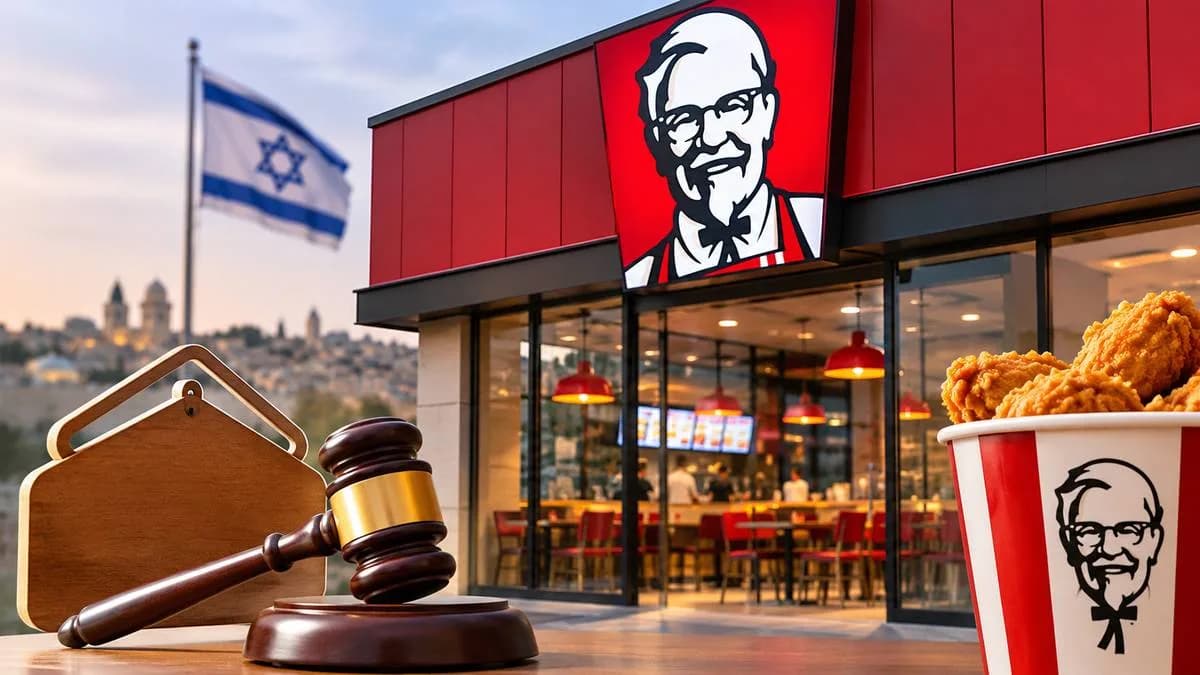
KFC's Israeli Franchise Business Enters Sale Process Amid Financial Crisis
KFC's business in Israel is facing a major financial crisis, with its local franchise operator, Smart Service K&K, entering an insolvency process and putting its restaurant operations up for sale. The development follows mounting financial liabilities estimated at approximately NIS 50 million (around ₹125 crore), raising questions about the future of the company's restaurant network and its employees.
According to Israeli media reports, the Be'er Sheva District Court has approved a process inviting potential buyers to submit acquisition offers for the business. The sale process is being overseen by court-appointed trustees, who are tasked with preserving the company's value and exploring options to secure a buyer.
12 Restaurants and Around 120 Employees Affected
Smart Service K&K currently operates approximately 12 KFC restaurants across Israel and employs around 120 people. The trustees are reportedly attempting to maintain restaurant operations while evaluating potential acquisition opportunities.
The proposed sale could involve the operating company or its restaurant operations and associated assets. Several interested parties have reportedly expressed interest in the business, although no confirmed buyer or acquisition valuation has been announced.
NIS 50 Million in Liabilities
The company's financial position has come under significant pressure, with reported liabilities of approximately NIS 50.1 million.
The reported breakdown includes:
- Shareholder loans: NIS 37.5 million
- Unsecured creditors: NIS 9.5 million
- Employee-related liabilities: NIS 1.9 million
- Government authorities: NIS 1.2 million
The company's reported assets stand at approximately NIS 3.3 million, highlighting the scale of the financial imbalance.
War-Related Disruption and Funding Challenges
The company's financial difficulties have been linked to several factors, including the economic impact of the October 7, 2023 attacks and the subsequent war in Israel.
The deteriorating security environment reportedly affected customer footfall, tourism and restaurant revenues, while operating expenses continued to put pressure on the business.
The company also reportedly faced difficulties securing additional funding from its shareholders, who are Russian residents. According to court-related reports, sanctions affecting financial institutions in Russia complicated the transfer of additional capital into Israel.
Rental disputes and difficulties meeting financial obligations to landlords and suppliers further contributed to the company's challenges.
KFC's Difficult History in Israel
KFC has experienced multiple challenges in establishing a sustainable presence in Israel. The brand has attempted to enter the market on several occasions, with its latest expansion efforts gaining momentum from 2019 onwards.
The Israeli market has also seen changes in franchise operators. Another KFC franchise operator, Mefco, reportedly ceased its restaurant operations in 2025, further highlighting the challenges facing the brand's local business.
The court-supervised sale process is expected to determine whether a new investor or operator can take over the business and continue operating the restaurants.
Potential buyers could find value in the existing restaurant network, equipment, workforce and established brand presence. However, the company's outstanding liabilities, lease agreements, supplier relationships and franchise arrangements remain important considerations.
Any continuation of KFC operations under a new owner will also depend on the relevant franchise rights and approvals from the international franchisor.
The development does not mean that KFC's global parent company, Yum! Brands, is selling its international business or announcing a withdrawal from Israel. The current process specifically concerns the financially troubled local franchise operator, Smart Service K&K.
For now, the future of the 12 restaurants and approximately 120 employees will depend on the outcome of the acquisition process and whether a new operator can restore financial stability to the business.