

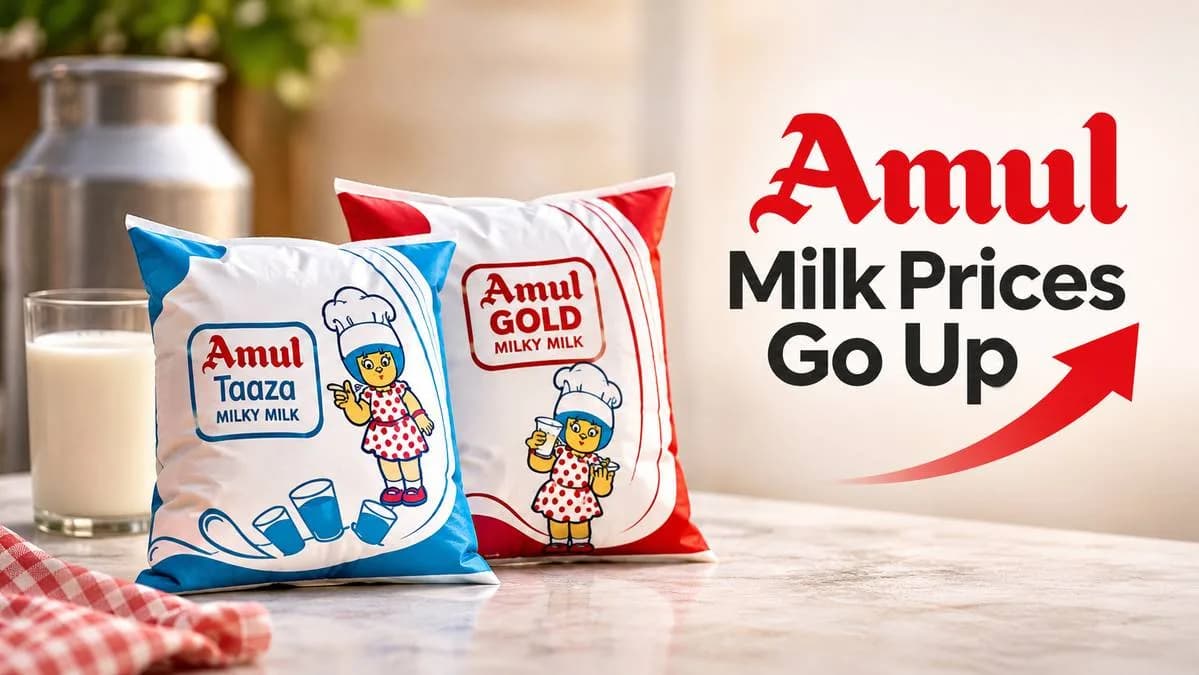
Consumers across India will have to pay more for their daily milk purchases as dairy major Amul has announced a fresh price increase of ₹2 to ₹4 per litre, effective November 12, 2026.
The Gujarat Co-operative Milk Marketing Federation (GCMMF), which markets milk and dairy products under the Amul brand, announced a 4–5% increase across major variants and pack sizes of its fresh pouch milk range. The decision comes amid rising input costs and increasing expenses across the dairy supply chain.
Under the revised pricing, Amul's largest-selling Taaza toned milk, containing 3% milk fat, will become costlier by ₹2 per litre, representing an increase of approximately 3.3%. Meanwhile, Amul Gold, which contains 6% milk fat, will see a price increase of ₹4 per litre, or approximately 5.5%.
Why Has Amul Increased Milk Prices?
Explaining the decision, GCMMF cited a significant rise in the cost of milk production and processing. The cooperative pointed towards increasing prices of green and dry fodder, along with cattle feed ingredients such as oil cakes, maize and molasses.
The federation also highlighted higher costs of milk packaging materials, including packaging film, and fuel, which have added to the overall operational expenses.
Another concern is the impact of low and uneven rainfall in Gujarat and several other parts of the country. According to the cooperative, changing weather conditions have affected fodder availability, putting additional financial pressure on dairy farmers.
GCMMF stated that the price revision was necessary to ensure better returns to milk producers and support them amid increasing cattle maintenance and production expenses.
Amul Says Majority of Revenue Goes Back to Farmers
Amul has defended the price increase by highlighting its cooperative business model, under which a substantial share of the revenue generated from consumers is returned to milk producers.
According to GCMMF, approximately 80% of the revenue collected through the Amul cooperative structure goes back to its 36 lakh milk producers.
The federation also indicated that its member unions have increased milk procurement prices paid to farmers by approximately 4–5% over the past year. A significant portion of the additional revenue generated through the latest retail price revision is expected to support dairy farmers.
Amul and Mother Dairy Announce Price Hikes Together
The Amul price revision comes alongside a similar announcement from Mother Dairy, which has also increased the prices of its liquid milk variants by ₹2–₹4 per litre, effective November 12.
Mother Dairy's revision affects consumers in the Delhi-NCR market, where the company is one of the largest milk suppliers.
The simultaneous price increases by two major dairy players highlight the growing pressure of input costs on India's dairy industry. Karnataka Milk Federation (KMF), which markets milk under the Nandini brand, had also increased milk prices by ₹8 per litre from November 1, 2026.
What Does the Price Hike Mean for Consumers?
The latest revision will add to the monthly expenses of households that depend on packaged milk for their daily consumption. Even a small increase per litre can translate into a noticeable additional expense over an entire month.
The impact could also extend beyond households to businesses that use milk as a primary ingredient, including tea shops, coffee outlets, bakeries, sweet manufacturers, restaurants and other food service businesses.
With Amul and Mother Dairy revising their prices amid rising procurement and operational costs, the latest developments point towards continued cost pressures across India's dairy and food service ecosystem.
For consumers, the immediate impact will be higher milk bills. For the dairy industry, the challenge will be balancing affordable prices with sustainable returns for milk producers.