

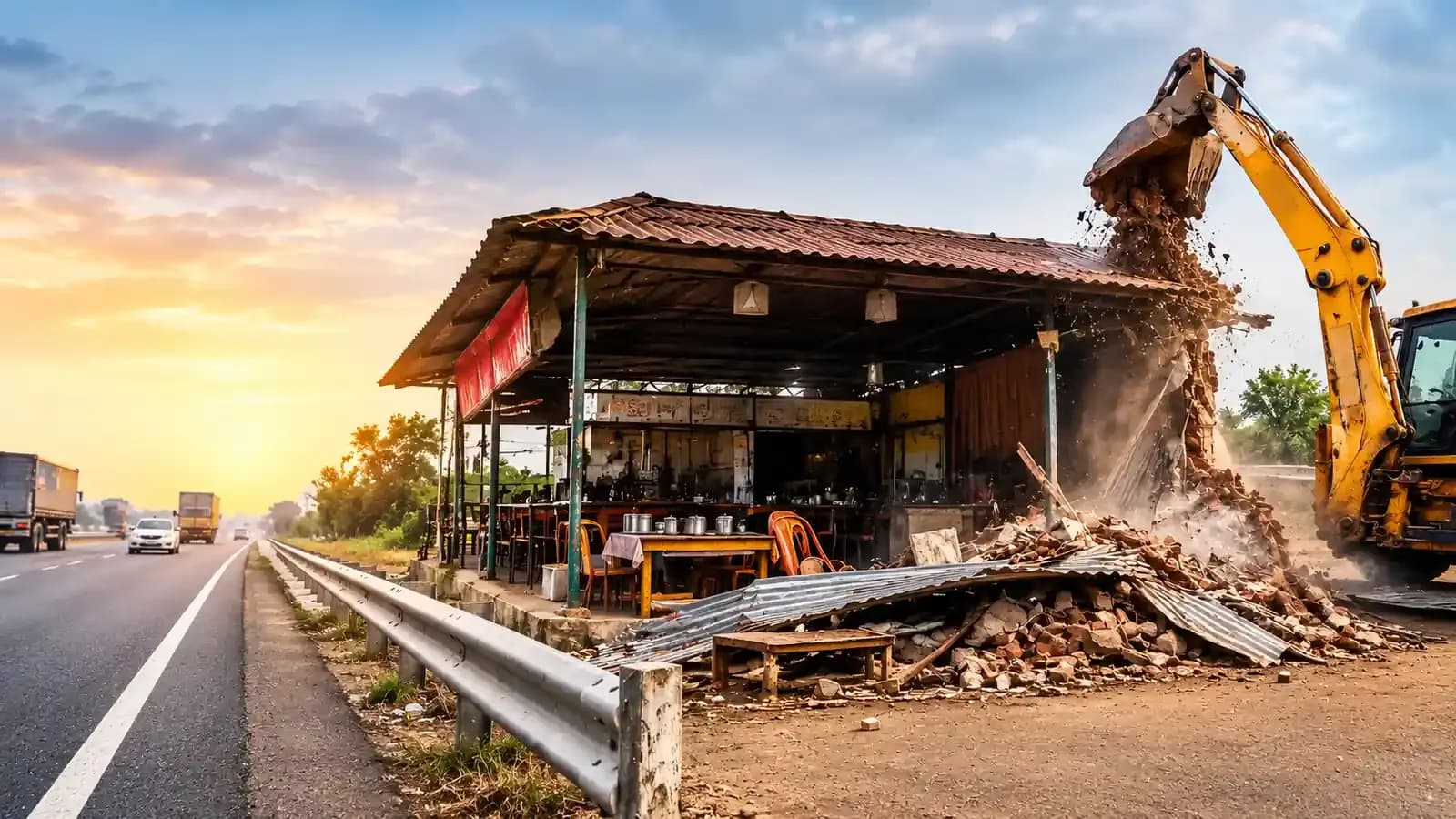
Maharashtra has ordered action against unauthorised dhabas, eateries and other commercial structures operating within the Right of Way (ROW) of National Highways, giving authorities 60 days to remove such structures.
The move comes as part of a wider road-safety drive following directions issued by the Supreme Court in April 2026 after it took suo motu cognisance of fatal accidents on National Highways.
Under the latest directions, the construction or operation of new dhabas, eateries and commercial structures within the Right of Way of National Highways has been prohibited with immediate effect.
Authorities have also been directed to identify existing unauthorised structures and take steps for their removal or demolition within 60 days, following the prescribed legal procedure.
Existing Licences to Be Reviewed
The crackdown will also cover the permissions and licences of existing establishments operating in highway safety zones.
Authorities have been directed to review existing licences within 30 days. Going forward, licences, No Objection Certificates (NOCs) and trade approvals for establishments located within highway safety zones will require clearance from the National Highways Authority of India (NHAI) or the concerned Public Works Department (PWD), wherever applicable.
This means that simply having a local trade or business licence may not be sufficient if the establishment is found to be occupying highway land without the necessary permissions.
Illegal Access Points Also Under Scrutiny
The government is also expected to take action against unauthorised access points created by roadside establishments.
Illegal entry and exit ramps, cuts through road medians and removal of highway barriers or guardrails to provide direct access to restaurants and dhabas can create serious risks for motorists.
Such unauthorised modifications can force vehicles to make sudden turns or enter and exit the highway at unsafe locations.
District-Level Task Forces to Monitor Highways
To ensure implementation, District Highway Safety Task Forces will be established in districts through which National Highways pass.
These task forces will involve officials from the district administration, police, highway authorities, PWD and local bodies.
District Collectors, along with senior police officials, will be responsible for ensuring timely action against highway encroachments.
The task forces will also be expected to conduct regular reviews and monitor the progress of encroachment removal.
Why Are Dhabas Being Targeted?
The action is primarily linked to highway safety.
Roadside dhabas and eateries often become stopping points for trucks and other commercial vehicles. When vehicles are parked on highway shoulders or close to active traffic lanes, they can obstruct visibility and create dangerous situations for other motorists.
The Supreme Court has therefore directed authorities to prevent heavy and commercial vehicles from parking on National Highway carriageways and paved shoulders, except at designated locations such as truck lay-bys and Wayside Amenities.
The broader objective is to ensure that food, rest and parking facilities are available to drivers without creating additional risks on busy highways.
Supreme Court's Wider Road-Safety Directions
The Supreme Court's April 2026 order goes beyond roadside dhabas and eateries.
The court issued a series of directions covering National Highway safety, including unauthorised construction, heavy-vehicle parking, highway surveillance, emergency response and accident-prone locations.
The court also directed authorities to improve highway monitoring through technology, strengthen patrol systems and develop safer facilities for truck drivers.
Drone surveys have also been directed to help identify highway encroachments.
Not Every Highway Dhaba Will Be Demolished
The Maharashtra government's action should not be interpreted as a blanket ban on all dhabas, restaurants or eateries located near National Highways.
The focus is on unauthorised structures and establishments falling within the relevant National Highway Right of Way and highway safety framework.
A legally established restaurant located outside the highway ROW is not automatically subject to demolition simply because it operates close to a National Highway.
For each establishment, authorities will need to consider factors such as land ownership, the exact highway ROW, applicable permissions, NHAI or PWD clearances and local approvals.
What Does This Mean for Highway Food Businesses?
The latest move could have a significant impact on roadside food businesses operating across Maharashtra.
Owners of dhabas, restaurants, hotels and eateries located along National Highways may need to verify whether their premises fall within the highway ROW and whether all required permissions and clearances are in place.
Businesses should also ensure that their entry and exit points are authorised and that customers, trucks and other vehicles are not being allowed to park illegally on the highway or paved shoulders.
The next 60 days are likely to be crucial as authorities begin identifying and acting against unauthorised structures across the state.
The crackdown is ultimately aimed at making National Highways safer while shifting roadside food, parking and rest facilities towards properly authorised and safer locations.