

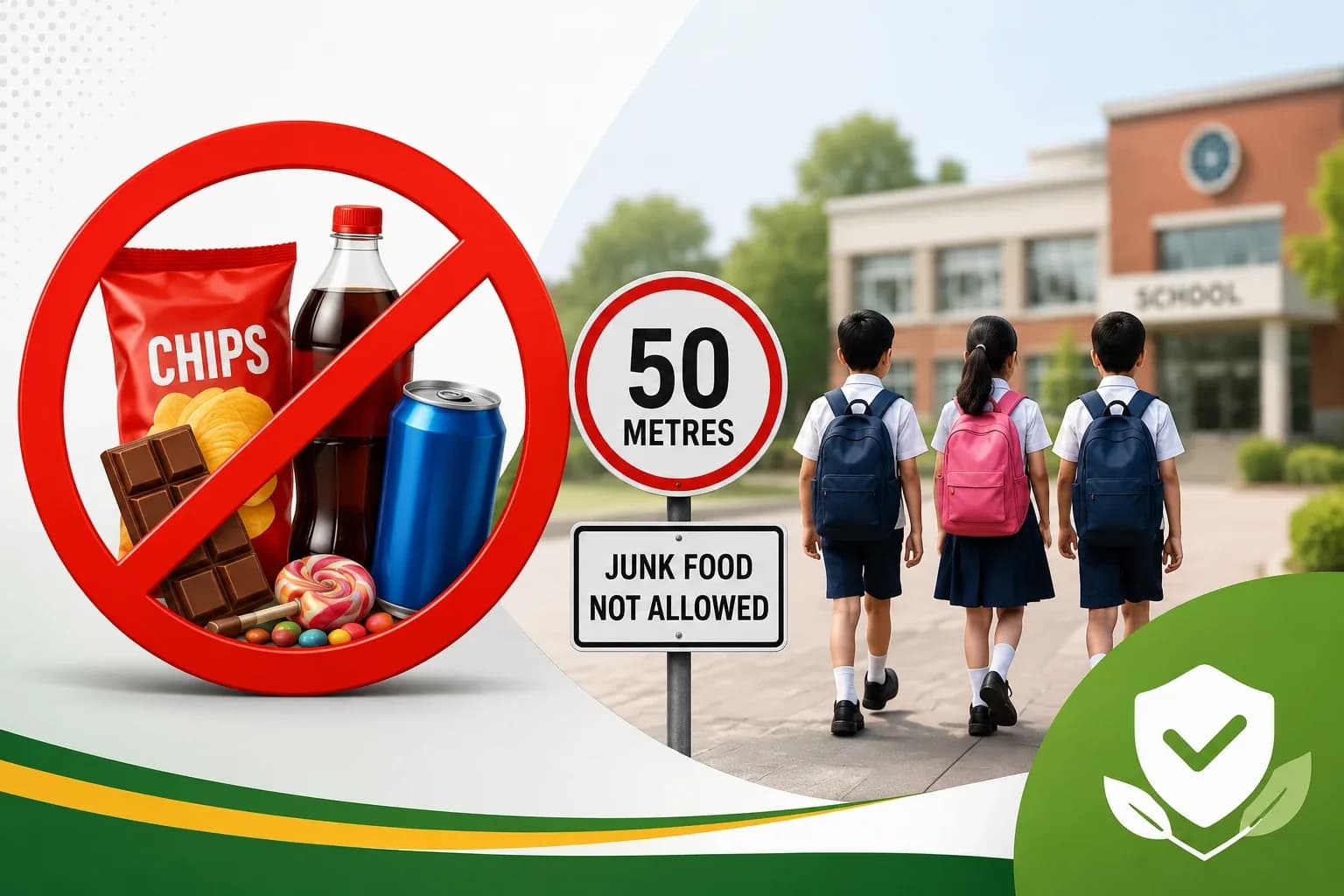
In a major move aimed at improving children's health and promoting healthy eating habits, the Maharashtra Food and Drug Administration (FDA) has announced a statewide ban on the sale of unhealthy foods and beverages within 50 metres of all schools.
The directive, issued by FDA Commissioner Tukaram Mundhe, prohibits the sale, advertisement and distribution of foods that are high in fat, sugar and salt (HFSS) around educational institutions. The order has been implemented following recommendations from the Indian Council of Medical Research (ICMR) to reduce childhood obesity and lifestyle-related diseases.
The new guidelines are expected to impact millions of students studying across Maharashtra and will significantly change how food is sold inside and around school campuses.
Why Has Maharashtra Introduced This Ban?
According to the Maharashtra FDA, the primary objective is to create a healthier food environment for children.
The government aims to:
Reduce childhood obesity
Prevent early-onset diabetes
Lower excessive sugar and salt consumption
Encourage healthier eating habits
Improve students' overall nutrition
Reduce children's exposure to ultra-processed foods
Health experts have repeatedly warned that regular consumption of junk food increases the risk of obesity, hypertension, diabetes and cardiovascular diseases later in life.
What Exactly Has Been Banned?
The order restricts the sale, advertisement and free distribution of foods categorized as High in Fat, Sugar and Salt (HFSS).
These include:
Potato chips
Soft drinks
Carbonated beverages
Sugary drinks
Chocolates
Candies
Packaged junk food
Fried snacks
Ice creams
Other ultra-processed foods with excessive fat, sugar or salt
The FDA clarified that the restriction applies to all products considered unhealthy under the prescribed nutritional guidelines.
Where Will the Ban Apply?
The restriction will be enforced:
Inside school premises
School canteens
Food stalls inside schools
Shops and vendors located within 50 metres of school entrances
The rule also covers any promotional activities or free distribution of junk food around educational institutions.
Which Schools Are Covered?
The directive applies to all educational institutions in Maharashtra, including:
Pre-primary schools
Primary schools
Elementary schools
Secondary schools
Higher secondary schools
Residential schools
School hostels
Government schools
Private schools
CBSE schools
ICSE schools
Maharashtra State Board schools
Schools affiliated with any recognized education board
This makes it one of the widest school food safety directives implemented in the country.
Schools Must Follow ICMR Nutritional Guidelines
Apart from restricting junk food, schools have also been instructed to prepare and serve meals according to ICMR nutritional recommendations.
Schools are encouraged to offer healthier food options such as:
Fresh fruits
Seasonal vegetables
Milk and dairy products
Healthy sandwiches
Sprouts
Whole-grain snacks
Balanced meals
Freshly prepared nutritious food
The objective is to replace highly processed snacks with healthier alternatives.
Food Suppliers Must Follow Strict Food Safety Rules
The FDA has instructed that every food supplier associated with schools must comply with food safety regulations.
This includes:
Valid FSSAI licence or registration
Hygienic kitchens
Safe food preparation practices
Proper food storage
Quality control measures
Regular sanitation standards
These rules apply to:
School canteens
Mid-day meal kitchens
Contract food suppliers
Catering agencies
How Will the New Rules Be Enforced?
The Maharashtra FDA has announced regular inspections across schools.
Authorities responsible for implementation include:
Maharashtra FDA
School principals
School management committees
Local administration
Food safety officers
Officials will conduct:
Surprise inspections
Food safety audits
Vendor inspections
Compliance checks
Schools and vendors violating the guidelines may face action under applicable food safety regulations.
Around Two Crore Students Expected to Benefit
According to government estimates, the directive is expected to benefit nearly 2 crore (20 million) students studying in schools across Maharashtra.
Public health experts believe that limiting children's easy access to unhealthy foods can significantly improve long-term dietary habits.
What Is HFSS Food?
HFSS stands for High Fat, Sugar and Salt.
These foods usually contain:
High sugar content
Excessive sodium
Saturated fats
Artificial additives
Low nutritional value
Examples include:
Category | Examples |
|---|---|
Sugary Drinks | Soft drinks, energy drinks, flavored beverages |
Salty Snacks | Potato chips, packaged namkeen |
Sweet Snacks | Chocolates, candies, confectionery |
Fried Foods | French fries, samosas, fried packaged snacks |
Ultra-Processed Foods | Highly processed packaged food items |
Why This Decision Is Important
India has witnessed a significant rise in childhood obesity over the past decade.
Health experts attribute this to:
Easy availability of processed foods
High sugar intake
Sedentary lifestyle
Excessive screen time
Aggressive marketing of junk food
By restricting unhealthy food near schools, Maharashtra hopes to create a healthier environment where children are encouraged to make better food choices.
Impact on the Food Industry
The new policy is likely to affect several businesses, including:
Chips manufacturers
Soft drink companies
Packaged snack brands
Local food vendors near schools
School canteen operators
At the same time, demand may increase for healthier food categories such as:
Fruits
Fresh juices
Dairy products
Millet-based snacks
Whole grain products
Nutritious homemade foods
Industry experts believe companies may increasingly invest in healthier product portfolios as consumer preferences evolve.
Final Thoughts
The Maharashtra government's decision to prohibit the sale of junk food within 50 metres of schools represents a significant step toward improving children's nutrition and reducing the consumption of unhealthy foods. While the move may impact vendors and food companies operating near schools, it is expected to create a healthier environment for millions of students.
Its success will ultimately depend on consistent enforcement, cooperation from schools, food vendors, parents, and greater awareness about healthy eating habits among children.
Frequently Asked Questions (FAQs)
1. What has Maharashtra banned near schools?
The Maharashtra FDA has banned the sale, advertisement and free distribution of junk food and High Fat, Sugar and Salt (HFSS) foods within 50 metres of all schools.
2. Which foods are banned?
The restriction covers products such as potato chips, soft drinks, sugary beverages, chocolates, candies, packaged junk food and other HFSS foods.
3. Does the ban apply only inside schools?
No. The ban applies both inside school campuses and within a radius of 50 metres around school premises.
4. Which schools are covered?
The order applies to pre-primary, primary, secondary, higher secondary, residential schools, hostels, government schools, private schools, CBSE, ICSE and State Board institutions across Maharashtra.
5. Why has Maharashtra introduced this ban?
The government aims to reduce childhood obesity, diabetes and unhealthy eating habits while encouraging nutritious food choices among students.
6. What does HFSS mean?
HFSS stands for High Fat, Sugar and Salt. These foods typically have low nutritional value and are associated with obesity and lifestyle-related diseases.
7. Are school canteens allowed to sell chips and cold drinks?
No. School canteens are expected to stop selling HFSS foods and instead offer healthier alternatives that comply with ICMR nutritional guidelines.
8. Will local vendors outside schools also be affected?
Yes. Vendors located within 50 metres of school premises cannot sell restricted junk food items covered under the order.
9. Who will enforce these guidelines?
The Maharashtra FDA, school authorities, food safety officers and local administration will conduct inspections and ensure compliance.
10. How many students will benefit from this decision?
The policy is expected to benefit approximately 2 crore students studying across Maharashtra.