

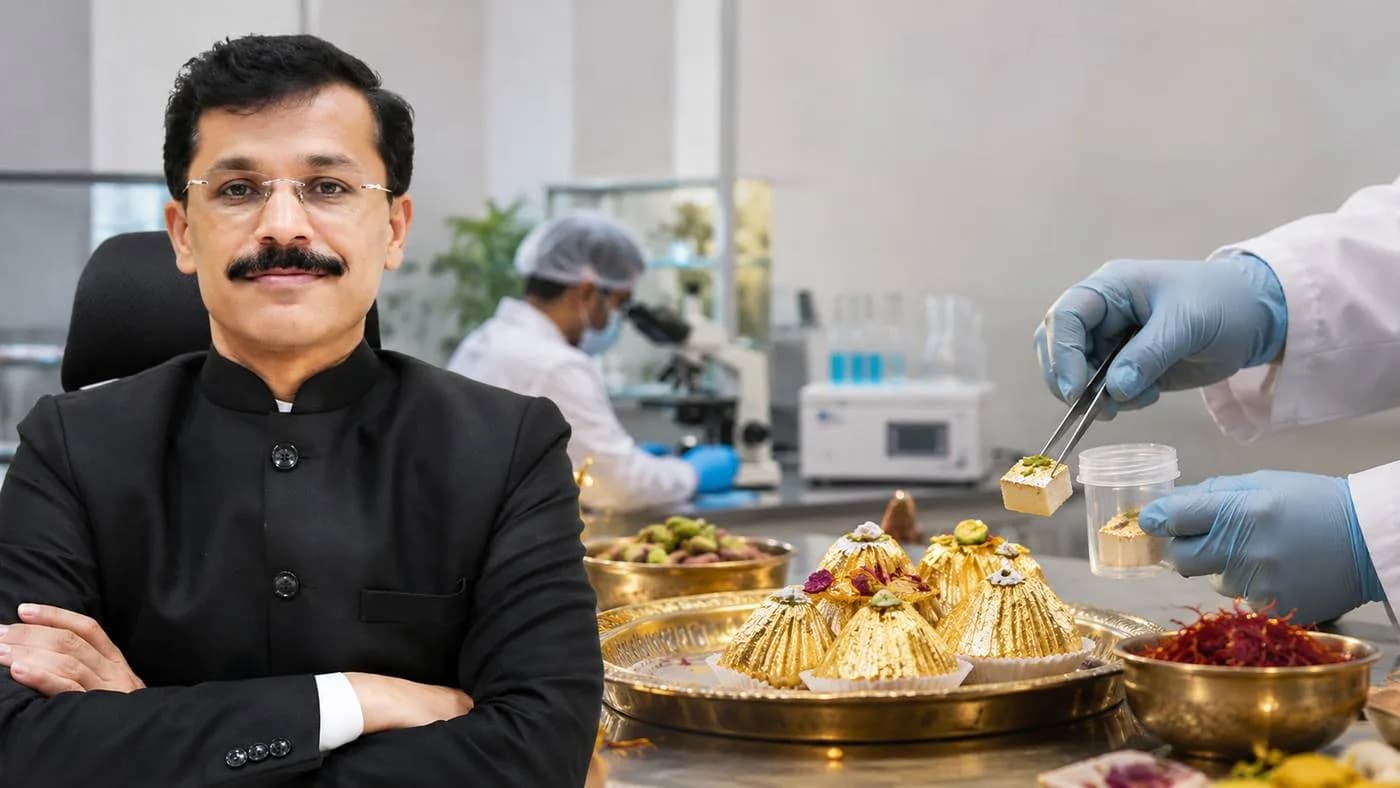
A sweet selling for ₹24,000 per kilogram has caught the attention of Maharashtra's Food and Drug Administration (FDA), but not just because of its premium price. The department is now examining whether the gold used to decorate the sweet is genuine.
The Maharashtra FDA has collected samples of a gold-decorated sweet called Swarn Shankh from a sweet shop in Amravati for laboratory testing. The development comes after FDA Commissioner Tukaram Mundhe raised concerns about the authenticity of gold and silver coatings used on expensive festive sweets.
The sweet, introduced by Raghuvir Sweet and Namkeen for the Diwali season, is priced at ₹24,000 per kg and is marketed as a premium confectionery product featuring 24-carat gold leaf.
The FDA's testing will help establish whether the gold coating matches the claims being made about the product. Authorities have indicated that appropriate action could follow if the laboratory findings reveal any violation of food safety standards.
What Makes Amravati's Swarn Shankh So Expensive?
Swarn Shankh is positioned as a luxury festive sweet, combining traditional Indian confectionery with expensive ingredients and gold decoration.
According to the shop's owner, Chandrakant Popat, the sweet is prepared using ingredients such as Mamra almonds, Pishori pistachios and pure saffron. Skilled artisans from Rajasthan are reportedly involved in its preparation.
The product draws inspiration from the conch shell, traditionally associated with Goddess Lakshmi and auspicious occasions.
Its gold coating is one of its major selling points, with the establishment claiming to use genuine 24-carat gold leaf.
The owner has also reportedly stated that the gold leaf used in the sweet was tested by a certified laboratory. However, the FDA has undertaken its own sampling and testing process to independently verify the claims.
The establishment reportedly sells the product through its outlets near Rajapeth Police Station and on Dastur Nagar Road in Amravati.
Why Has Maharashtra FDA Stepped In?
The investigation highlights a growing concern around the use of metallic foils and decorative coatings in premium food products.
Gold and silver leaves are commonly used to decorate Indian sweets, particularly during festivals, weddings and special occasions. However, when products are marketed using claims of precious-metal purity, consumers should be able to trust that those claims are accurate.
Commissioner Tukaram Mundhe has raised concerns about the authenticity of such coatings and the possibility of sellers using cheaper metallic alternatives.
The FDA's intervention is intended to establish whether the product's coating is genuine and whether it complies with applicable food safety requirements.
The department has also drawn attention to silver foil used on sweets. Mundhe has highlighted how aluminium foil can sometimes be passed off as silver leaf, raising questions about product authenticity and consumer awareness.
However, visual or manual checks alone cannot conclusively establish the purity of a metallic coating. Laboratory testing remains important in determining its actual composition.
Maharashtra FDA's Diwali Food Safety Drive
The Amravati investigation is part of a broader food safety enforcement drive being conducted across Maharashtra during the festive season.
With demand for sweets, dairy products, dry fruits and packaged foods increasing around Diwali, the FDA has intensified inspections of food businesses to identify adulteration, substandard products and violations of food safety requirements.
According to reported figures, between October 1 and November 3, 2026, the department inspected more than 9,666 establishments across the state.
The enforcement drive also resulted in:
- Suspension of 954 food business licences.
- Cancellation of 25 licences.
- Seizure of food stock valued at approximately ₹63.45 crore.
- Issuance of more than 1,500 improvement notices.
The inspections covered sweet shops, dairy businesses, food manufacturers, suppliers and other food establishments.
The department has also focused on products such as khoya, mawa, ghee, edible oils, paneer, milk products, artificial food colours and decorative food coatings.
These inspections are aimed at ensuring that food businesses follow hygiene requirements and that products sold to consumers meet prescribed food safety standards.
What Should Consumers Keep in Mind?
The FDA has encouraged consumers to be careful while purchasing sweets and other food products, particularly during the festive season.
Consumers are advised to purchase sweets from licensed food businesses, check packaging and expiry information, and avoid products with unusually bright colours or questionable appearances.
For milk-based sweets, freshness and proper storage are particularly important. Buying smaller quantities and consuming perishable products within a short period can also help reduce food safety risks.
Consumers should also be cautious about premium claims involving gold and silver coatings. A high price or attractive presentation does not automatically establish the quality or authenticity of the ingredients.
The laboratory findings from the Amravati sweet sample will be important in determining whether the product meets the claims made by its seller and complies with applicable food safety regulations.
If any violation is established, the FDA can initiate action under the Food Safety and Standards Act, 2006, depending on the nature and seriousness of the findings.
For now, the collection of samples should not be treated as proof that the sweet contains fake gold or is adulterated. The final findings of the laboratory investigation will determine whether further regulatory action is warranted.
The incident also raises a wider question for India's growing premium food market: as brands increasingly use luxury ingredients and elaborate presentations to attract customers, how can consumers be assured that what they are paying for is genuinely what they are promised?
For Maharashtra's food regulator, the answer begins with testing, transparency and accountability.